Fractographic analysis laboratory
A broken part, an unexplained crack, a failure in service… Behind every breakage lies a precise mechanism. Fractographic analysis makes it possible to identify the origin of the fracture and trace it back to the root cause.
As an industrial manufacturer, you want to carry out a fractographic analysis
Fractographic analysis: what is it?
L’analyse fractographique permet de localiser une amorce de rupture d’un matériau, d’identifier le mode de rupture et de mettre en évidence la présence de défauts de santé de la matière pouvant être à l’origine de la rupture.
Une rupture de pièce peut avoir des conséquences importantes sur une production ou sur l’installation dans laquelle elle est située. Dans ce contexte, l’analyse fractographique permet de comprendre et déterminer les causes d’une rupture. En effet, celles-ci peuvent être multiples :
severe impact (brittle fracture)
cyclic loading of a part (fatigue failure)
raw material not compliant with the expected grade
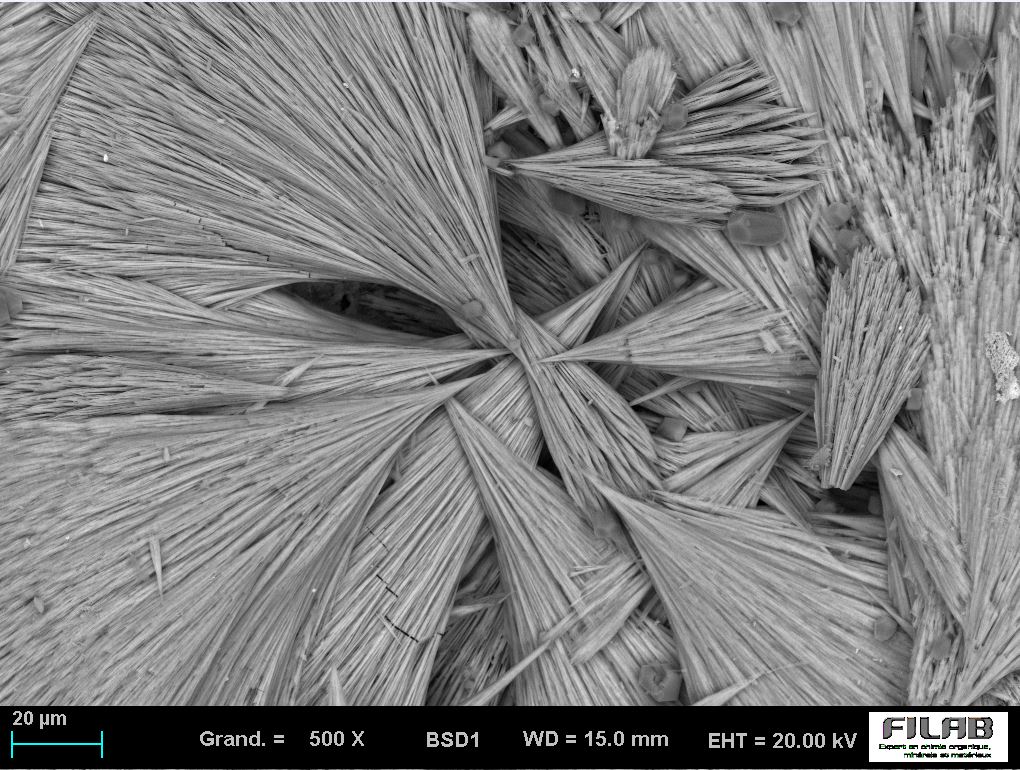
corrosion issue
mechanical deformation of a part (ductile fracture)
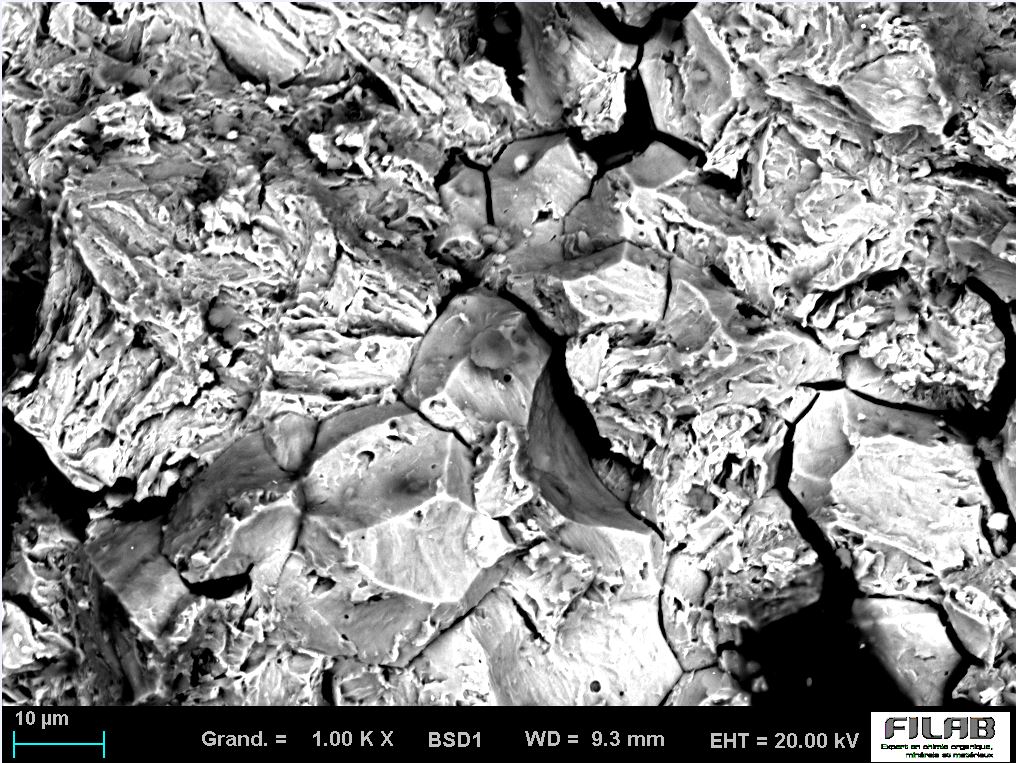
hydrogen embrittlement
environment unsuitable for the material used
Fractographic analysis: specialized expertise from the FILAB laboratory
With significant experience in carrying out this type of fractographic expertise, FILAB supports you in understanding and resolving your fracture issues through fractographic analysis.
As part of failure analysis, the FILAB laboratory provides its full analytical equipment and the expertise of its engineers to address your fracture issues on metal parts.
Our technical resources for fractographic analysis
Why carry out a fractographic analysis?
Fractographic analysis consists of studying the fracture surfaces of a material in order to determine:
- the fracture mode (brittle, ductile, fatigue, stress corrosion cracking...)
- the origin of crack initiation
- the propagation conditions
- the aggravating factors (material defects, stresses, environment...)
It is generally used in the following contexts:
- part breakage in production or in service
- product non-conformity
- disputes or technical expertise
- continuous improvement process
Why choose the FILAB laboratory for your fractographic analysis?
Our teams are here to listen and support you with the fractographic analysis of your metal parts. The FILAB laboratory puts its knowledge and expertise at your disposal to carry out audits at your production sites in order to understand the issues you are facing. We offer tailor-made support based on your fractographic analysis needs following a metal part failure, to provide you with concrete and lasting solutions.
Application examples
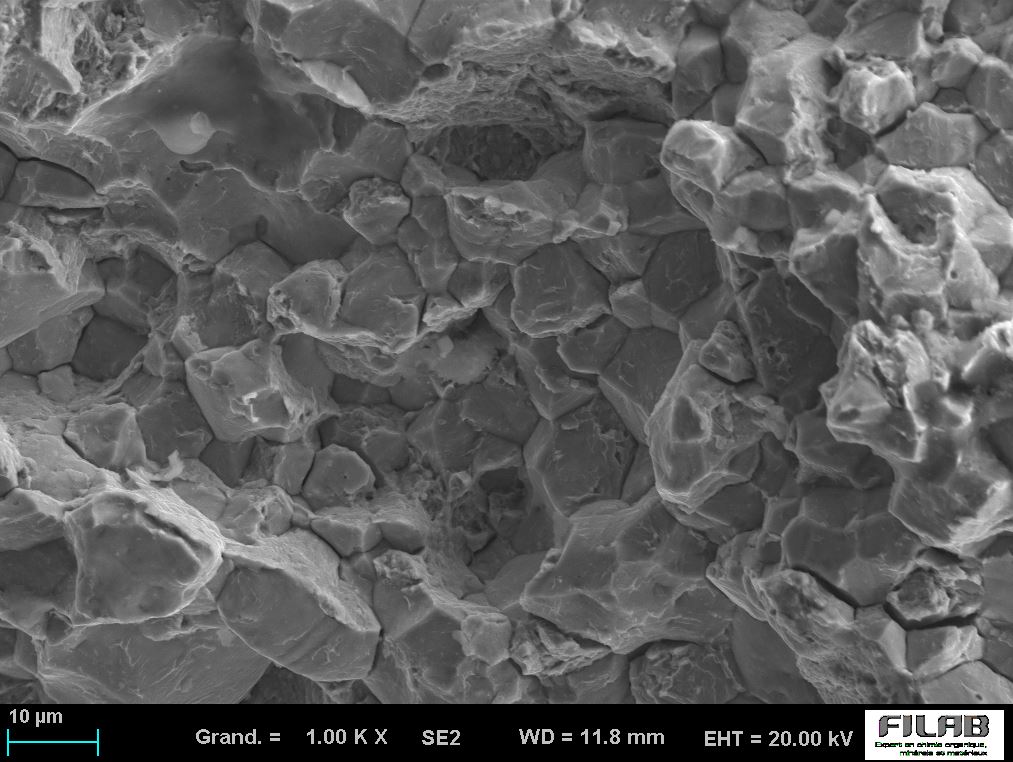
Brittle fracture
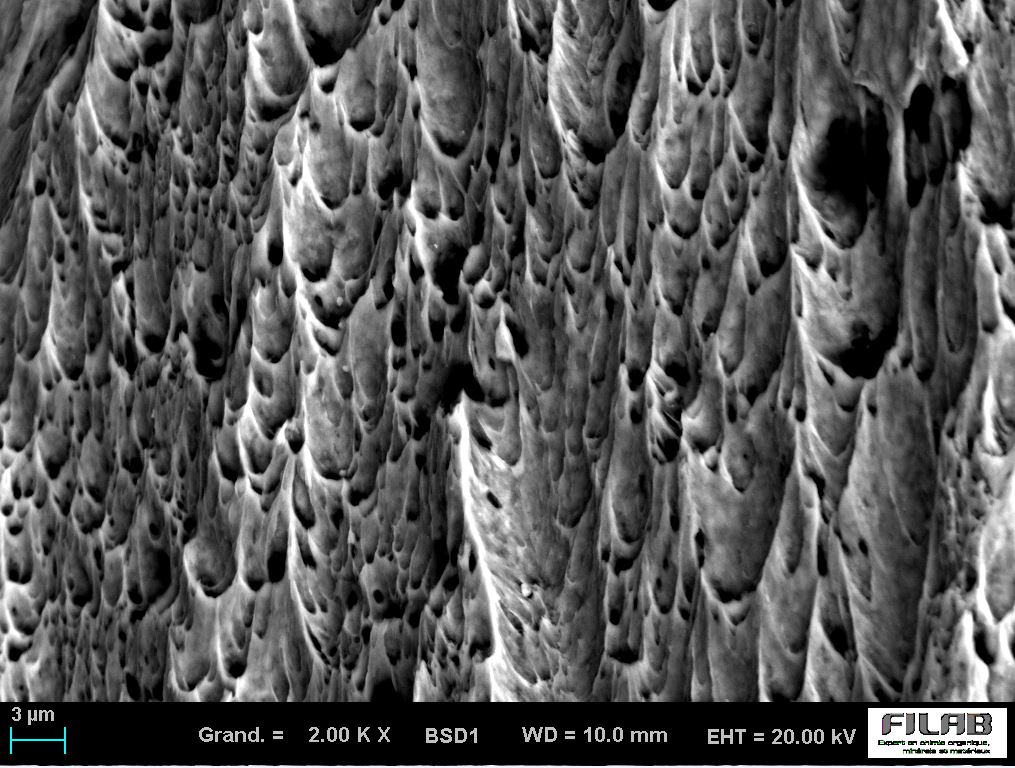
Ductile fracture
Hydrogen Embrittlement
Presence of Corrosion
See also...
Our FAQ
In metallurgy, a fracture refers to the way a metal material breaks or cracks in response to a force or stress. The study of metallurgical fractures provides crucial information about the quality, strength, and durability of a metal material. There are different types of fractures in metallurgy:
- Ductile fracture: occurs when the metal material deforms before breaking. It is generally characterized by significant plastic deformation before failure. In other words, the material undergoes permanent deformation without breaking immediately. Ductile metals, such as steel, tend to exhibit this type of fracture.
- Brittle fracture: occurs when the material breaks without showing much plastic deformation. This usually happens at lower temperatures or under high stress levels. Brittle metals, such as cast iron, are more likely to exhibit this type of fracture.
- Fracture zone: The fracture zone is the specific area where the break occurs in the material. It may show specific features, such as cracks, deformation zones, or striations, which can be examined to analyze the nature of the fracture.
- Microstructure: The microstructure of a metal material, such as its chemical composition and grain arrangement, can influence the way it fractures. A well-designed microstructure can improve a material's fracture resistance and ductility.
- Fracture analysis: Fracture analysis is a technique used in metallurgy to examine and understand the causes of a material's failure. It often involves observing the fracture zone under a microscope and can help identify the factors that contributed to the failure, such as manufacturing defects, corrosion, fatigue, etc.
In short, a fracture in metallurgy refers to the way a metal material breaks in response to stress or force. Understanding fracture types, the factors that influence them, and fracture analysis are important elements in the design, manufacture, and use of metal materials in various industrial applications.
Fracture analysis is a technique used in metallurgy to examine and understand the causes of a material's failure. It often involves observing the fracture zone under a microscope and can help identify the factors that contributed to the failure, such as manufacturing defects, corrosion, fatigue, etc.
To get a quote, you can contact our teams via our contact form, by phone, or by email.
All you need to do is send us your requirements (material type, requested analysis, any applicable standard, urgency, number of samples, etc.). We will then send you a tailored technical and pricing proposal within 24-48 hours.
Lead times vary depending on the nature of the analysis and the complexity of the expert assessment project.
However, FILAB is committed to providing fast turnaround times adapted to your constraints and industrial urgencies.