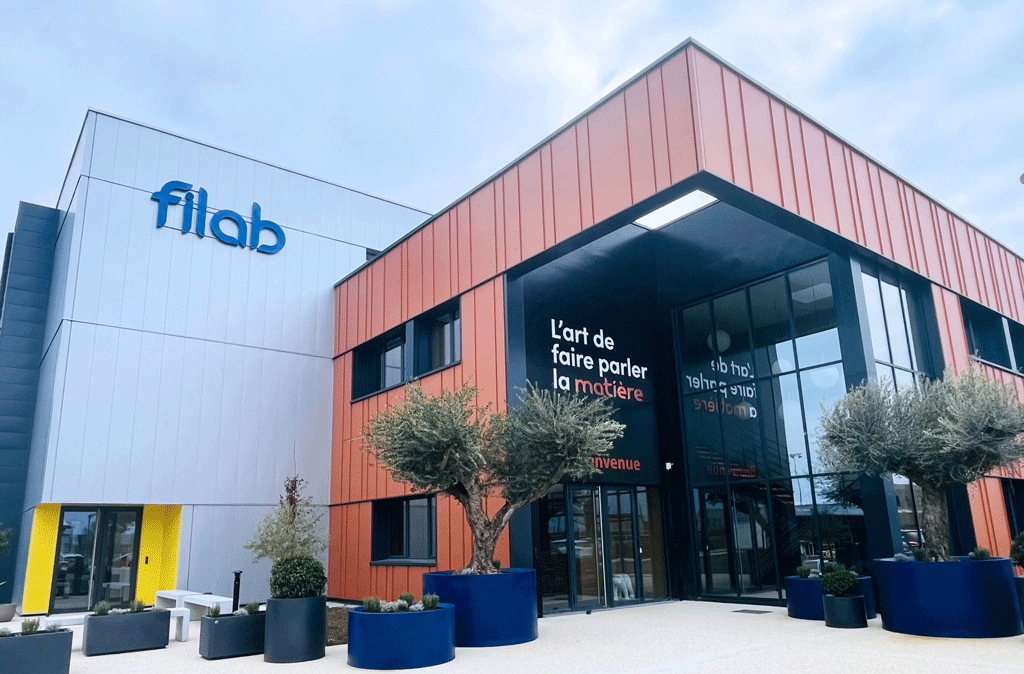
PMUC analysis laboratory: inspection and approval

Chemical analysis Material characterization
More than 140 people
More than 140 people at your service
5200 m² laboratory
5200 m² laboratory + 99% of services are provided in-house
Accredited laboratory
Accredited laboratory COFRAC ISO 17025
EDF approved
EDF approved

FILAB supports manufacturers in their approval processes by carrying out reliable PMUC analysis, compliant with EDF requirements and tailored to your technical constraints.

Your need: carry out a PMUC inspection or approval analysis with a competent laboratory approved by EDF

PMUC products (Products and Materials Used in Nuclear or Thermal Power Plants) are non-metallic products or materials in direct contact with metallic materials or circuits.

They can potentially have a corrosive effect on steel when they contain halogenated or sulfur-containing species. PMUC inspection or approval analysis helps prevent and control the risk of corrosion in power plant metal circuits.

To be authorized for sale, PMUC products must be approved by EDF after analysis have been carried out in an EDF-approved laboratory for PMUC.

Services

PMUC

analysis and inspections carried out by the FILAB laboratory
Pre-approval inspection - assessment

Carrying out an assessment of your products before PMUC approval

Approval inspection - total content

Approval inspection: Chemical analysis to obtain PMUC approval

Approval inspection - soluble content

Approval inspection: Chemical analysis to obtain PMUC approval

Approval inspection - prohibited elements(*)

(*) List of prohibited elements: Pb, Sn, Zn, Al, Bi, As, Cu, Cd, Sb, Ag, Co, Ga, In, Fe, molybdenum disulfide (through molybdenum and sulfur) and rare earths (Ce, Dy, Er, Eu, Gd, Ho, La, Lu, Nd, Pr, Sc, Sm, Tb, Tm, U, Y, Yb)

PMUC inspection – total content
PMUC inspection – soluble content
Manufacturing inspection
Monitoring inspection

Inspection and monitoring analysis of PMUC products

PMUC Analysis

PMUC analysis consists of characterizing the chemical composition of products likely to be used in a nuclear environment.

These analysis are mainly intended to detect and quantify critical chemical elements such as: halogens (chlorine, fluorine, bromine) or sulfur. Under certain conditions, these substances can cause corrosion phenomena on the metal alloys present in nuclear facilities.

Analytical objectives of PMUC analysis

The PMUC analysis carried out at the FILAB laboratory aim to:

accurately measure halogen content (Cl, F, Br)

verify compliance with EDF specifications

secure the use of products in nuclear power plants

quantify total sulfur

identify potential sources of corrosion

PMUC - Halogen Analysis

Halogens are analyzed in PMUC products to prevent any risk of corrosion in the power plant metal circuits.

PMUC - Rare Earth Analysis

Several elements are involved; rare earth analysis as part of a PMUC analysis:
Yttrium
Lanthanum
Cerium
Neodymium
Gadolinium
Services

PMUC - Non-metallic Samples

Chemical analysis of contact products on non-metallic samples
analysis by ICP/AES or ICP/MS after mineralization or combustion for iodine
  • Ag, Al, As, Bi, Cd, Cu, Fe, Ga, In, Mg, P, Pb, S, Sb, Sn and Zn
  • Iodine by ICP/MS
  • Mercury by amalgamator
analysis by IC according TO D5710/ESD/1990/000295/01

F, Cl, and Br after combustion in a bomb calorimeter

Analytical methods used for PMUC analysis

The FILAB laboratory uses various analytical techniques to meet PMUC requirements:

ICP-AES - ICP-MS

for halogens and sulfur, often after mineralization

Ion chromatography (IC)

for certain halogen ions

FTIR

to detect silicones

We also use complementary methods depending on the matrices (paints, temporary products, etc.)

PMUC approval checks

Products covered by PMUC approval (EDF)

The products concerned are those that can be used in a nuclear or thermal power plant during operations involving:

  • Manufacturing
  • Assembly
  • Maintenance
  • Operation

The products concerned are those that can be used in the plant during manufacturing, assembly, maintenance or operation activities.

There are 24 categories of products classified as PMUC by EDF: adhesives, varnishes/paints, anti-seize products, cleaning/decontamination/protection products, plastics, seals, leak detection or leak-sealing products, abrasives…

Who needs to have a PMUC product approved?

Manufacturers: to sell to EDF or its contractors.
Distributors / Importers: if the product is not already approved
Maintenance contractors: for specific products used in the plant.
Any company working on an EDF site with its own consumables

How do you choose a PMUC testing laboratory?

FILAB laboratory has recognized expertise in the chemical characterization of materials and supports manufacturers with issues related to PMUC.

  • EDF-approved PMUC laboratory: a perfect command of EDF requirements relating to Products and Materials Usable in Power Plants
  • COFRAC ISO 17025 accreditation: a guarantee of reliability and quality in analytical results
  • PMUC analysis expertise: implementation of chemical and physico-chemical methods compliant with PMUC standards
  • Tailored technical support
  • Responsiveness and compliance with industrial deadlines
  • Traceability and reliability of results for PMUC approval files.

Regulatory framework: FILAB, an edf-approved PMUC laboratory

The PMUC chemical analysis carried out by FILAB comply with EDF procedure D5713 / DJX / RB 90 0295.

The checks carried out by the laboratory consist of analyzing the halogen content (fluorides F-, chlorides Cl-, bromides Br-) and sulfur in Products and Materials Usable in Power Plants (PMUC) in order to verify compliance with EDF PMUC chemical specifications.

FAQ

What is PMUC approval?

PMUC approval is an official procedure that certifies that a product or material complies with EDF requirements for use in a nuclear or thermal power plant. This approval guarantees that the product meets the contamination thresholds for halogens (chlorine, fluorine, bromine, iodine), sulfur and silicones, in order to prevent any risk of corrosion, pollution or accidents in controlled areas.

Which laboratory should you choose for a PMUC analysis?

It is recommended to use a PMUC laboratory with expertise in chemical analysis and a thorough knowledge of EDF requirements.

What are the 24 PMUC product categories (EDF)?

All products and materials that may be used in a nuclear power plant may be affected. The 24 product categories are: adhesives, varnishes, paints, anti-seize compounds, cleaning products, decontamination products, protective products, lubricants, oils, greases, degreasers, solvents, seals, sealing products, leak detection products, leak sealing products, abrasives, plastics, foams, expanded polymers, temporary coatings, protective films, temporary marking products, wiping consumables (rags, wipes).

What is a PMUC analysis?

A PMUC analysis checks the chemical composition of a product to ensure it is compatible with use in a nuclear power plant.

Why have a PMUC approval carried out in a laboratory?

PMUC approval is mandatory to ensure that a product complies with EDF’s thresholds for halogens, sulfur and silicones. These substances can cause corrosion, contamination and incidents in the plant. Only an accredited laboratory can carry out analysis in accordance with EDF standards (HN 03-S-90, HN 03-S-91).

What is the difference between a PMUC check and a PMUC approval?

PMUC control only applies as part of a check that a product complies with PMUC requirements when that product has already been approved for less than 5 years

What does the PMUC check or approval analysis involve?

PMUC control or approval analysis consists of determining the levels of halogens (fluorine / fluorides, chlorine / chlorides analysis, bromine / bromides) and sulfur in products and materials intended for use in the plant, according to EDF protocols specific to the product family.

Once the analysis has been completed, a report is issued and sent to the client so that the results can be presented to EDF for the issuance of PMUC approval by EDF.

What are the main steps in a PMUC approval?

The main steps are:

  1. Definition of the product scope and collection of documents (SDS, TDS).
  2. Chemical analyses (halogens, sulfur, silicones) by an accredited laboratory.
  3. Preparation of a test report compliant with EDF standards.
  4. Submission of the approval file to EDF.

Receipt of the approval decision, valid for 5 years.

Why go through a laboratory like FILAB for a PMUC approval?

FILAB is a COFRAC ISO 17025 accredited laboratory and, above all, is recognized by EDF (EDF approval) to carry out PMUC analyses. FILAB support enables:

  • To guarantee reliable and traceable analyses,
  • To benefit from technical support for preparing the file,
  • To optimize processing times,
  • To secure the process in the face of EDF's strict requirements.
How do you get a quote for a PMUC analysis?

To get a quote for a PMUC analysis, you can contact our teams via our contact form, by phone or by email. Send us your requirements (type of material, analysis requested, any applicable standard, urgency, number of samples, etc.).

How long does it take to get a quote for a PMUC analysis?

The quote turnaround time is 24 to 48 hours.

The filab advantages
A highly qualified team
Responsiveness in responding to and processing requests
A COFRAC ISO 17025 accredited laboratory
(Staves available on www.cofrac.com - Accreditation number: 1-1793)
A complete analytical facility of 5,200m²
Tailor-made support
Tailor-made support
Video debriefing available with the expert
Clément BOENARD Head of Inorganic Chemistry Department
Ask for your quote