

Inorganic chemistry and organic chemistry: what is the difference between the two?
In the following article, you will find the following questions:
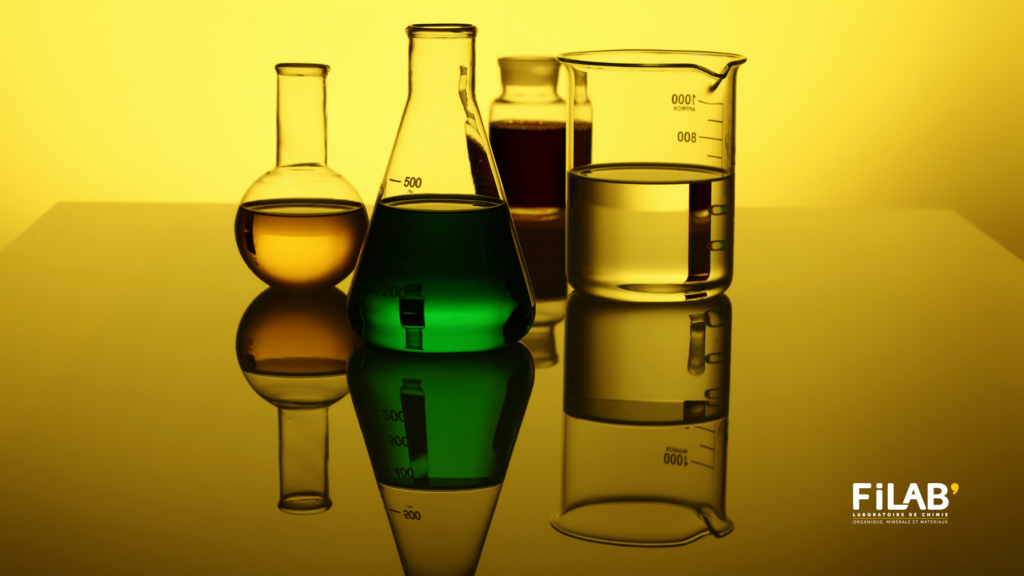
What is organic chemistry?
The main difference between the two types of chemistry lies in the presence of a carbon atom. Organic chemistry is a branch of chemistry that focuses on the study of chemical compounds containing carbon, as well as their properties, structure, synthesis, and reactivity. It therefore provides an understanding of biological and biochemical processes and enables the design of new drugs, materials, polymers, solvents, food additives, and other chemicals used in many industrial sectors. Organic chemists use complex synthesis and purification techniques to create specific organic molecules, as well as sophisticated analytical tools to characterize their structures and properties.
What about mineral chemistry?
Mineral chemistry, or inorganic chemistry, is a branch of chemistry that studies chemical elements and their inorganic compounds. That is, substances that do not contain carbon-hydrogen (such as minerals, metals, salts, acids, bases, etc.). This discipline focuses on the synthesis, structure, properties, reactivity, transformation, and use of inorganic compounds, as well as their role in nature and industry. The fields of application of mineral chemistry include metallurgy, catalysis, pharmacy, agriculture, the environment, and more.
Why use FILAB for your mineral and organic chemical analysis ?
Equipped with the latest and most diverse range of analytical equipment, the FILAB analytical chemistry laboratory offers you tailor-made support in the control of your raw materials and finished products. From quality control analysis to the development and validation of analytical methods, our expertise and multidisciplinary skills enable us to respond to all types of requests in analytical chemistry:
- Chemical analysis: identifying excess impurities in a product, measuring the thickness of a coating, checking the presence of a raw material, etc.
- Expertise in analytical chemistry: development and validation of analytical methods, surface characterization, failure and aging studies, etc.
- Analytical R&D support: training in analytical chemistry, on-site audits, bibliographic studies, etc.
Our analytical chemistry equipment includes chromatography (gas chromatography-mass spectrometry (GC-MS), liquid phase HPLC-MS/MS, ion phase CLI), X-ray diffraction (XRD) analysis, inductively coupled plasma analyzers (ICP AES and ICP MS), SEM-EDX microscopy, and MS/MS analysis. SEM-EDX microscopy, etc.