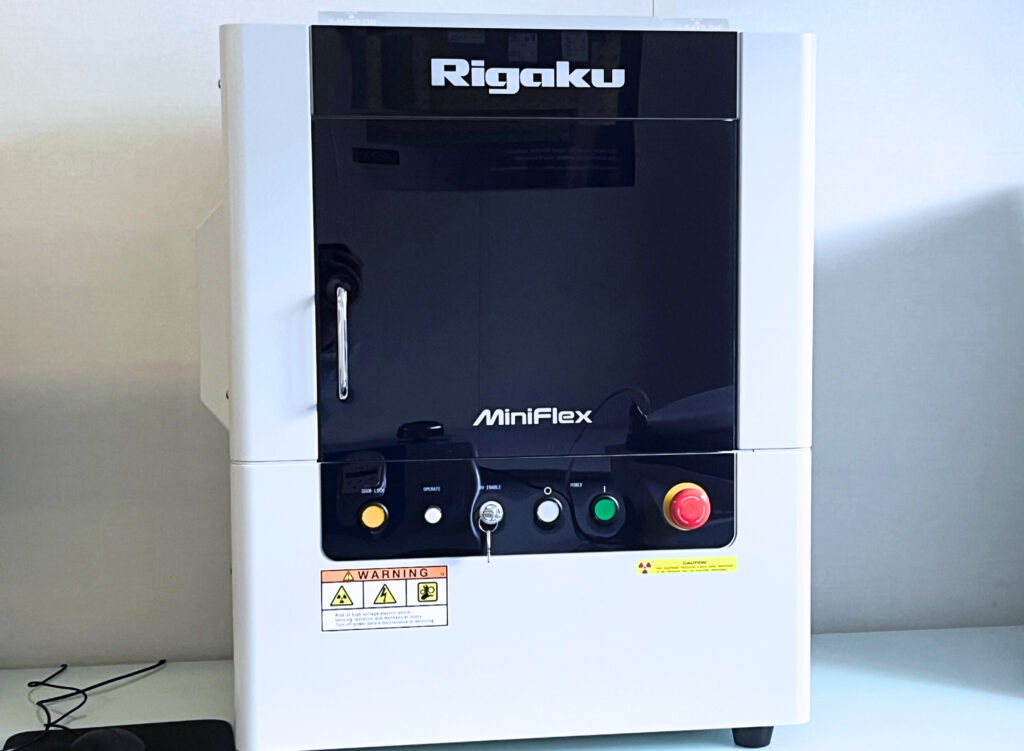
Understanding the importance of residual austenite measurement
Residual austenite is a key metallurgical component in many industrial applications, the amount of which within a material can significantly influence its mechanical properties and durability. This analysis applies only to hardened steels.
For manufacturers, measuring residual austeniteis not just a matter of complying with technical specifications; it is crucial to ensuring the performance and longevity of metal components.
ASTM E975-22 is a standard test method for measuring residual austenite by X-ray in steels. It applies to steels in which the ferrite and austenite crystallographic phases have a quasi-random orientation.
Techniques for quantifying residual austenite by X-ray diffraction (XRD) offer unmatched precision, making this method the preferred choice for in-depth analysis (over a few µm).
The principle of DRX in measuring residual austenite
X-ray diffraction analysis is a powerful analytical technique based on the phenomenon of X-ray diffraction by the atoms of a material.
When X-rays encounter the crystal structure of a sample, they are scattered at specific angles depending on the arrangement of atoms in the material. By measuring the intensities and angles of diffraction, it is possible to determine the crystal structure and phases present in the sample, including residual austenite.
The advantages of DRX compared to other methods
Unlike destructive methods, XRF is a non-invasive technique that preserves the integrity of the sample.
This feature is crucial when dealing with components in service or high-value parts. In addition, the DRX’s ability to detect low amounts of austenite makes it an invaluable tool for determining residual austenite in a wide range of materials.
Why quantify the residual austenite in your steel parts?
Residual austenite can be present in various industrial applications, such as automotive manufacturing, aerospace, and mechanical equipment.
For example, in stainless steels, the amount of residual austenite can influence the material’s resistance to corrosionand ductility. In metal alloys, it can affect magnetic properties and mechanical performance.
In conclusion: a strategic challenge for the industry
Quantifying residual austenite using XRD is becoming a strategic approach for manufacturers. They can rely on this technique to guarantee the quality and performance of their products, while optimizing their manufacturing processes. By quantifying residual austenite in their steels using XRD, companies gain a significant competitive advantage that is essential to their long-term viability.