

Issues and comprehensive analytical approach
The customer's initial request to optimize their product quickly evolved into a comprehensive assessment of packaging integrity, encompassing chemical composition, physical thickness, and electrochemical resistance.
Our laboratory has developed a comprehensive analysis protocol combining electrochemistry and materials characterization to answer the following questions:
- What is the minimum thickness that guarantees the absence of critical defects?
- Does contact with the opening tab (made of a different shade of aluminum) introduce a risk of galvanic coupling?
- How do the coating and metal behave after accelerated aging?
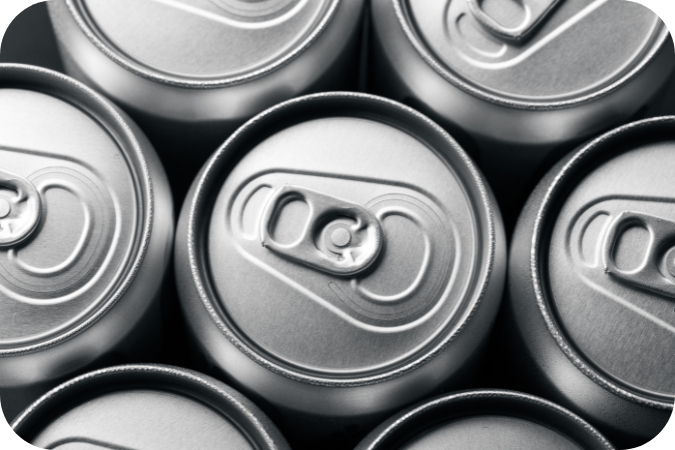
Materials and corrosion expertise services
Our laboratory has developed a comprehensive analysis protocol combining electrochemistry and material characterization to ensure packaging integrity.
To evaluate the integrity of the coating, the analysis began with electrochemical impedance spectroscopy (EIS). This non-destructive technique made it possible to measure the electrical impedance of the coating. A high-quality varnish acts as a perfect capacitor with very high impedance, while any drop in impedance reveals and quantifies microscopic defects and pores.
To understand the physical structure of the coating, we performed micrographing and metallography, allowing us to accurately measure the thickness of the varnish and characterize the metal phases of the can. The corrosion rate (LSV) was measured to establish the kinetics of degradation of the bare metal. This data was supplemented by accelerated aging tests using salt spray (BSN) simulating storage conditions to predict the product's lifespan.

The analysis then focused on electrochemical interactions. Knowing that the pull tab is often a different color from the body of the can, we studied galvanic coupling. This measurement made it possible to quantify the corrosion current that is created when these two metals come into contact in the presence of the beverage (the electrolyte), which poses a major risk to the integrity of the container.
Finally, for surface characterization and chemical analysis, several techniques were used.
- The ICP (Inductively Coupled Plasma) was used to verify the exact composition of the aluminum alloy.
- The SEM (Scanning Electron Microscope), coupled with XPS (X-ray Photoelectron Spectroscopy), made it possible to analyze the chemical nature of the oxides formed on the surface.
- Finally, XRD (X-ray diffraction) identified the crystallographic phase of these oxides and any corrosion deposits, providing a complete picture of the degradation phenomena.


Laboratory specializing in analysis and expertise for industrial companies


