Glass or crystal? How can you tell the difference?
Is it glass? Is it crystal? What is the difference between glass and crystal? FILAB laboratory can answer all these questions and more.
There are several ways to determine whether the raw material or finished product is crystal or glass. However, the most reliable method is to examine its composition.
How can you tell crystal from glass and vice versa?
What is the composition of the crystal?
First of all, what is the composition of crystal? It consists mainly of silica, potash, and especially lead.
To be considered "crystal" and thus bear this name, the piece must contain at least 24% lead. This is what is known as lead crystal. In addition, the glass must have a refractive index equal to or greater than 1.545.
Lead is part of the heavy metal family and has a number of advantages, including:
- increased transparency and brilliance through an increase in the refractive index.
- the material is more flexible, which facilitates cold working of the part
What is the composition of glass?
As for glass, it does not contain lead in its composition. The most common type is soda-lime glass, which is composed of silica (SiO2), calcium, and sodium, generally added during manufacture in the form of CaO and Na2O.
The FILAB laboratory helps you differentiate between glass and crystal by studying its composition.
For the FILAB laboratory, it is easy to differentiate between the two materials.
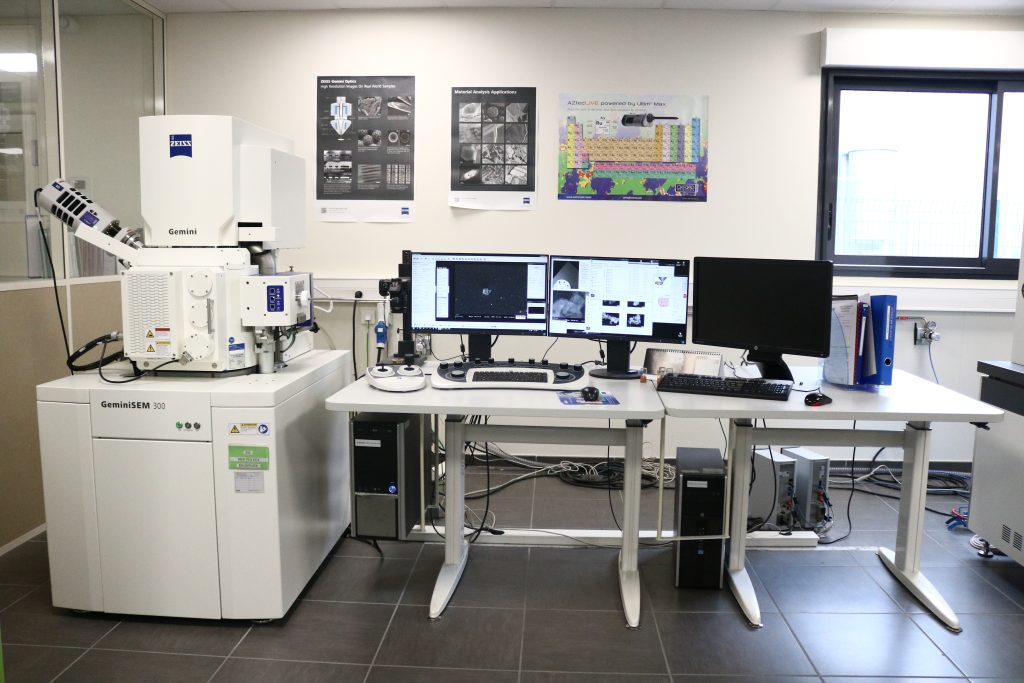
In fact, a semi-quantitative SEM-EDX analysis of the composition of a glass fragment can provide a very good estimate of its composition.
If there is no lead present, then it is conventional glass. If there is a significant amount of lead (more than 24%), then the material can be called crystal.
Also, note that high-quality crystal can contain up to 31% lead.