Case study

Optimization of the coating of a can

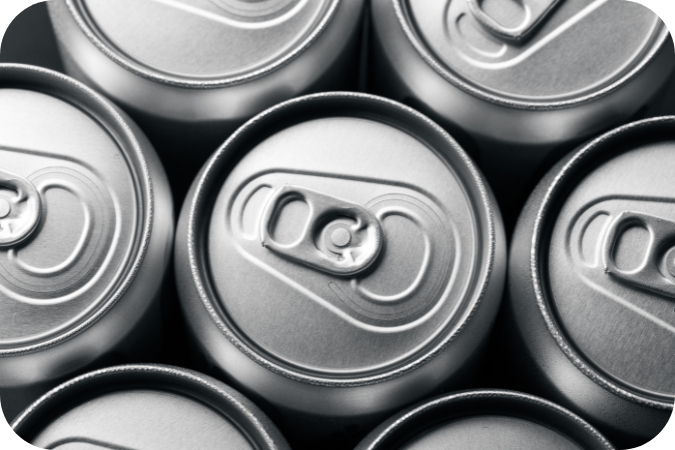
One of our clients wants expertise and optimization of the coating used on the cans it uses to market its beverages.
Accueil Blog Optimization of the coating of a can

The problem?

A beverage manufacturer uses aluminum cans coated internally with a polymer varnish to protect the contents (a carbonated beverage) from the aluminum and prevent any chemical interaction or metallic taste.

The customer approached FILAB because it is committed to continuous improvement and is seeking to optimize the thickness of this coating. Insufficient coating creates defects (pores, discontinuities) and risks of premature corrosion. Conversely, excessive coating represents a costly waste of raw materials.

To address this issue, FILAB developed a comprehensive assessment of the integrity of the packaging, including its chemical composition, physical thickness, and electrochemical resistance.

Summary

01
Issues and comprehensive analytical approach
02
Materials and corrosion expertise services
03
Conclusion of the study
01

Issues and comprehensive analytical approach


The customer's initial request to optimize their product quickly evolved into a comprehensive assessment of packaging integrity, encompassing chemical composition, physical thickness, and electrochemical resistance.

Our laboratory has developed a comprehensive analysis protocol combining electrochemistry and materials characterization to answer the following questions:

  • What is the minimum thickness that guarantees the absence of critical defects?
  • Does contact with the opening tab (made of a different shade of aluminum) introduce a risk of galvanic coupling?
  • How do the coating and metal behave after accelerated aging?
02

Materials and corrosion expertise services

Our laboratory has developed a comprehensive analysis protocol combining electrochemistry and material characterization to ensure packaging integrity.

To evaluate the integrity of the coating, the analysis began with electrochemical impedance spectroscopy (EIS). This non-destructive technique made it possible to measure the electrical impedance of the coating. A high-quality varnish acts as a perfect capacitor with very high impedance, while any drop in impedance reveals and quantifies microscopic defects and pores.

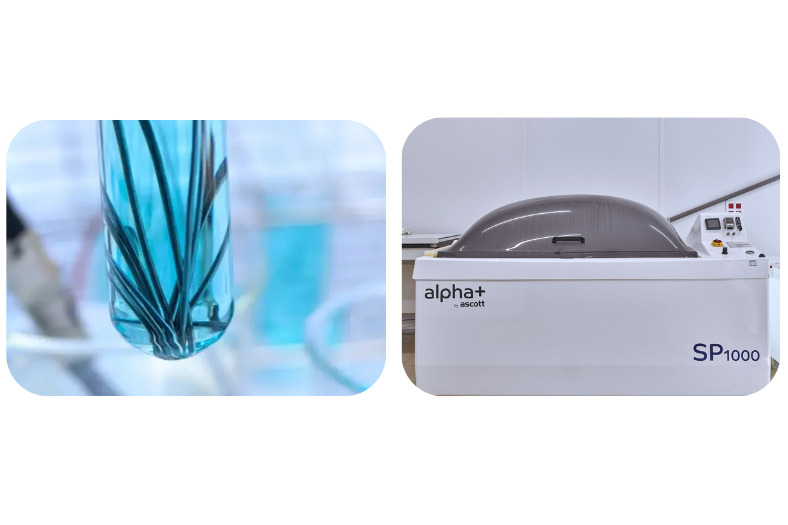
To understand the physical structure of the coating, we performed micrographing and metallography, allowing us to accurately measure the thickness of the varnish and characterize the metal phases of the can. The corrosion rate (LSV) was measured to establish the kinetics of degradation of the bare metal. This data was supplemented by accelerated aging tests using salt spray (BSN) simulating storage conditions to predict the product's lifespan.
The analysis then focused on electrochemical interactions. Knowing that the pull tab is often a different color from the body of the can, we studied galvanic coupling. This measurement made it possible to quantify the corrosion current that is created when these two metals come into contact in the presence of the beverage (the electrolyte), which poses a major risk to the integrity of the container.

Finally, for surface characterization and chemical analysis, several techniques were used.

- The ICP (Inductively Coupled Plasma) was used to verify the exact composition of the aluminum alloy.

- The SEM (Scanning Electron Microscope), coupled with XPS (X-ray Photoelectron Spectroscopy), made it possible to analyze the chemical nature of the oxides formed on the surface.

- Finally, XRD (X-ray diffraction) identified the crystallographic phase of these oxides and any corrosion deposits, providing a complete picture of the degradation phenomena.

03

Conclusion of the stud

Thanks to an integrated approach combining electrochemistry (EIS, galvanic coupling) and material characterization (micrography, ICP, XRD), the laboratory was able to accurately map the integrity of the coating and metal assembly.

The study by EIS was essential, as it enabled the parameters of the coating process to be correlated with the presence of invisible defects (pores), leading to the identification of the optimal settings. This optimization generated substantial savings in raw materials while ensuring continuous protection.

More importantly, the expertise validated two fundamental points: the absence of critical defects in the varnish and the elimination of risks of chemical interaction or galvanic coupling between the can and the pull tab.

Need help? Contact our team

Other studies that may be of interest to you

Rouging phenomenon

With its excellent properties, stainless steel has become indispensable in many fields: everyday objects, medicine, surgery, automotive, aeronautics, mechanical industries, etc. However, many industrial stainless steel installations are affected by the phenomenon of rouging. Find out more

Fracture facies study

Inspect a broken metal anchor to identify the cause of the failure. Find out more

Yellowing of silicone

Silicones are now widely used in various fields thanks to their remarkable physical and chemical properties, such as excellent thermal stability, high resistance to oxidation and hydrolysis, and excellent gas permeability. Find out more

Services associated with the case study

Electrochemical tests

Impedance measurement in laboratory – electrochemical test

Galvanic coupling testing - Electrochemical testing

Free potential measurement (OCV) in laboratory – electrochemical testing

Laboratory specializing in analysis and expertise for industrial companies

More than 140 people
More than 140 people at your service
5200 m² laboratory
5200 m² laboratory + 99% of services are provided in-house
Accredited laboratory
Accredited laboratory COFRAC ISO 17025
+2200 clients
+2200 clients in France and abroad

Contact us

Our services are reserved for professionals.