Analysis and characterization of mRNA in the laboratory

Biopharmaceutical services Large molecule characterization
More than 140 people
More than 140 people at your service
5200 m² laboratory
5200 m² laboratory + 99% of services are provided in-house
Accredited laboratory
Accredited laboratory COFRAC ISO 17025
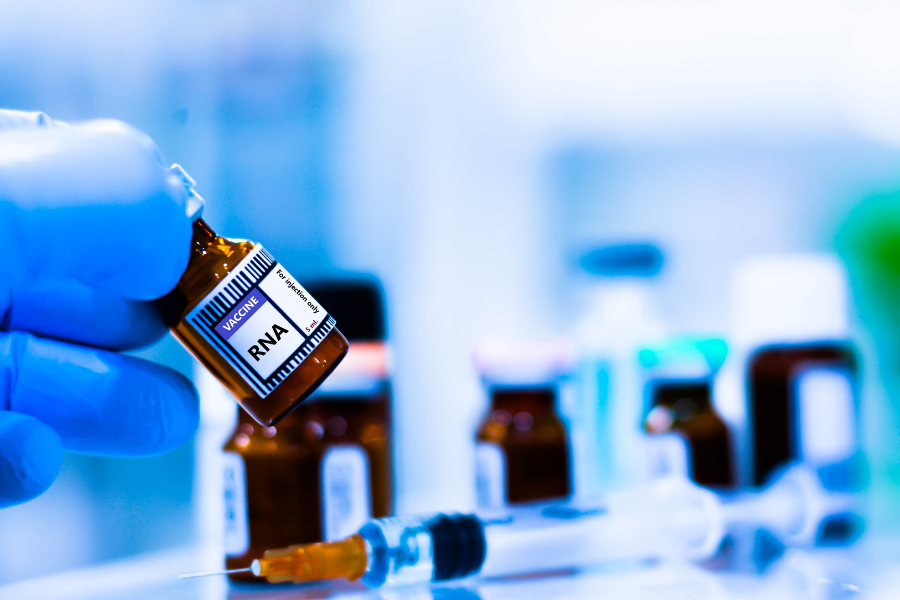
Are you looking to analyse and characterize your mRNA molecules?

What is the analysis and characterisation of messenger ribonucleic acid (mRNA)?

mRNA characterization involves a thorough analysis of its sequence, purity, and structural integrity. This process also includes identifying impurities that may arise from transcription, degradation, or residual components from the manufacturing process, as well as validating chemical modifications (such as 5’ capping, polyadenylation, and nucleoside modifications) that enhance mRNA stability and translation efficiency.

Commonly used techniques for these analyses include mass spectrometry (LC-MS), liquid chromatography (HPLC), and capillary electrophoresis (CE). Additional attention is given to mRNA secondary structure, immunogenicity, and degradation patterns, which are crucial for its effectiveness in therapeutic applications.

Our solutions for mRNA analysis and characterization

Why choose FILAB?

At FILAB, we offer comprehensive analytical services tailored to the specific requirements of mRNA products. With extensive expertise in RNA technologies, we support you in the development, validation, and quality control of your mRNA molecules in compliance with regulatory guidelines.

We provide customized solutions at every stage of the development process, from mRNA synthesis to production, ensuring that critical quality attributes are met for optimal therapeutic outcomes.

Our technical resources

Mass spectrometry (LC-MS)

Liquid chromatography (UPLC)

Nanopore

Fluorometer

mRNA analysis and characterization services

Sequence and structural characterization:

Sequence analysis by LC-MS/MS

Analysis of truncated or degraded mRNA products

Primary sequence: de novo sequencing

Secondary and tertiary structure: circular dichroism (CD)

Verification of modifications (5’ cap, poly(A) tail length, nucleoside modifications)

Primary sequence: peptide mapping

Determination of intact mass: molecular mass by HRMS and SEC-triple detection (LALS-RALS/UV/RI)

Glycosylation: monosaccharides, glycosylation and carbohydrate structure

Physicochemical property characterization

we provide detailed data on the molecular weight, size, and structural stability of mRNA :

Molecular weight and size (LC-MS, SEC)

Secondary structure analysis (circular dichroism, UV/Vis spectroscopy)

Solubility: critical concentration and stability in solution

Chromatographic profile (HPLC) : characteristic liquid fingerprint by IEX or SEC

Measurement of isoelectric point (pl): net charge of the protein

Thermal stability: melting temperature by DSC

Impurity identification and quantification :

Residual process-related impurities (HPLC, LC-MS)

Analysis of degradation products (enzymatic or chemical)

Elemental impurity analysis (ICH Q3D, USP 233)

Analysis of solvent residues and culture medium (cell culture): measurement of residual amino acids, vitamins and saccharides

By-products from transcription reactions (cap analogs, incomplete poly(A) tails)

Characterisation of purity and heterogeneity

Quantification of aggregates

Identification and quantification of PTMs

Load variant analysis

Etude des fragments : formes réduites (HC, LC, Fab, Fc)

We also ensure compliance with ICH and USP standards, offering specific tests to assess the presence of elemental impurities, residual solvents, and other contaminants. Our services include stability testing and the evaluation of immunogenicity potential, essential for ensuring the safety of mRNA products.

Our FAQ

Why analyse and characterise messenger ribonucleic acid (mRNA)?

The analysis and characterization of messenger RNA (mRNA) are critical steps in ensuring the quality, efficacy, and safety of mRNA-based therapeutics, such as vaccines and gene therapies. mRNA-based technologies have gained significant attention due to their role in the development of vaccines and therapeutics for various diseases, including COVID-19. The production of mRNA requires precise control over its synthesis, sequence, and structure to ensure optimal performance in biological systems.

How to get a quote ?

To get a quote, you can contact our teams via our contact form, by telephone or by e-mail.
Simply send us your requirements (type of material, desired analysis, any standards, urgency, quantity of samples, etc.). We will then send you a personalised technical and price proposal within 24-48 hours.

How long do analysis typically take?

Turnaround times vary depending on the nature of the analysis and the complexity of the assessment project.
However, FILAB is committed to providing fast turnaround times tailored to your industrial constraints and urgent needs.

The filab advantages
A highly qualified team
Responsiveness in responding to and processing requests
A COFRAC ISO 17025 accredited laboratory
(Staves available on www.cofrac.com - Accreditation number: 1-1793)
A complete analytical facility of 5,200m²
Tailor-made support
Tailor-made support
Video debriefing available with the expert
Anaïs DECAUX Customer Support Manager
Ask for your quote