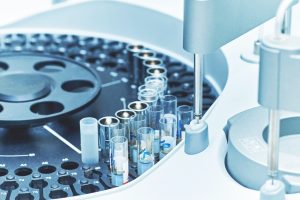
Analytical validation of an HPLC assay method
Whether you are looking to optimize your existing products, launch new products, or comply with regulatory changes, analytical validation of HPLC dosage methods allows you to perform analysis specific to your matrices.
Why perform analytical validation of a dosage method?
Regardless of your field of activity, analytical validation consists of guaranteeing the performance of an analytical method by examining it and providing objective evidence with regard to the expected use of the product. It also makes it possible to estimate measurement uncertainties. Regardless of the analytical method, here are the main criteria to consider when validating an analytical method:
At FILAB, we now offer customized analytical validation services and can assist you with setting up method validation studies and statistical calculations.
What are the existing standards for analytical validation of an HPLC assay method in the laboratory?
Many available guidelines address the validation of analytical methods and acceptance criteria:
ISO 17025: General requirements for the competence of testing and calibration laboratories
ISO 5725-2:1994: Accuracy (trueness and precision) of measurement results and methods — Part 2: Basic method for determining the repeatability and reproducibility of a standardized measurement method
ICH Q2 (R1) : Validation of analtycal procedures : text and methodology
Citac/Eurachem Guide: Guide to Quality in Analytical Chemistry
ISO 5725-1:1994: Accuracy (trueness and precision) of measurement results and methods — Part 1: General principles and definitions
FDA Guidance for Industry (July 2015): Analytical Procedures and Methods Validation for Drugs and Biologics
NF V03-110 May 2010: Analysis of agricultural and food products – Characterization protocol for the validation of a quantitative analysis method by constructing an accuracy profile
Analytical validation guide: report by an SFSTP commission – I: methodology.
HPLC, the leading analytical technique for the analytical validation of a dosage method
High-performance liquid chromatography (HPLC) is an analytical technique used to separate, identify, and quantify compounds in a solution. In short, this method allows molecules to be separated based on their physicochemical characteristics.
HPLC analysis uses a chromatographic column filled with stationary particles, which are separated from each other by a liquid mobile phase. Your samples are injected into the HPLC system and moved through the column under the influence of the mobile phase. This technique is based on the separation of molecules according to their size, polarity, or affinity for the stationary phase. It is widely used in the chemical, medical, and food industries to identify compounds accurately and reliably.
Other analytical validation methods available at FILAB
The FILAB laboratory offers its clients analytical validation services for HPLC assay methods.