Mineralogical laboratory analysis
As a manufacturer, you want to carry out a mineralogical analysis of your finished products or raw materials
What is mineralogy?
Mineralogy is a multidisciplinary science that deals with minerals, their identification, characterisation and description. It focuses in particular on observing the physical properties of minerals: colour, hardness, transparency, fracture, density, chemical analysis and crystallography.
What is a mineralogical analysis?
Mineralogical analysis is the study of materials, aimed at determining the mineral composition and structure of samples. Mineralogical analysis is useful for identifying mineral types and understanding their properties.
Why carry out a mineralogical analysis?
A mineral deposit of unknown composition may appear on the surface of a material following contamination or physico-chemical modifications. Theappearance of a deposit on a material or in a formulation can lead to visual or functional production non-conformity (adhesion, roughness, wear).
Mineral analysis is therefore an essential step in the production/cleaning process. Characterisation of the chemical composition of a mineral deposit by a specialist laboratory such as FILAB will help you to define the actions required to eliminate it.
FILAB can help you with the mineralogical analysis of your samples
Through our three levels of services: analysis, expertise and R&D support, FILAB assists companies in all sectors and of all sizes with the mineralogical analysis of their finished products or raw materials.
For over 30 years, our FILAB laboratory has had the experience and specific analytical equipment to help manufacturers solve their problems by providing its customers with the know-how and experience of its team.
Our services and technical resources for mineralogical analysis
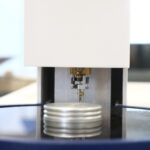
Thermogravimetric ATG, ATG-FTIR and ATG-MS analysis to determine the product's decomposition temperature and its percentage of mineral fillers
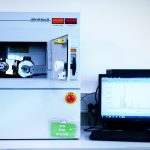
X-ray Diffraction (XRD) to determine the nature of the crystalline phase(s) making up the product's fillers.
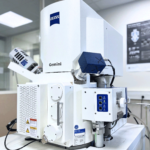
Scanning Electron Microscopy (SEM/EDX) is used to carry out morphological observations and local semi-quantitative chemical analyses on product fillers.
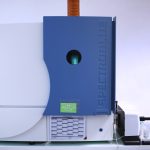
ICP-AES optical emission spectrometry to determine the chemical composition of mineral fillers


Our FAQ
To obtain a quote, you can contact our team via our contact form, by phone, or by email.
Simply tell us your requirements (type of material, desired analysis, applicable standards, urgency, quantity of samples, etc.). We will then send you a personalized technical and pricing proposal within 24-48 hours.
Les délais varient selon la nature de l’analyse et la complexité du projet d’expertise.
FILAB s’engage toutefois à fournir des délais rapides et adaptés à vos contraintes et urgences industrielles.
A mineral analysis laboratory specializes in identifying, characterizing and quantifying mineral phases in materials. It uses advanced analytical techniques to determine chemical composition, crystalline structure and morphology for industrial applications.
Mineral analysis is used to:
- Identify unknown mineral deposits
- Control raw material quality
- Investigate contamination issues
- Optimize industrial processes
- Ensure product compliance
Our mineral analysis laboratory can test a wide variety of samples. This includes raw mined ores, refined industrial minerals, metallic alloys, ceramics, construction materials, cosmetic powders, and unknown surface deposits. We adapt our mineral characterization methods to suit the specific matrix of your raw materials or finished products.
Thorough mineral characterization helps ensure that your raw materials meet strict purity specifications, prevents manufacturing defects, and optimizes the performance of your final product. Relying on specialized mineral expertise is crucial for identifying crystalline phases, structural properties, and trace elements that might negatively impact your production lines.
Yes. If you notice an unusual deposit, scaling, or contamination on your products or machinery, our mineral analysis lab can identify its exact chemical and structural composition. Using our deep mineral expertise, we not only identify the contaminant but can also help you determine its root cause so you can implement lasting corrective actions.
While chemical analysis determines the elemental makeup of a sample (e.g., how much iron or silicon is present), mineral analysis goes a step further by identifying how those elements are combined into specific crystalline structures or phases (e.g., identifying whether the silica is present as quartz or cristobalite). A comprehensive mineral laboratory uses a combination of both approaches (like ICP-AES for chemistry and XRD for structure) to provide a complete picture of the material.