Study of Extractables and Leachables (E&L) - Interview
Behind the analysis, the faces of FILAB expertise
Extractables and Leachables (E&L) study, what is it all about?
Hello, my name is Barbara Beauvais and I have been Head of the Organic Department at FILAB for three years now. Today, I wanted to talk to you about an analysis that we perform at FILAB and in which my team and I take a great deal of interest: the study of extractables and leachables in medical devices, pharmaceutical products, and cosmetics.
Hello Barbara, first of all, can you tell us what an extractable and releasable study involves?

An Extractables and Leachables study is used to verify the chemical compatibility of a medical device or packaging with its conditions of use or with the formula it contains. This type of study therefore serves a dual purpose. The first is to verify that the packaging or medical device does not contain any hazardous chemicals that could migrate into the formula or the final environment of the medical device. The second is to verify that the formula does not damage the packaging.
More specifically, to conduct an extractables study, a solvent is used that could simulate the formula contained in the packaging (fatty, aqueous, polar, non-polar solvent, etc.) or simulate the conditions of use of a medical device (e.g., NaCl water, polar or non-polar solvents that do not damage the medical device). The simulant is then placed in contact with the product under defined temperature and time conditions. The simulants are analyzed to identify and quantify the molecules that have migrated into the solvent.
For releasable substances, we track the molecules that have migrated into the formula directly, without simulating anything this time, and quantify them in the final formula.
Why do we conduct this type of study (E&L) and what kind of matrix does it apply to?
Primarily for the safety of the end consumer!
These studies can apply to medical devices (MDs), pharmaceutical products, and even cosmetics (for regulatory purposes).
With regard to matrices, these studies concern injectable products stored in bags, all types of invasive or non-invasive MDs, and any cosmetic or pharmaceutical formulation contained in a container, such as syrup.
In the context of an extractables and leachables study, all parts of the packaging are concerned. For example, for an infusion bag, it is not only the bag that is analyzed, but also the valve and the closure system.
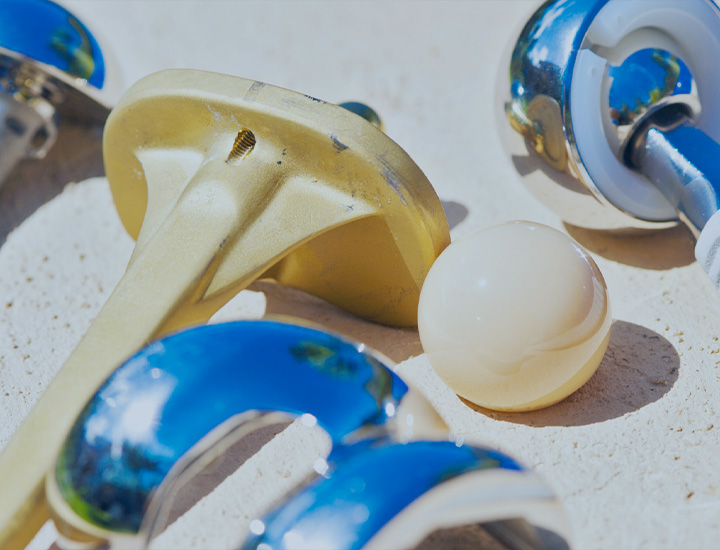
The purpose of this type of study is to enable a toxicologist to assess the chemical compatibility of a medical device or a formula/packaging combination.
Are there any standards for these E&L studies? What are they and what do they describe?
Yes, indeed, when it comes to extractables and leachables, different standards exist depending on the product matrix:
- For medical devices, these tests are governed by standards NF EN ISO 10993-18 (chemical risk assessment) and 10993-12 (sample preparation and reference conditions).
- For pharmaceuticals, USP 1663 and 1664, which address the risks of leaching from packaging materials in contact with pharmaceutical products, BPOG and the FDA regulate these studies.
- However, there are no standards for cosmetics; in practice, those for pharmaceuticals or medical devices are extrapolated.
Recently, USP 661.1 and 661.2, which aim to ensure the compliance of pharmaceutical packaging, have called for extractable and leachable analysis to be conducted in accordance with USP 1663 and USP 1664, based on a risk analysis.
The medical device and pharmaceutical industries are more regulated than the cosmetics industry in terms of reference texts. Unlike these industries, the cosmetics industry can rely on certificates from packaging suppliers.
In practical terms, how do you conduct this type of study and what technical resources are required?
This type of study is carried out in several stages.
- In the case of extractables, the first stage consists of preselecting four or five solvents, from which the solvent most similar to the formulation is selected. The aim is to select a solvent that resembles the content and does not damage the packaging or the medical device, as this could result in extraction rather than migration.
- Once this solvent has been identified, the second stage generally involves exhaustive extraction to define the storage conditions over a given period of time, which will enable the storage conditions (time and temperature) that reproduce the conditions of use of the product to be determined.
- In the third stage, the simulant is analyzed by chromatography to identify and quantify the organic molecules from the most volatile to the least volatile.
- In the fourth step, inorganic molecules are analyzed by ICP and ion chromatography to quantify the elementary particles.
Are there any accreditations for E&L?
The relevant accreditation is the 17025 accreditation issued by COFRAC, which we have at the FILAB laboratory for the application of medical devices.
What are the regulatory authorities?
There are notified bodies that assess the conformity of these chemical biocompatibility analysis of medical devices with a view to their marketing authorization.
In the United States, the FDA approves and audits extractables and leachables testing for medical devices.
In France, the ANSM (Agence Nationale de Sécurité du Médicament) is responsible for medical devices and the anti-fraud agency is responsible for cosmetics.
Thank you, Barbara, for these explanations and for sharing your experience in this area.