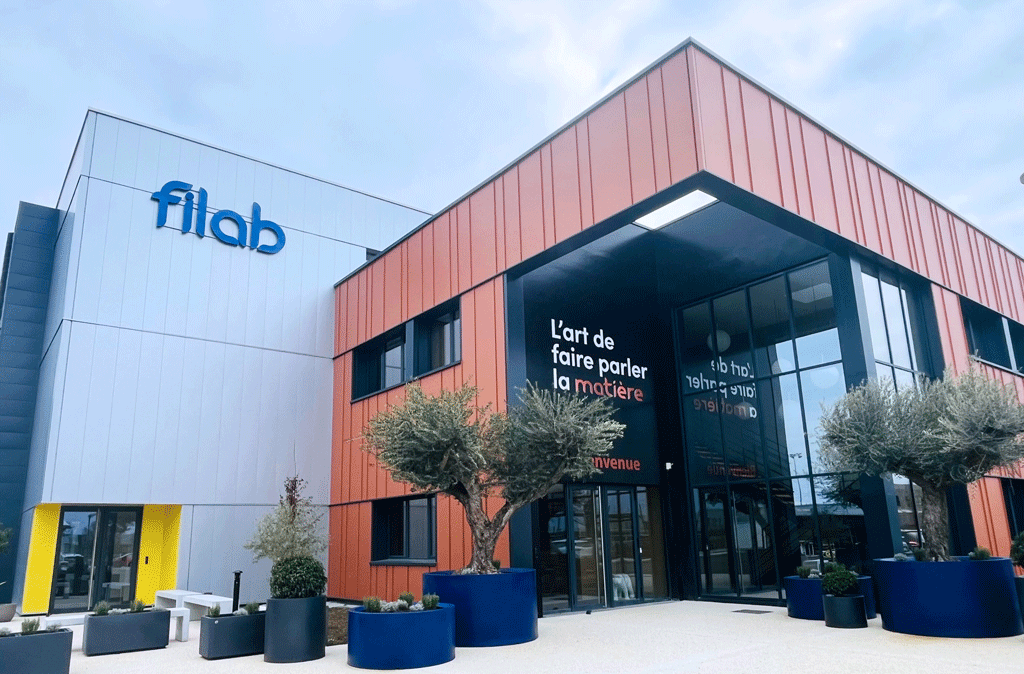
Electrochemical Characterization Analysis Laboratory

Chemical analysis Materials characterization R&D support
More than 140 people
More than 140 people at your service
5200 m² laboratory
5200 m² laboratory + 99% of services are provided in-house

Expert in characterization and diagnosis of corrosion, FILAB validates the compliance of your surface treatments through cutting-edge electrochemical analysis to secure your materials.

Would you like to carry out electrochemical characterization on your materials

What is electrochemical characterization?

Electrochemical characterization is an analytical method used to assess the electrical and chemical properties of materials.

This technique makes it possible to examine the response of a material when it is subjected to an electrochemical environment.

Electrochemical characterization can be applied to many industrial sectors, from aerospace to automotive and energy.

The FILAB laboratory supports you in carrying out electrochemical tests

Our electrochemical analysis services

Open circuit potential measurement (OCV) to assess the spontaneous electrochemical behavior of a metal in a given medium (water)

Galvanic coupling study to analyze the interactions between two metallic materials and identify the risks of differential corrosion (e.g., zinc vs steel)

Corrosion rate determination (LSV) to determine the corrosion rate (mm/year) in various environments (salt water, pure water, presence of inhibitors)

Electrochemical impedance measurement (EIS) to detect defects in protective coatings, assess layer homogeneity, and study surface corrosion phenomena (e.g., oxide formation).

Why choose FILAB for electrochemical characterization analysis?

With a team of engineers and PhDs specializing in metallic materials, the FILAB laboratory provides its knowledge and expertise to carry out electrochemical characterization analysis of your metal parts.

To support you in the best possible conditions, the FILAB laboratory is approved for Research Tax Credit (CIR) and accredited COFRAC ISO 17025.

Our technical resources

Cyclic voltammetry: study of oxidation and reduction reactions

Cyclic voltammetry is an electrochemical analysis technique used to study the oxidation and reduction mechanisms of materials.

It involves applying a variable voltage to an electrode while measuring the current generated, thereby revealing the chemical reactions that occur.

Electrochemical impedance: characterization of interfaces and material properties

Electrochemical impedance is a non-destructive method that analyzes the properties of interfaces between a material and its electrochemical environment.

By applying an alternating signal, it measures a system’s resistance and ability to conduct charge. It is particularly useful for assessing the stability of protective coatings and the durability of biomaterials, such as medical implants, by providing valuable insights into long-term mechanisms.

Polarization curves: determining the corrosion rate

Polarization curves are used to assess the corrosion resistance of materials.

By applying a controlled variation in voltage and measuring the corresponding current, this method makes it possible to determine the corrosion rate and identify the electrochemical reactions involved.

It is widely used to optimize material selection and anti-corrosion coatings in aggressive environments.

Recherche et développement

Anticipate corrosion phenomena before industrialization
Validate the resistance of materials and processes
Quickly determine the origin of observed corrosion
learn more

Rapid and accurate analysis of metal corrosion through electrochemical characterization

Electrolytic medium selected according to the intended application:

The most suitable electrolytic medium is selected for your application, whether for marine, industrial, or medical environments. This tailored approach ensures relevant and reliable results.

Obtaining a metal's corrosion current density values

Our advanced techniques allow us to measure the corrosion current density of your metals in less than an hour. The lower this density, the more resistant the metal is to corrosion, ensuring better performance and a longer service life.

Shifting the corrosion potential toward positive values (surface passivation):

Our electrochemical characterization analysis also make it possible to observe the shift in corrosion potential toward positive values, indicating surface passivation. This phenomenon is a clear sign of improved corrosion resistance of the material.

For which electrochemical environments?

The electrochemical interactions of materials occur in various natural or industrial environments:

Aqueous media, such as seawater, promote phenomena such as galvanic corrosion due to the presence of ions.

Aqueous media, such as seawater, promote phenomena such as galvanic corrosion due to the presence of ions.

Humid or polluted atmospheres, rich in moisture and pollutants such as salt or sulfur dioxide, also accelerate material degradation, especially in marine or industrial areas.

Humid or polluted atmospheres, rich in moisture and pollutants such as salt or sulfur dioxide, also accelerate material degradation, especially in marine or industrial areas.

Humid or polluted atmospheres, rich in moisture and pollutants such as salt or sulfur dioxide, also accelerate material degradation, especially in marine or industrial areas.

Acidic or alkaline media, with extreme pH, and high-temperature environments found in the chemical or petrochemical industries, intensify electrochemical reactions.

Acidic or alkaline media, with extreme pH, and high-temperature environments found in the chemical or petrochemical industries, intensify electrochemical reactions.

Finally, controlled electrochemical media, used in processes such as electrolysis or electroplating, illustrate the importance of anticipating these interactions to ensure the durability of materials under specific conditions.

Finally, controlled electrochemical media, used in processes such as electrolysis or electroplating, illustrate the importance of anticipating these interactions to ensure the durability of materials under specific conditions.

Finally, controlled electrochemical media, used in processes such as electrolysis or electroplating, illustrate the importance of anticipating these interactions to ensure the durability of materials under specific conditions.

Electrochemical interactions and their effects on materials

Analyzing the electrochemical interactions of materials makes it possible to master complex phenomena that influence their performance and durability.

For example, corrosion, which refers to the degradation of metals through electrochemical reactions (such as rust formation), is a major issue in the construction and aerospace sectors.

Conversely, some materials, such as aluminum, benefit from passivation, where a protective layer limits these reactions, providing increased resistance.

Redox reactions (reduction-oxidation) play a central role in energy technologies, while electrodeposition is widely used for metal plating and improving surface properties.

Discover our case study

For more information on electrochemistry, you can read our blog post on optimizing can coating

Learn more

FAQ

Why perform an electrochemical analysis?
  • Ensuring the durability and reliability of materials:
    Electrochemical analysis identifies degradation mechanisms, such as corrosion, and makes it possible to select or improve materials so they perform better under specific conditions.
  • Optimizing performance and reducing costs:
    This measurement also makes it possible to develop higher-performance materials (conductivity, resistance, protection) and prevent failures, thereby reducing costs related to maintenance, replacement, and downtime.
  • Encouraging innovation and compliance:
    With a better understanding of electrochemical reactions, manufacturers can design innovative solutions (alloys, coatings) while ensuring that products comply with current standards.
What are the electrochemical analysis methods?

Electrochemical analysis methods, such as cyclic voltammetry, make it possible to study oxidation and reduction reactions in materials for batteries, fuel cells, or catalysts. Electrochemical impedance is used to characterize interface properties, assess the performance of protective coatings, and test the durability of biomaterials. Finally, polarization curves are essential for analyzing the corrosion resistance of metals and alloys, as well as the electrochemical performance of electrodes and catalysts.

What are the applications of the electrochemical analyzer?
  • Corrosion: assessing the resistance of materials to corrosive environments.
  • Energy: testing the performance of batteries, supercapacitors, and fuel cells.
  • Protective coatings: analyzing the barrier properties of paints, varnishes, and other protective films.
  • Biomaterials: studying the biocompatibility and corrosion of medical implants.
  • Fundamental research: studying the mechanisms of electrochemical reactions, such as redox processes.
What is an electrochemical analyzer?

An electrochemical analyzer is a laboratory or industrial device used to measure and analyze the electrochemical properties of materials and systems. It generates, controls, and records electrical signals (current, voltage, impedance) to study chemical reactions and the phenomena occurring at the interface between a material (electrode) and an electrolyte.

Why measure electrochemical impedance in the laboratory?

Electrochemical impedance is an analysis used to measure the response of an electrochemical system when it is subjected to an electrical perturbation, such as an alternating current or voltage. 

It makes it possible to characterize the properties of the interfaces between a material and an electrolyte by evaluating parameters such as charge-transfer resistance and electrochemical capacitance. 

This method is widely used to diagnose material performance in electrochemical environments and understand reaction mechanisms.

Which materials are affected by electrochemical impedance?

Many materials are concerned by electrochemical impedance. Metals and alloys (steel, aluminum) are analyzed for their corrosion resistance, while battery materials (graphite, lithium oxides) are used to optimize their performance. Protective coatings (paints, varnishes) are evaluated to prevent degradation, and conductive polymers (PEDOT, polyaniline) are assessed for their conductivity and stability. Finally, biomaterials (titanium alloys) are studied for their biocorrosion. This versatility makes electrochemical impedance a key tool in energy, materials protection, and biomedical devices.

How do you analyze an electrochemical deposition bath?

The analysis of an electrochemical deposition bath is essential to ensure a uniform deposit, optimize process performance, and prevent defects that could compromise the quality and durability of the coating. It involves checking the chemical composition by controlling the concentrations of the metal ions responsible for deposition, the additives (levelers, inhibitors), and any impurities that could affect the process. Electrochemical properties are also measured to ensure precise control of the reactions. Finally, parameters such as pH, temperature, and bath conductivity are monitored to maintain stable and efficient conditions, reducing defects and improving coating durability.

How do you get a quote for electrochemical analysis?

Contact our experts for a quote within 24/48 hours. Our services are eligible for the Research Tax Credit (CIR) to optimize your R&D costs.

What are the rates and turnaround times for electrochemical analysis in the laboratory?

Our rates are tailored to the complexity of the study, with rapid protocols and an accredited expert report including a technical debrief with our engineers.

The filab advantages
A highly qualified team
Responsiveness in responding to and processing requests
A COFRAC ISO 17025 accredited laboratory
(Staves available on www.cofrac.com - Accreditation number: 1-1793)
A complete analytical facility of 5,200m²
Tailor-made support
Tailor-made support
Video debriefing available with the expert
Anaïs DECAUX Customer Support Manager
Ask for your quote