


"I used Filab for a chemical analysis. Very satisfied with the service. Responsive team, deadlines met, and a clear analysis report. I recommend them."
Corrosion analysis and expertise laboratory
Chemical analysis
Materials characterization
Problem solving

More than 140 people
at your service

5200 m² laboratory
+ 99% of services are provided in-house
Home • Analytical services • Expertise • Deposit or pollution • Corrosion analysis and expertise
At the FILAB laboratory, we provide comprehensive corrosion expertise to analyze, diagnose, and solve your corrosion problems on metal materials.
Your needs: carrying out corrosion expertise
The FILAB laboratory puts its corrosion expertise at your service to analyze, diagnose, and prevent degradation phenomena on your metal materials.
Thanks to our state-of-the-art equipment and specialized team, we support you in identifying the causes of corrosion and implementing solutions tailored to your industry.
Our corrosion analysis and expertise
Understanding and controlling corrosion from R&D to production
Support for your R&D: designing for durability
Anticipating corrosion phenomena before industrialization
- Electrochemical tests (measurement of open circuit potential (OCV), corrosion rate (LSV), electrochemical impedance
spectroscopy (EIS) and galvanic coupling) - Simulation of specific environments (seawater, extreme pH, inhibitors)
- Comparative studies of coatings, paints, surface treatments and literature review
- Associated techniques: Salt spray, Potentiostat, ICP, XRD (crystal structure), XPS (surface chemical analysis)
Corrosion control analysis
Validating the resistance of materials and processes
- Checking a part's resistance to corrosion (accelerated aging)
- Checking the uniformity of the surface treatment and analyzing coating thickness loss
- Quality monitoring and materials/processes compliance
- Electrochemical tests (measurement of open circuit potential - OCV, corrosion rate - LSV, electrochemical impedance
spectroscopy - EIS and galvanic coupling) - Associated techniques: Potentiostat, Salt spray, FE-SEM, SEM-EDX (morphology & composition), OM (micrographic
sections), XRD
Corrosion expertise and material selection advice
Quickly determining the origin of observed corrosion
- Study of the corrosion mode (pitting, crevice, galvanic...)
- Assessment of the degree of oxidation
- Detection of precursors (halogens, deposits, contamination)
- In-depth multi-scale expertise
- Associated techniques: FE-SEM-EDX (surface and deposits), ICP (trace element analysis),
XPS (surface chemistry), OM (metallographic observations)
Standardized tests for evaluating corrosion resistance
FILAB carries out tests according to recognized international standards:
- DTRF 150608 test: intergranular corrosion on stainless steels
- NF EN ISO 11846 - 1995 test: intergranular corrosion test on aluminum alloys
- ASTM A262-15 test: intergranular corrosion on stainless steels
- ISO 10289 test: corrosion of metallic and inorganic coatings on metallic substrates
- ISO 3651-1 tests : intergranular corrosion
- UN (Test C.1)
Our technical resources
To carry out corrosion analysis on your materials or parts, the FILAB laboratory uses various state-of-the-art analytical techniques:
Discover them all Our Accreditations – Client Qualifications

AIRBUS
Qualification
Corrosion expertise: a long-standing area of expertise at the FILAB laboratory
For more than 30 years, our FILAB laboratory has been putting its expertise and its state-of-the-art analytical equipment at the service of businesses, offering comprehensive corrosion expertise.
From analysis to in-depth study of corrosion phenomena, we support you with tailor-made solutions adapted to your industrial challenges.
We carry out detailed analysis of corrosive phenomena to identify:
- the extent of corrosive attack on your materials,
- the causes of the attack (aggressive environments, environmental factors),
- the physicochemical mechanisms behind the damage.
- identification of intergranular corrosion
Corrosion analysis and testing
Diagnosis and understanding of the corrosion phenomenon
This focus area aims to characterize the state of degradation and identify the source of the corrosion problem.
- Analysis of the degree of corrosion attack in the laboratory
- Determination of the causes of a corrosion phenomenon
- Analysis of corrosion onset
Characterization of mechanisms and triggering factors
These analysis make it possible to understand the physicochemical mechanisms and identify the factors that promote corrosion.
- Electrochemical analysis to characterize corrosion mechanisms
- Analysis of corrosion precursors (e.g., presence of halogens, contaminants)
Assessment of resistance and protection solutions
This section is dedicated to performance testing and validation of anti-corrosion strategies.
- Corrosion resistance tests such as salt spray tests
- Studies of the effectiveness of anti-corrosion systems: coatings, paints, surface treatments
Metals: materials sensitive to corrosion
Metals are widely used for their mechanical and electrical properties; however, they are sensitive to corrosion.
Corrosion occurs when metal is exposed to aggressive environments such as moisture, salts, and acids. This can lead to a deterioration in the properties of metals.
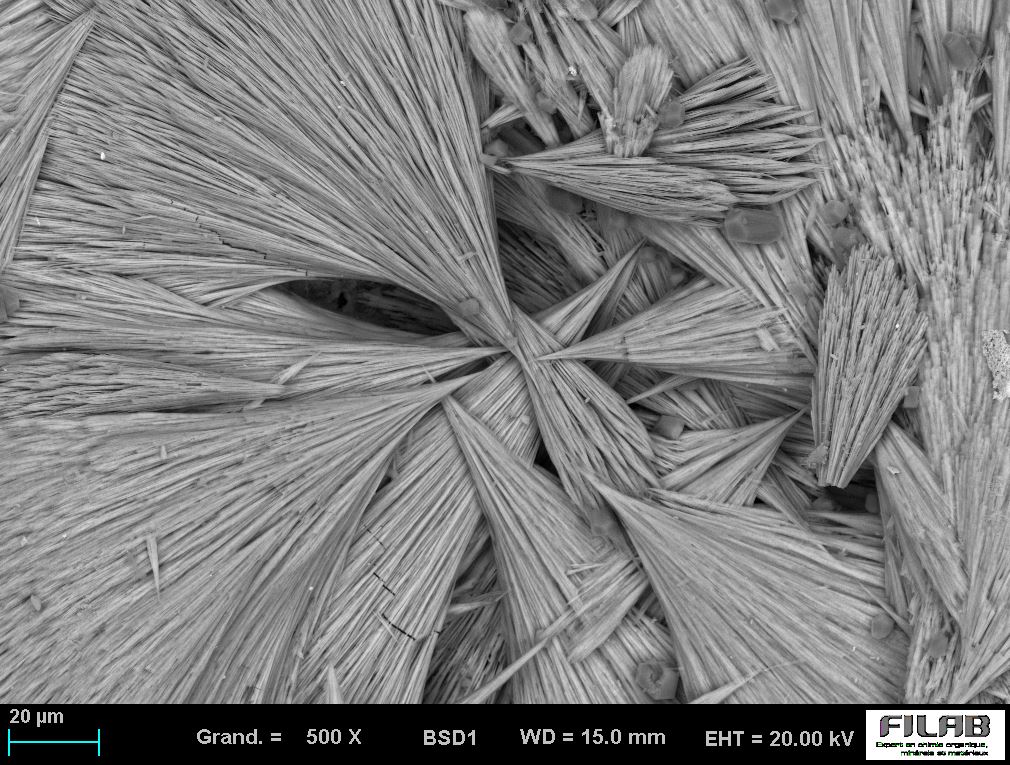
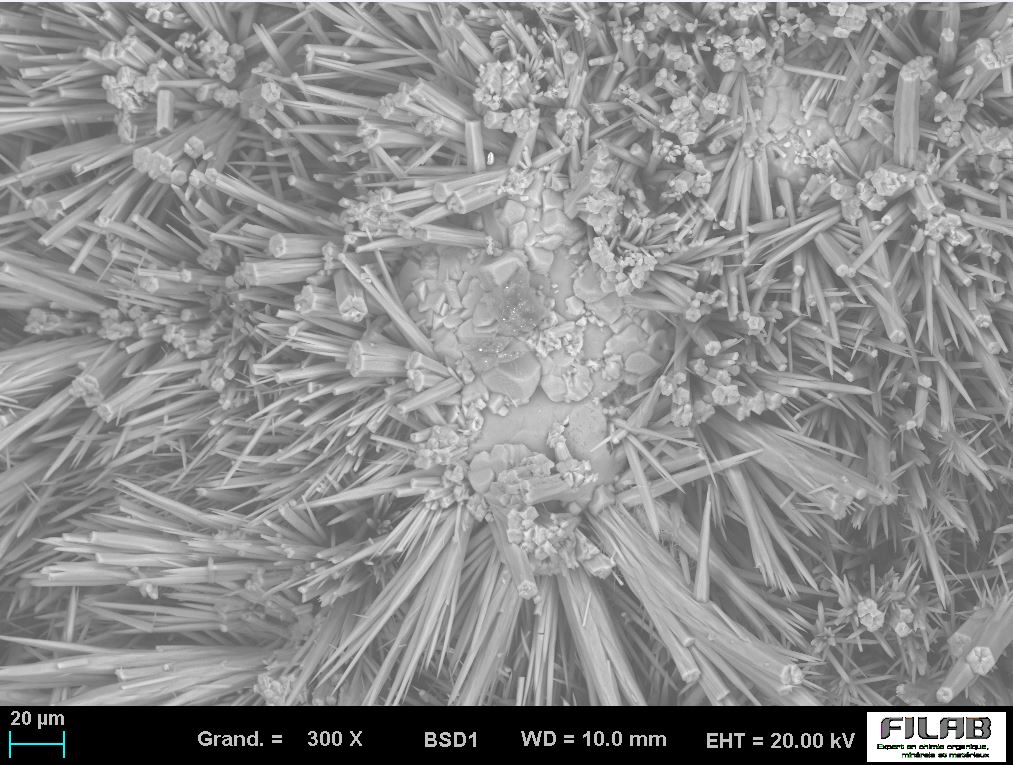
Oxide analysis by SEM: understanding corrosion mechanisms
Oxide analysis by scanning electron microscopy (SEM), combined with EDS spectroscopy, makes it possible to observe the morphology, composition, and layering of corrosion products on metal surfaces.
This technique is essential for identifying the types of oxides present, understanding the corrosion mechanisms at work, detecting any exogenous deposits, and evaluating the metal/oxide interface. It helps establish a reliable diagnosis, guide material selection, and improve the durability of parts exposed to aggressive environments.
Expertise, evidence and traceabilityUpdated: June 2026
Why trust the FILAB laboratory with your corrosion analysis and expertise?
Entrusting your corrosion analysis and expertise to the FILAB laboratory means relying on technical expertise, a documented quality framework, and expert interpretation of the results to support industrial, quality, or regulatory decisions.
Recognized accreditations
- ISO 17025
- Nadcap MTL
- SAFRAN
- FRAMATOME
- EDF
- DASSAULT AVIATION
- Aubert & Duval
- Airbus Defence & Space
- Liebherr
- FDA registered
An expert at your side
Expertise managers
Thomas Gautier, Clément Boenard and Thomas Rousseau support corrosion analysis and expertise projects.
Recognized accreditations
- ISO 17025
- Nadcap MTL
- SAFRAN
- FRAMATOME
- EDF
- DASSAULT AVIATION
- Aubert & Duval
- Airbus Defence & Space
- Liebherr
- FDA registered
An expert at your side
Expertise managers
Thomas Gautier, Clément Boenard and Thomas Rousseau support corrosion analysis and expertise projects.
Our approach in 4 steps:
- Discussion of your issue and constraints.
- Proposal of a suitable analytical protocol and a quote.
- Execution of the analysis and expert review of the results.
- Delivery of a detailed, actionable, and traceable report.
Verified reviews
What our clients say
N
Nicolas a.
12 May 2026
"Very responsive laboratory, with excellent analysis quality and deadlines met. Communication is smooth, the technical explanations are clear, and the team knows how to adapt to specific needs. I recommend them for their professionalism and reliability!"
5/5
C
Charlotte t.
8 May 2026
"Clear and precise deliverable, delivered on time. I recommend them."
5/5
Transparency & contactLast checked: June 2026
Where to find us and how to contact us
FILAB is a physical laboratory located in France, independent and accredited. All the contact details below allow you to verify our identity and submit your request.
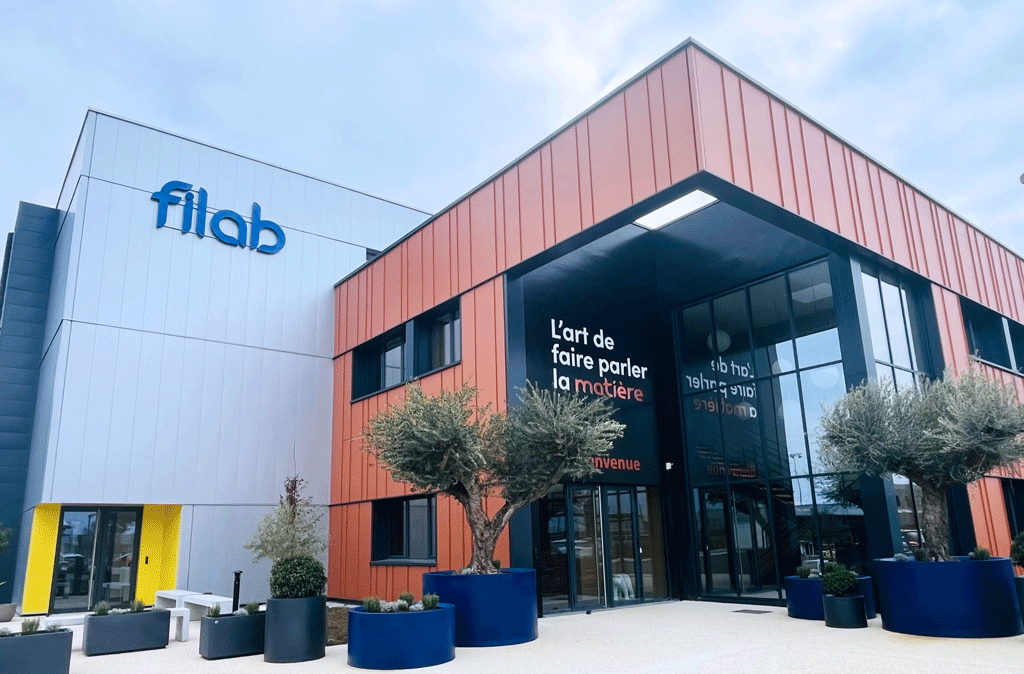
FILAB Laboratory
Ecoparc Dijon Bourgogne
80 rue Jean-Louis Auguste Petitjean
21850 Saint-Apollinaire, France
Tel. +33 (0)3 80 52 32 05
Our FAQ
What types of materials can be tested during a corrosion assessment in the laboratory?
A corrosion study in the laboratory can include different types of materials to be tested. Metals, such as steel, copper and aluminum, are frequently studied because they are often exposed to moisture and air. Metal products, such as galvanized steels and copper-nickel alloys, can also be evaluated for their corrosion resistance. Non-metallic materials, such as coatings, plastics and composites, can also be subjected to corrosion tests to assess their durability in the presence of corrosive liquids. In a corrosion study in the laboratory, various testing techniques can be used to mimic real-world conditions. This makes it possible to predict a material's service life in corrosive environments and plan accordingly.
How can corrosion on steel be prevented?
To prevent corrosion on steel, applying protective coatings such as paint, galvanizing or plating provides a physical barrier between the steel and corrosive agents. In addition, it is important to maintain a dry environment whenever possible, as moisture is a major factor in corrosion.
Using corrosion-resistant materials in harsh environments and designing structures that allow proper drainage also help prevent corrosion. Finally, regular monitoring, preventive maintenance and replacement of corroded parts are essential practices to ensure the durability of steel structures and parts.
What is a corrosion oxidation test?
A corrosion oxidation test is a specific test designed to assess a material's or coating's resistance to oxidation and corrosion by exposing the sample to severe environmental conditions. The purpose of this test is to simulate the real conditions to which the material will be exposed, especially when it is subjected to high temperatures and atmospheric oxygen. The corrosion oxidation test is commonly used to assess the durability of metallic materials and coatings in exposed environments.
What are the main types of corrosion?
Corrosion is a process that can affect various materials due to environmental and chemical factors.
List of the main causes of corrosion on materials:
- Electrochemical corrosion: This is the most common form of corrosion, where electrochemical reactions occur on the metal material due to water and ions present in the environment.
- Oxidation corrosion: Metals react with oxygen in the air to form metal oxides, which gradually weaken the material.
- Galvanic corrosion: This occurs when two different metals are in contact in a conductive environment.
- Pitting corrosion: This appears as the formation of small holes or pits on the surface of the material, often very localized.
- Stress corrosion: This occurs when mechanical stress is combined with corrosive conditions, which can lead to cracking and material failure.
- Microbiologically influenced corrosion: Bacteria, fungi and algae can colonize the surface of materials, producing corrosive chemicals.
- Contact corrosion: Exposure to corrosive chemicals such as acids or salts can cause rapid corrosion of materials.
It is important to take these corrosion factors into account when selecting materials and designing your parts, in order to minimize risks and ensure the durability of components and installations.
How does the FILAB laboratory ensure its corrosion expertise?
Our laboratory's expertise in corrosion analysis can be defined by several criteria that demonstrate our ability to provide accurate information on corrosion processes. Here are a few elements to consider when assessing our corrosion expertise :
> Certification and accreditation: FILAB meets high standards in technical competence and testing processes, in accordance with ISO and COFRAC standards.
> Equipment and technologies: Expertise in corrosion analysis relies in part on our state-of-the-art equipment and precise measurement technologies.
> Industry experience: The FILAB laboratory has experience in specific industries, enabling it to carry out tests and analysis for the aerospace, metallurgy, automotive, etc.
> Multiple services: we offer a range of corrosion analysis services, such as accelerated corrosion testing, material durability studies, corrosion-related failure analysis, and support for corrosion prevention and protection.
Why analyze corrosion problems in the laboratory?
A true industrial scourge, corrosion phenomena affect the reliability and strength of a metal product and its structure. The presence of corrosion can also raise health, safety or environmental concerns.
Understanding corrosion phenomena is a major challenge in the industrial sector. Failure analysis due to corrosion (leaks, breaks, adhesion problems, etc.) by a specialized laboratory will make it possible to identify the external causes affecting the material, so that your activity can be adapted with durable and reliable solutions.
What is corrosion expertise?
Corrosion expertise is an in-depth laboratory diagnosis carried out to identify the causes, mechanisms and impacts of a corrosion phenomenon on your materials.
What types of corrosion tests does FILAB offer?
We offer corrosion resistance tests (salt spray and other controlled environments), electrochemical tests and custom simulations according to your needs.
How can i get a quote for corrosion analysis?
To get a quote for corrosion analysis, fill in the web form to be contacted.
How long does it take to get a quote for corrosion analysis?
Quote within 24 to 48 hours
Why use a laboratory expert in corrosion?
A specialized laboratory makes it possible to obtain an accurate diagnosis, identify root causes, and define sustainable measures to prevent future corrosion problems.
FAQ - Industrial issues
How can corrosion expertise help identify a design flaw in the aerospace or mechanical engineering industry?
Corrosion expertise makes it possible to correlate the observed attack modes (pitting, galvanic corrosion, stress corrosion cracking) with the geometry of the parts, multi-material assemblies, and exposure conditions. Metallographic and electrochemical analysis highlights areas of stress concentration or unfavorable electrochemical couples.
Why is the presence of halogens critical in the electronics and microelectronics industries?
Halogens (chlorides, fluorides, bromides) promote highly aggressive localized corrosion mechanisms on copper alloys and thin metals. Their detection makes it possible to identify contamination from processes, fluxes, or storage environments that can lead to premature functional failures.
Why are electrochemical analysis decisive for the chemical and petrochemical industries?
Why are electrochemical analysis critical for the chemical and petrochemical industries?
How are corrosion resistance tests used in the automotive industry?
Corrosion resistance tests, such as salt spray testing, make it possible to assess the resistance of materials, assemblies, and coatings in severe corrosive environments. They are used to compare different protection solutions and validate material choices before industrialization.
Why carry out an investigation into the onset of corrosion in the surface treatment industry?
An investigation into the onset of corrosion makes it possible to determine whether the phenomenon is linked to a surface preparation defect, a coating/substrate incompatibility, or post-treatment degradation. It relies on the analysis of interfaces, adhesion, and the continuity of protective layers.
What is a corrosion phenomenon?
Corrosion is a chemical or electrochemical degradation phenomenon affecting metallic materials in contact with their environment (air, water, chemicals, humidity, etc.).
It can appear as pitting, cracking, material loss, or delamination of metal surfaces.
A thorough analysis of these corrosion phenomena makes it possible to prevent failures and ensure the durability of parts and structures.
The filab advantages

A highly qualified team

Responsiveness in responding to and processing requests

A COFRAC ISO 17025 accredited laboratory
(Staves available on www.cofrac.com - Accreditation number: 1-1793)

A complete analytical facility of 5,200m²

Tailor-made support

Video debriefing available with the expert


Ask for your quote