

The amazing power of hyaluronic acid
Author: Benoît Persin

A molecule naturally present in many tissues (skin, eyes, joints, etc.), hyaluronic acid has beneficial properties for the human body. It is capable of retaining large amounts of water, which makes it useful for maintaining skin hydration. It can also help lubricate joints, protect the eyes, and promote wound healing.
What are the specific characteristics of hyaluronic acid?
Hyaluronic acid is a polysaccharide commonly used in cosmetic medicine to reduce wrinkles and fine lines, increase lip volume, and improve skin texture. It is also used in orthopedic medicine to treat joint problems, such as osteoarthritis.
Hyaluronic acid has several specific characteristics that distinguish it from other substances:
- Elasticity: it can help maintain the elasticity of the epidermis and tissues by allowing cells to expand and contract.
- Water retention capacity: this molecule can retain large amounts of water, up to a thousand times its own weight.
- Lubrication: it can act as a lubricant for the joints, reducing friction and joint pain.
- Biocompatibility: this sugar is a substance that occurs naturally in our bodies, so it is well tolerated by the body and does not cause allergic reactions.
- Degradability: it is naturally broken down by enzymes in our bodies, allowing it to be easily eliminated.
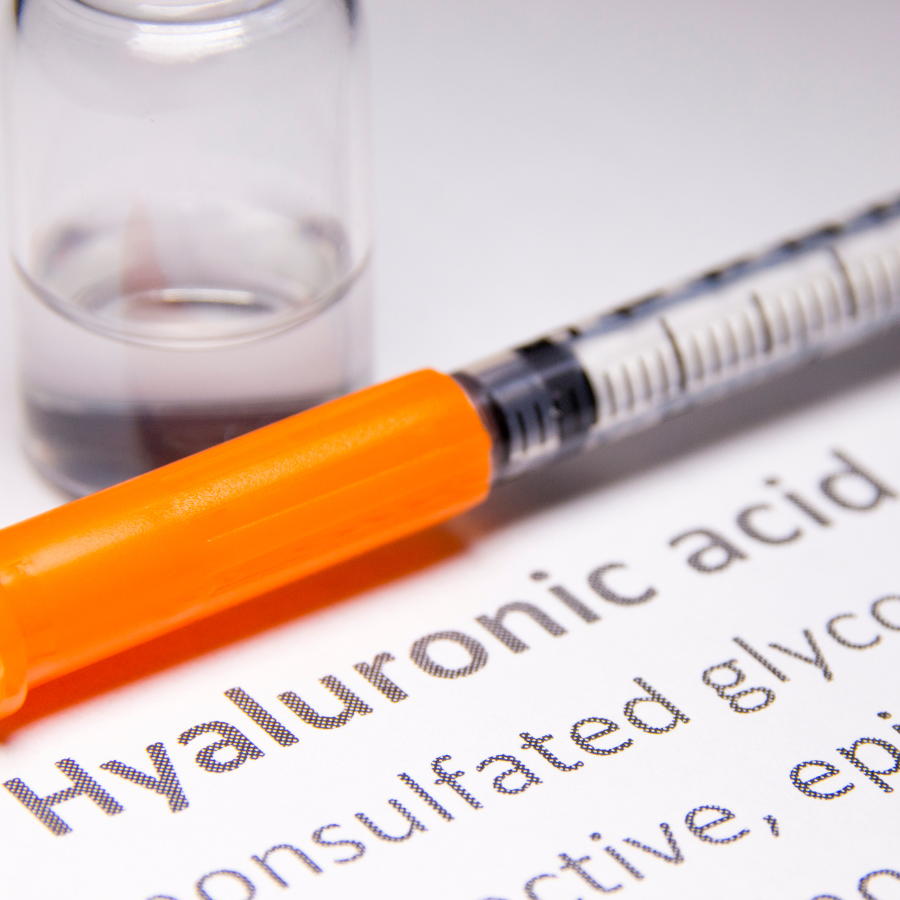
Hyaluronic acid is used in a wide variety of products, such as skin care products (cosmetics and dermo-cosmetics), fillers, and orthopedic products (medical devices).
The quality and concentration of hyaluronic acid vary considerably depending on the type of product and application.
Understanding the mechanisms of hyaluronic acid and its physicochemical characteristics:
For this reason, it is important to have a good understanding of the mechanisms of this molecule and its physicochemical characteristics, for example:
- Purity: determination of profile, verification of the presence of organic or mineral impurities, additives that could potentially cause an allergic reaction or inflammation
- Concentration: the product must contain a sufficient concentration to produce the desired effects. However, this concentration must not be too high in order to avoid undesirable side effects.
- Molecular weight (or molar mass): this can affect its ability to penetrate the skin and work effectively. Products containing high molecular weight hyaluronic acid may be more suitable for treating superficial wrinkles, while those containing low molecular weight hyaluronic acid may be more effective at penetrating the skin and providing deep hydration.
Cross-linked or non-cross-linked?
In some cases, hyaluronic acid can be cross-linked, i.e., chemically modified to increase its viscosity and lifespan in the human body. Cross-linking involves connecting several chains of the molecule to form a 3D structure. This makes it more stable and less prone to degradation in the body, allowing it to last longer and have a more lasting effect.
Cross-linked hyaluronic acid is commonly used in cosmetic medicine for injections to fill wrinkles and skin folds. Fillers containing cross-linked hyaluronic acid are more suitable for long-term treatments because they break down more slowly in the body than non-cross-linked products.
There are different levels of cross-linking, which can affect the viscosity and density of cross-linked hyaluronic acid. Fillers with higher cross-linking are denser and more suitable for treating deep wrinkles, while those with lower cross-linking may be more suitable for more delicate areas of the face, such as the lips or under-eye circles.
There are several chemicals used to cross-link hyaluronic acid. For example:
- 1,4-Butanediol diglycidyl ether (BDDE): this is the most commonly used cross-linking agent for hyaluronic acid.
- Divinyl sulfone (DVS): this cross-linking agent is also used to cross-link hyaluronic acid…
How can hyaluronic acid-based products be characterized and analyzed?
Depending on requirements and applications, numerous analysis methods and techniques can be used to characterize a hyaluronic acid-based product:
ANALYSIS
- AH dosage by SEC/GPC chromatography
- Dosage of BDDE (1,4-butanediol diglycidyl ether)
- Analysis of anesthetics: Lidocaine hydrochloride and its impurities, Mepivacaine, etc.
- Identification and quantification of impurities: ICH Q3D, ICH Q3C, degradation products, etc.
- Analysis of active ingredients according to the European Pharmacopoeia
- Determination of material purity
CHARACTERIZATION
- Molecular weight measurement
- Identification of particulate contaminants
- Particle counting according to PE 2.9.19 and USP 788/789
- Measurement of viscosity and viscoelastic properties
- Determination of heat capacity by DSC
- Physicochemical properties: pH, osmolarity, surface tension, etc.
SUPPORT R&D
- Analytical development and method validation according to ICH Q2
- Degradation study: enzymatic…
- Determination of the crosslinking rate
- Removable and releasable
- Stability study

Benoît PERSIN
Sales Director
contact@filab.fr
03 80 52 32 05