

Determination of steel grade
What analysis techniques did the FILAB laboratory decide to use to perform the chemical analysis of the faulty piston?
Analysis by elemental analyzer
The purpose of chemical analysis by C/S elemental analyzer is to specifically determine the carbon and sulfur content of the sample.
Analysis by ICP-AES
Analysis by Inductively Coupled Plasma Atomic Emission Spectroscopy (ICP-AES) is used to identify and quantify the chemical elements present in the sample.
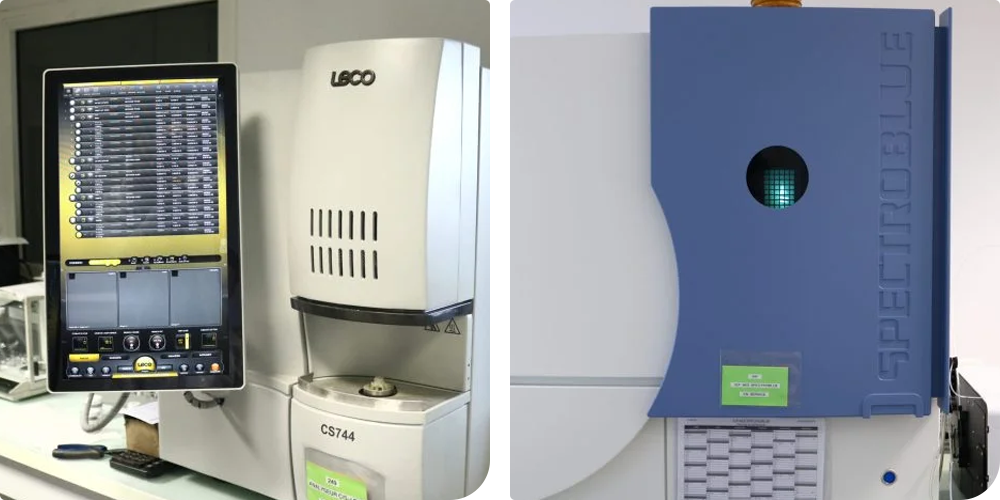
These chemical analysis of the piston have shown that the contents obtained are consistent with those of non-alloy structural steel.
Fractographic analysis of the piston
Observation with a binocular magnifying glass
The binocular magnifying glass technique allows macroscopic observations to be made. Observations made with a binocular magnifying glass have yielded the following information:
- The fracture initiation zone follows part of the circumference of the part and is a few millimeters thick.
- Most of the fracture surface has a shiny, grainy appearance with propagation lines and relief features. Dark areas are present and may correspond to contamination or corrosion that appeared after the part broke. A few areas of matting (areas deformed by impact after the break) are also present in small numbers.
- The end of the tear zone was observed. It follows the perimeter of the part over a small portion.
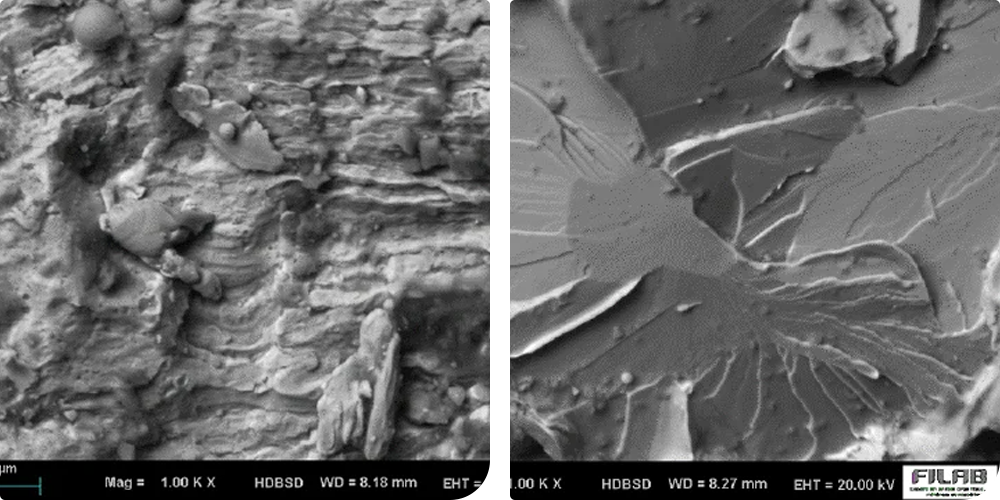
Detailed observations using SEM-EDX
- Micro-striations were identified in the fracture initiation zone. These may have been caused by fatigue in the part. This part of the fracture surface is rich in carbon (C), but this concentration is probably due to organic contamination on the surface
- The majority of the fracture surface corresponds to a transgranular brittle fracture with the presence of cleavage rivers, indicating a sudden fracture.
- The end of the tear zone contains dimples consistent with a ductile fracture. As in the fracture initiation zone, there is a significant amount of organic contamination.


Laboratory specializing in analysis and expertise for industrial companies


