Fracture facies analysis laboratory

Characterization of materials Problem solving R&D support
More than 140 people
More than 140 people at your service
5200 m² laboratory
5200 m² laboratory + 99% of services are provided in-house
Accredited laboratory
Accredited laboratory COFRAC ISO 17025

Do you need a fracture surface analysis?

FILAB, laboratoire d’analyse des faciès de rupture est spécialisé dans l’étude des surfaces de fracture pour déterminer les mécanismes responsables des défaillances des matériaux. Grâce à des équipements de pointe, comme la microscopie électronique à balayage (MEB) couplée à l’analyse chimique par spectroscopie EDX, nous accompagnons les industries dans l’identification des causes de rupture de leurs matières premières ou produits finis.

What is a fracture surface?

A fracture surface refers to the surface of a material that has undergone fracture. It can provide valuable information about the reasons for the failure and the characteristics of the metal material.

Metal materials, used in a wide variety of products, are likely to fail over time due to wear. The observation of metallographic cross-sections and the precise analysis of fracture surfaces (fractography) make it possible to identify the causes of failure.

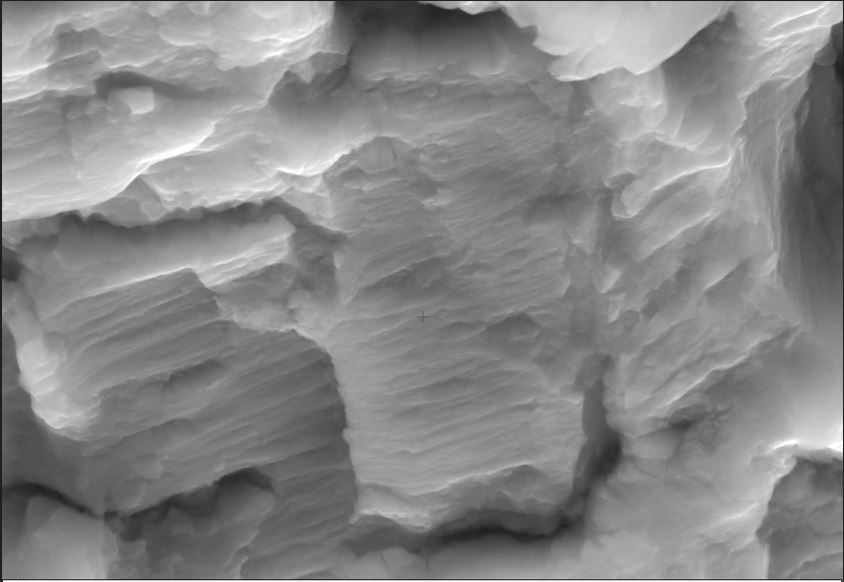
Each fracture has a specific surface that makes it possible to identify the cause and origin of the failure: this is fractography, the art of analyzing the fracture surface of failed parts

The types of fracture surfaces

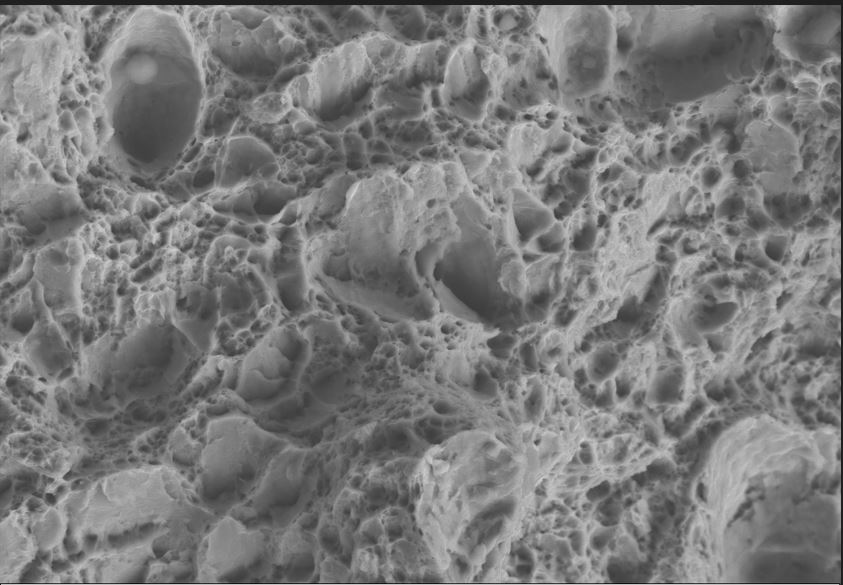
Ductile fracture surface

This type of failure involves significant plastic deformation before fracture. Example: A metal stretched before breaking shows a ductile fracture surface with deformation cavities.

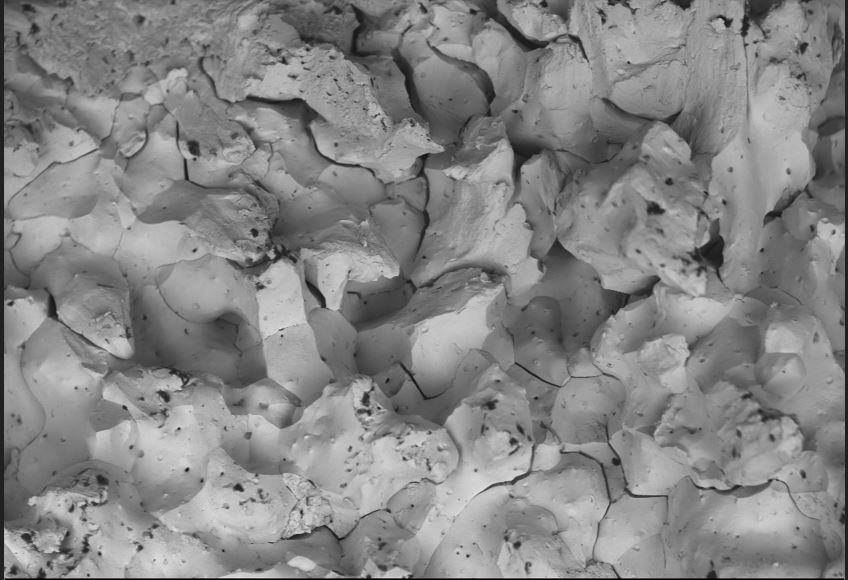
Brittle fracture surface

The fracture occurs without noticeable deformation, leaving a clean fracture. Example: A ceramic part that breaks suddenly.

Fatigue fracture surface

It occurs following repeated load cycles, forming progressive cracks. Example: A turbine blade subjected to vibrations.

Corrosion fracture surface

Caused by the chemical degradation of a material combined with mechanical stress. Example: A metal pipe corroded in a marine environment that cracks.

Fatigue fracture
rupture fragile
Brittle fracture
rupture ductile
Ductile fracture

The FILAB laboratory supports you in fracture surface analysis

For more than 30 years, the FILAB laboratory has had the experience and specific analytical equipment needed to support companies in the analysis and study of fracture surfaces on metal parts, through tailor-made support.
From analysis to R&D support, the FILAB laboratory offers multisector expertise to address your various fracture surface issues:

Our technical resources for analyzing a fracture surface

This fractographic expertise makes it possible in particular to locate the origin of the fracture, identify its propagation, and highlight any material defects or external contamination that may be at the source. The FILAB laboratory supports you in understanding and resolving your fracture issues.

For this type of service, the FILAB laboratory uses advanced analysis techniques such as:

Scanning Electron Microscopy coupled with an EDX microprobe (FEG-SEM-EDX)

Optical Microscope - OM

Our expertise in fracture surface analysis includes identifying microscopic defects, such as inclusions or microcracks, which are often at the origin of material failure.

Our failure analysis services

In addition to fracture surface analysis through fractography, FILAB’s laboratory offers other analysis services to characterize metallic materials and identify metallurgical failures :

Identify the causes of wear on a material

Assess the risk of wear on a material in a given environment

Study the effectiveness of a surface treatment system

Validate surface compliance

Our metal analysis services

Our expertise in fracture surface analysis

Le laboratoire FILAB, analyse des faciès de rupture pour une large gamme de matériaux :

  • Métaux : faciès de rupture acier, aluminium faciès de rupture, métal ductile ou traité thermiquement.
  • Verres : identification des faciès de rupture du verre trempé ou en flexion.
  • Polymères et composites : observation des images MEB faciès de rupture polymère et des faciès de rupture charpy fibre de verre ou composites.

Examples of industrial applications

Our expertise enables us to address industrial challenges :

  • Failures in metal alloys: determining the stresses that led to fractures.
  • Fracture studies in composites: Charpy impact tests to optimize their durability.
  • Observation of fracture surfaces in polymer materials: detection of weaknesses due to fatigue.

Fracture surface and metallurgical failure analysis

In metallurgical failure analysis, examining the fracture surface makes it possible to determine whether the break was caused by phenomena such as fatigue, corrosion, or mechanical overload. By combining techniques such as scanning electron microscopy (SEM) and fractography, our experts identify the mechanisms behind the failure, helping prevent future breakages in industrial processes.

Fracture surface characteristics on metals

Ductile

This type of failure is characterized by significant plastic deformation before fracture. When a metal such as mild steel fails in a ductile manner, microscopic cavities (voids) appear. This fracture surface is often granular with tear-like features.

Brittle

In this case, failure occurs without plastic deformation. This is typical of metals subjected to low temperatures or hard materials such as cast iron. The fracture surface is generally bright and smooth, with characteristic patterns such as crystalline facets.

Fatigue

This fracture surface occurs after repeated cycles of stress, even when the applied stresses are below the metal’s yield strength. It is characterized by visible fatigue striations on the fracture surface, representing the stages of crack propagation. This type of failure is common in metals such as aluminum alloys used in aviation.

By corrosion

This type of failure, often called stress corrosion cracking, is linked to the interaction between mechanical stress and a corrosive environment. It is characterized by cracks that are often fine and branched, with signs of chemical degradation around the fracture zone. Stainless steels in chlorinated environments are a good example.

Each type of failure reveals valuable information about the mechanical and environmental conditions that led to the material’s failure.

Tailored support

Whether you are facing sudden failure, progressive cracking, or material fatigue issues, FILAB supports you in your projects. Our analysis help ensure the quality and safety of your products while meeting the strictest industry standards. Do you have a question or would you like to carry out an analysis? Contact our experts to get a personalized quote.

Fracture surface analysis

A fracture surface analysis, also called fractographic analysis, is a laboratory analysis carried out for industry to determine the causes of metal part failures. This method relies on visual examination of fracture surfaces to determine the characteristics of their appearance, followed by microscopic analysis. Internal defects such as cracks, inclusions, or weak areas can be detected using this technique.

Fracture surface analysis can reveal:

The type of fracture: ductile fracture surface, brittle fracture surface, or mixed fracture surface

Critical areas: crack initiation, propagation, and termination.

The mechanical or chemical phenomena behind the failure

The causes of material failure

The fracture surface is caused by multiple conditions such as:

fatigue of the metal part due to repeated stress

overheating that weakens the metal part

corrosion that weakens the metal

poor design of the part, which was not strong enough for the demands of use.

Why call on a laboratory in the event of metal failure?

Material analysis following metal failure helps to understand the factors contributing to the failure of the metal structure, making it possible to develop preventive measures to avoid future failures and improve the quality of metal materials.

The FILAB laboratory offers high-quality services to help determine the reasons for metal failure (excessive stress, corrosion, fatigue, or a combination of factors) and prevent it from happening again.

Fracture surface analysis is part of our expertise in metal materials and metallurgical failures.

FAQ

How do you identify a fracture surface?

Identifying a fracture surface on a metal part can be a real challenge for industry professionals. Yet it is essential to detect signs of fatigue, corrosion, or cracks that can cause costly failures. By correctly identifying the fracture surface, manufacturers can determine the nature of the problem and take the necessary steps to avoid negative consequences for the quality and safety of metal parts.

How can you act upstream of a fracture surface failure?

Pour fiabiliser l’utilisation de pièces métalliques, les industriels ont la possibilité de réaliser des essais mécaniques et des analyses chimiques en amont d’une rupture. Parmi les analyses les plus courantes : 

  • essais de traction, essai de flexion, essai de compression, essai de fatigue
  • analyse de corrosion, analyse d’alliages mécaniques
How is a fracture surface analysis carried out?

A fracture surface analysis consists of studying the surface characteristics of the fracture in order to infer the mechanical properties that led to the failure. This type of analysis is generally carried out in three steps. First, the sample in question must be prepared so that it presents a fracture surface. Next, this surface is observed using an optical or electron microscope to identify the different fracture zones. Finally, the morphological and mechanical characteristics of these zones, such as the presence of microcracks or deformations, are studied to understand the fracture mechanisms involved.

Why analyze a fracture surface?

The analysis of fracture surfaces is essential for:

  • Identifying the causes of failures and preventing them from recurring.
  • Understanding the interactions between operating conditions (temperature, pressure, mechanical load) and material behavior.
  • Improving industrial processes by optimizing material selection and processing.
The Different Fracture Surfaces on Metals
  • Ductile fracture surface: This type of fracture is characterized by significant plastic deformation before failure. When a metal such as mild steel breaks in a ductile manner, microscopic cavities (voids) appear and coalesce to form a fracture. This surface is often granular with tear-out features.
  • Brittle fracture surface: In this case, failure occurs without plastic deformation. This is typical of metals exposed to low temperatures or hard materials such as cast iron. The fracture surface is generally shiny and smooth with characteristic patterns, such as crystalline facets.
  • Fatigue fracture surface: This surface occurs after repeated stress cycles, even when the applied stresses are below the metal's yield strength. It is characterized by visible fatigue striations on the fracture surface, representing the stages of crack propagation. This type of failure is common in metals such as aluminum alloys used in aviation.
  • Corrosion fracture surface: This type of failure, often called stress corrosion cracking, is linked to the interaction between mechanical stress and a corrosive environment. It is characterized by often fine, branched cracks, with signs of chemical degradation around the fracture zone. Stainless steels in chlorinated environments are a good example.

Each type of fracture reveals valuable information about the mechanical and environmental conditions that led to the material failure.

What Is a Screw Fracture Surface?

A screw fracture surface shows clues about how a screw broke. This may include fatigue fractures, sudden failures under excessive stress, or failures due to corrosion.

How Do You Identify a Fracture Surface in Aluminum?

In aluminum, fracture surfaces can vary between ductile (significant deformation before failure) and brittle (clean, rapid failure, typical at low temperature or under fatigue).

What Is a Torsional Fracture Surface?

A torsional fracture surface generally shows a helical fracture with striations or spiral cracks caused by excessive twisting.

What Is the Difference Between a Brittle and Ductile Fracture Surface?

A brittle fracture occurs with little or no plastic deformation, leaving a smooth, shiny fracture surface, whereas a ductile fracture shows clear signs of deformation before breaking, with a granular fracture surface.

What Is a Fatigue Fracture Surface?

This surface forms gradually under repeated loading cycles. It is often characterized by fatigue striations that represent the stages of crack growth before final failure.

The filab advantages
A highly qualified team
Responsiveness in responding to and processing requests
A COFRAC ISO 17025 accredited laboratory
(Staves available on www.cofrac.com - Accreditation number: 1-1793)
A complete analytical facility of 5,200m²
Tailor-made support
Tailor-made support
Video debriefing available with the expert
Thomas GAUTIER Head of Materials Department
Ask for your quote