Distinguishing between the polymer materials polyamide PA 6 and PA 6.6
How did FILAB help a customer distinguish between the polymer materials polyamide PA 6 and PA 6.6?
Polyamide polymers, more commonly known as nylons, are widely used in many industries. PA 6 and PA 6.6 polyamide polymers are the most commonly used. Although they have many similarities, they differ in certain characteristics (mechanical properties, chemical structures, water absorption, and thermal resistance) that make them suitable for specific applications.
This case study focuses on the method and technical means used to determine whether a polyamide is PA6 or PA6.6.
Context
Our client called on FILAB to help with a production discrepancy. One of their machines had been mistakenly fed with the wrong raw material. They wanted to take samples from 130,000 parts throughout the production process to determine whether they were made of PA 6.6 (compliant) or PA 6 (non-compliant).
The client commissioned FILAB, a laboratory specializing in material characterization and chemical analysis, to first identify the polymers and then restart production.
Determination of the chemical nature of parts
What analysis techniques did the laboratory decide to use to distinguish between the two polyamide polymers?
DSC analysis
DSC is a thermal analysis technique that measures the differences in heat exchange between a sample to be analyzed and a control (a reference).
In this case, it made it possible to identify the characteristic temperatures of each polymer. The analyses revealed that the sample analyzed was indeed PA 6.6, consistent with normal production.
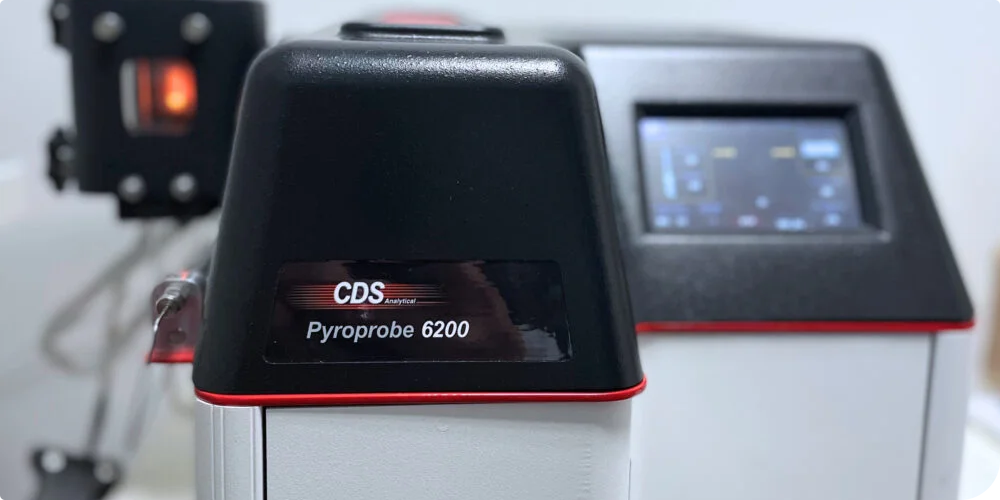
Pyrolysis GC-MS analysis
This technique confirmed the nature of the polymer found. Pyrolysis coupled with mass spectrometry (Py-GC-MS) is a pyrolysis technique followed by gas chromatography coupled with mass spectrometry (GC-MS) that identifies the organic compounds in a sample and determines its chemical composition by breaking it down into its volatile components.
The nature of the polymer was thus confirmed.
Conclusion of the study
FILAB's in-depth analyses made it possible to determine with precision that the parts manufactured and analyzed complied with our client's specifications. This information was essential for successfully restarting production.
