Case study

How can you identify the nature of a deposit at the bottom of a tank?

The customer called on FILAB to determine the nature of a deposit found at the bottom of an autoclave tank.
Accueil Blog How can you identify the nature of a deposit at the bottom of a tank?

The problem?

A deposit is an accumulation of substances or particles that can come from various sources, such as the precipitation of insoluble chemical components, the aggregation of suspended particles, corrosion, or contamination by foreign matter.

The customer called on FILAB, a laboratory specializing in material characterization and chemical analysis, to determine the nature of a deposit found at the bottom of an autoclave tank. The customer wanted to ensure the integrity of its equipment so as not to affect its performance.

Summary

01
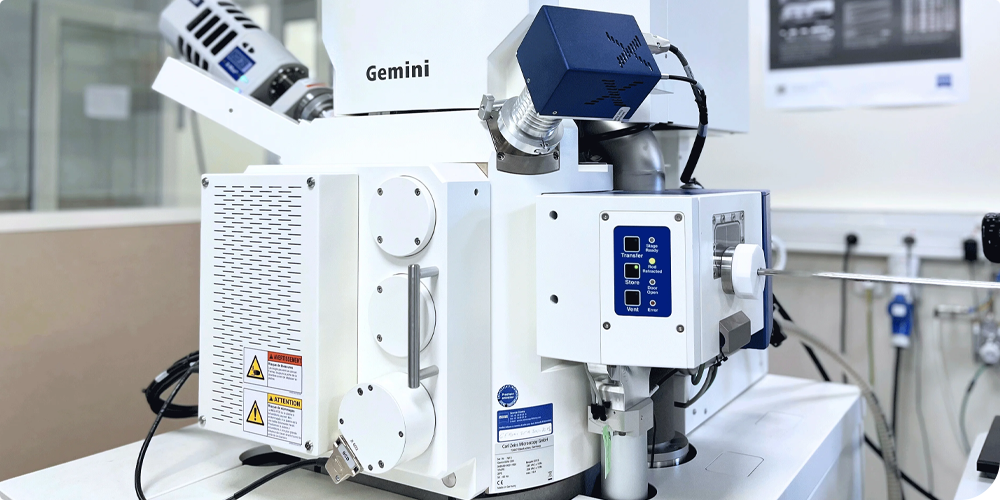
Initial analyses performed by SEM-EDX
02
Additional analyses using IRTF
03
Conclusion of the study
01

Initial analyses performed by SEM-EDX

SEM-FEG observations and EDX analyses provided the following information. The deposit found in the tank is mainly composed of carbon (C), oxygen (O), calcium (Ca), and sodium (Na), with smaller amounts of magnesium (Mg) and silicon (Si), as well as traces of nitrogen (N), sulfur (S), chlorine (Cl), iron (Fe), and copper (Cu).
02

Les analyses complémentaires par IRTF

With FTIR analysis, the characteristic absorption bands observed are as follows:

  • A broad band around 1403 cm-1 characteristic of the elongation vibration mode of carbonate bonds;
  • Two narrow peaks around 871 and 712 cm-1 characteristic of the deformation vibration mode of carbonate bonds.

Based on these results, the spectrum of the observed deposit appears to correspond to the spectrum of a reference compound of the calcium carbonate type.

The results obtained...

The analyses carried out for this study revealed that the samples analyzed mainly contain carbon, oxygen, and calcium. Based on this elemental composition, the identification hypothesis concluded that calcium carbonate was present in the deposits analyzed.

03

Conclusion of the study

The discovery of calcium carbonate as the main component of the deposit analyzed provided our client with valuable insight into the origin of the blockages in their equipment. This analysis led to the development of a preventive maintenance program specifically tailored to counteract the effects of carbonate deposits, thereby improving equipment performance and durability.

Need help? Contact our team

Other studies that may be of interest to you

Material balance

A material balance is an essential process in materials science, chemistry, physics, and various industries. It involves analyzing and understanding the properties and behavior of materials. Find out more

Rouging phenomenon

With its excellent properties, stainless steel has become indispensable in many fields: everyday objects, medicine, surgery, automotive, aeronautics, mechanical industries, etc. However, many industrial stainless steel installations are affected by the phenomenon of rouging. Find out more

Racket coverings

Indeed, the intensive use of table tennis rackets has revealed problems related to the durability of this equipment. Find out more

Services associated with the case study

Analysis of particulate contamination on your powders by SEM-EDX

Calcium/Silicon (CaSi) Analysis and Expertise - Metallurgical Expertise

FTIR

SEM-FEG

Laboratory specializing in analysis and expertise for industrial companies

More than 140 people
More than 140 people at your service
5200 m² laboratory
5200 m² laboratory + 99% of services are provided in-house
Accredited laboratory
Accredited laboratory COFRAC ISO 17025
+2200 clients
+2200 clients in France and abroad

Contact us

Our services are reserved for professionals.