Case study

How does FILAB support its clients in conducting a material assessment?

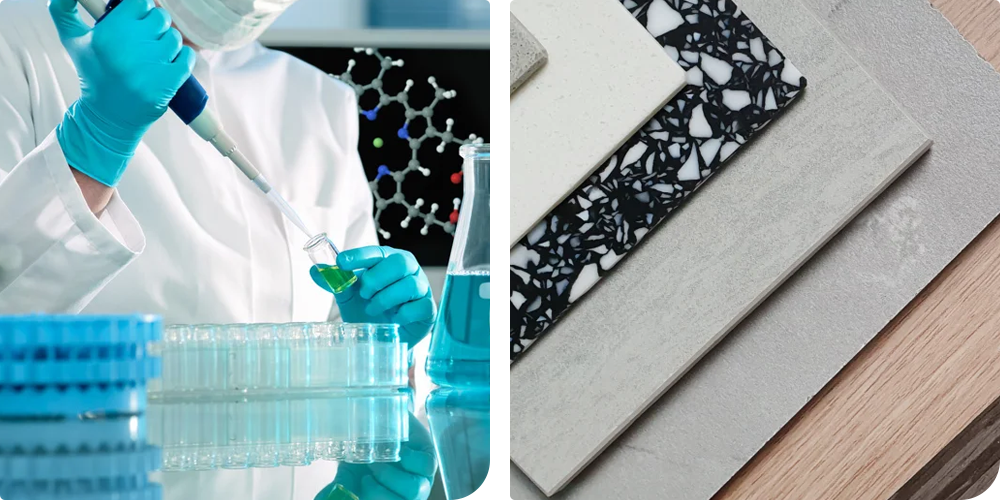
Two manufacturers from different sectors recently asked the FILAB laboratory to carry out a material assessment.
Accueil Blog How does FILAB support its clients in conducting a material assessment?

What does a material assessment in a laboratory involve?

A material assessment is an essential process in materials science, chemistry, physics, and various industries. It involves analyzing and understanding the properties and behavior of materials. This characterization can cover a wide range of materials, from metals and polymers to ceramics and biomaterials.

It is essential for the development and optimization of new materials, for quality control in production, and for fundamental research in materials science. It enables scientists and engineers to gain an in-depth understanding of materials, predict their behavior under different conditions, and design products tailored to specific applications.

Summary

01
Presentation of two client cases
02
Client 1: Identification of material on a round joint
03
Client 2: Steel piping material balance
04
Conclusion of the study
01

Presentation of two client cases

Two manufacturers from different sectors recently contacted the laboratory for the following reasons:

  • Client 1: Identification of material on a round joint
  • Client 2: Study to carry out a material assessment of steel piping to evaluate its state of deterioration

Why conduct a material assessment?

A material assessment is crucial for optimizing production processes, improving profitability, ensuring regulatory compliance, promoting responsible environmental management, guaranteeing product quality, and stimulating innovation. This tool enables companies to better understand and control the use of their resources, thereby reducing waste and increasing overall efficiency.
02

Client 1: Identification of material on a round joint

Context

The client contacted the FILAB laboratory because they needed to characterize the material used in a seal. They wanted to confirm that their seal was made of NBR (also known as nitrile rubber).

What characterization analysis techniques did the laboratory decide to use to verify the material of the seal in this assessment?

Structural analysis by pyrolysis GC-MS

The sample was placed in a quartz tube, then inserted into the pyrolyzer chamber and heated according to the program below:

  • This instantly causes the fragmentation of certain macromolecules (polymers) and the simple volatilization of organic molecules (additives, solvents, residual monomers, pollution, etc.) present in the sample.
  • All these pyrolytic fragments and volatilized molecules are separated by the chromatographic column and then identified by the MS (mass spectrometry) detector.
  • The recognition of pyrolytic "tracer" fragments and comparison with those obtained with known matrices allows the certain identification of the polymer matrix(es) in the sample.

In this case, it was used to search for peak profiles in order to identify the constituent matrices of a sample.

The results obtained ...

FILAB's in-depth analyses made it possible to determine with certainty that the seal analyzed was indeed an NBR seal. This information was essential to understanding the behavior of the seal in its context of use.

03

Client 2: Steel piping material balance

Context

In this case, the objective of this study is to perform a material assessment on sections of steel piping in order to evaluate their state of deterioration.

Analyses performed

In order to carry out this study, the following techniques were used:

  • Binocular magnifying glass for macroscopic observations;
  • Field emission scanning electron microscopy coupled with an EDX microprobe (SEM-EDX) for observations and semi-quantitative local chemical analyses;
  • Optical microscopy to perform observations before and after chemical development.

For each sample, an interpretation is made of the external, internal, and core areas. The following observations were made:

The results obtained ...

  • For sample 1: externally, the uncoated areas appear to be more affected. Internally, corrosion is widespread. No corrosion is observed at the core. No corrosion is observed at the core
  • For sample 2: externally, the uncoated areas appear to be more affected. Internally, there is widespread corrosion with areas potentially more affected by erosion. No corrosion is observed at the core. No corrosion is observed at the core
  • For sample 3: externally, the uncoated areas appear to be more affected. Internally, corrosion is widespread. No corrosion is observed at the core

FILAB's in-depth analyses made it possible in this situation to establish a detailed assessment of the progress of corrosion in the pipe.

04

Conclusion of the study

Material analysis can be carried out in several contexts and on various materials for various applications. Here, FILAB's approaches made it possible to confirm the material for customer 1 and carry out a condition assessment of a pipe for customer 2.

Need help? Contact our team

Other studies that may be of interest to you

Case study: goniometry and comparison of surface tensions

One of our customers wanted to measure the contact angle and surface tension of their materials. Find out more

Method transfer

As part of the rehabilitation of several of their industrial sites, the client (a pharmaceutical group) must closely monitor the decontamination of their soil and water from active pharmaceutical ingredients (APIs). Find out more

XPS coating

Comparative study of multilayer coatings on zirconium tubes using XPS Find out more

Services associated with the case study

Chemical analysis of materials with FILAB

Support in solving oxidation problems of materials and products

Analysis of materials by dilatometry in the laboratory

Analysis of a deformation of materials in laboratory

Inclusion analysis on laboratory materials

Support from a laboratory in the choice of your raw materials

Laboratory specializing in analysis and expertise for industrial companies

More than 140 people
More than 140 people at your service
5200 m² laboratory
5200 m² laboratory + 99% of services are provided in-house
Accredited laboratory
Accredited laboratory COFRAC ISO 17025
+2200 clients
+2200 clients in France and abroad

Contact us

Our services are reserved for professionals.