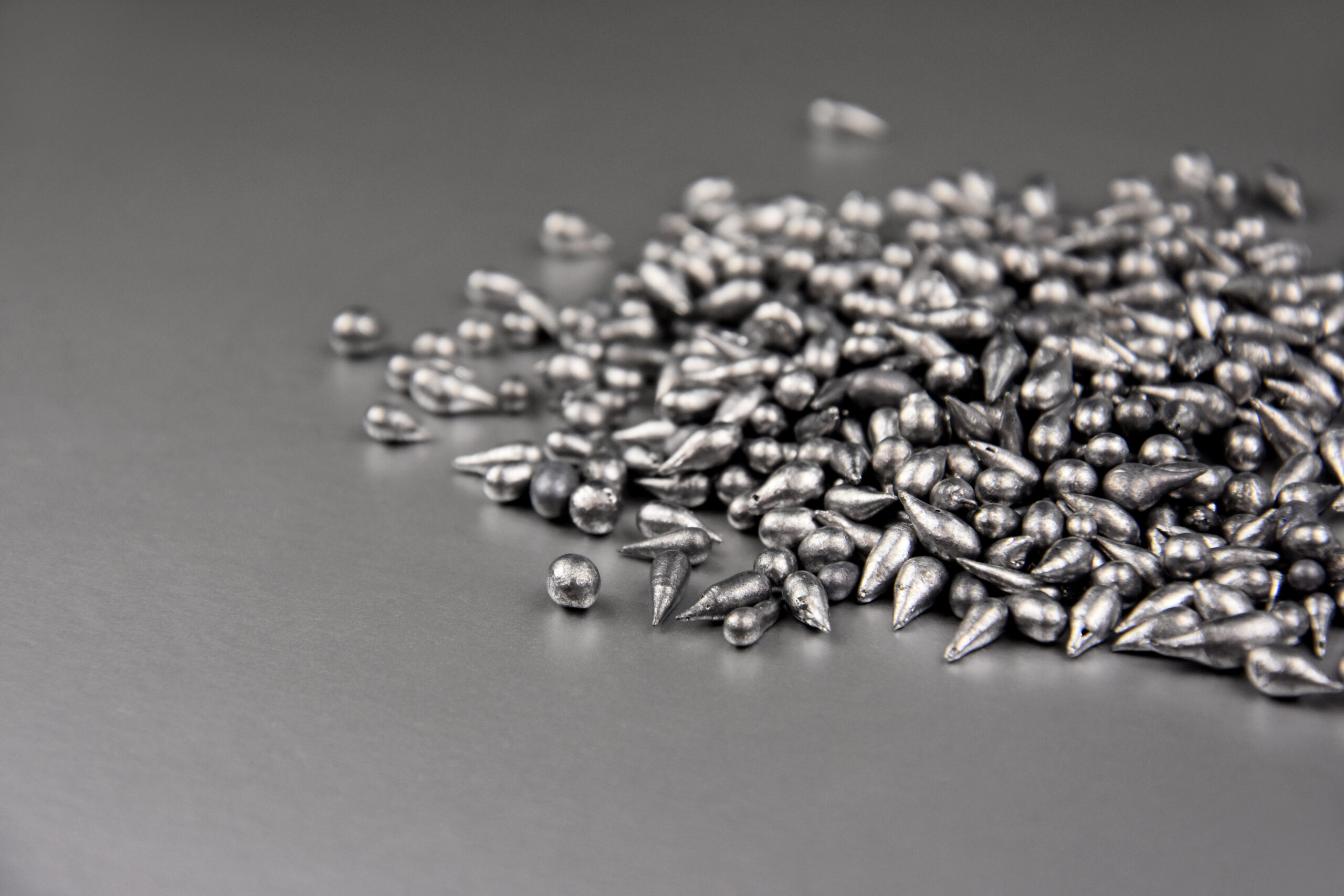
Laboratory analysis and testing of amorphous metals
Amorphous metal analysis: secure the performance of your materials
Amorphous metals, also known as metallic glasses (Metallic Glasses), have a disordered atomic structure, unlike conventional crystalline metal alloys. This distinctive feature gives them remarkable properties: high mechanical strength, excellent corrosion resistance, significant elasticity, low magnetic hysteresis, and good wear resistance.
These innovative materials are now used in many industrial sectors such as aerospace, space, medical, electronics, energy, and high-tech goods.
However, their performance depends directly on controlling their amorphous structure. Partial crystallization, a change in chemical composition, or a manufacturing defect can significantly degrade their properties.
At the FILAB laboratory, we support manufacturers in the analysis, testing, and expert assessment of amorphous metals, from R&D to quality control and failure investigation.
Why analyze an amorphous metal?
Analyzing metallic glasses serves several industrial purposes.
You may want to:
- verify that an alloy is amorphous;
- check the chemical composition of an amorphous metal;
- compare several production batches;
- qualify a new manufacturing process;
- measure glass transition and crystallization temperatures;
- understand the cause of performance loss;
- characterize a failure or fracture;
- support the development of a new alloy.
Our experts adapt analytical protocols to your material, your manufacturing process, and your regulatory requirements.
Our amorphous metal analysis services
Verification of the amorphous structure
The first step is to confirm the absence of a crystalline structure.
Our laboratories carry out in particular:
- X-ray diffraction (XRD);
- electron microscopy (SEM);
- microstructural analysis;
- elemental mapping.
These analysis make it possible to detect any crystallization, even if localized.
Chemical composition analysis
Composition directly influences the stability of the amorphous phase as well as the mechanical or magnetic properties of the material.
We carry out in particular:
- ICP-OES;
- ICP-MS;
- GDMS depending on purity requirements;
- X-ray fluorescence (XRF);
- EDS coupled with SEM.
These techniques make it possible to verify alloy compliance or compare different batches.
Thermal characterization
The properties of amorphous metals depend heavily on their thermal behavior.
Our tests make it possible in particular to determine:
- the glass transition temperature (Tg);
- the crystallization temperature (Tx);
- thermal stability;
- phase transformations.
The analysis are performed by:
- DSC (differential scanning calorimetry);
- TGA when necessary.
Microstructural characterization
Our experts assess:
- the homogeneity of the structure;
- the presence of secondary phases;
- manufacturing defects;
- inclusions or porosity;
- crystallized areas.
This step is particularly important when developing new alloys or in the event of a failure.
Why choose the FILAB laboratory?
FILAB laboratory provides manufacturers with recognized expertise in metal material characterization.
Our support is structured around three levels of expertise:
- Analysis : obtain reliable results thanks to a state-of-the-art analytical platform;
- Expertise : interpret results and identify the causes of an anomaly;
- R&D : support the development and optimization of new materials.
Our teams cross-reference data from several analytical techniques to provide a complete picture of your material's behavior.
Our FAQ
The analysis makes it possible to verify that the material retains its amorphous structure, an essential condition for guaranteeing its mechanical, thermal, and magnetic properties, as well as its corrosion resistance.
The reference technique is X-ray diffraction (XRD), which highlights the absence of a crystalline structure. This analysis is often supplemented by SEM observations and thermal analysis.
Differential scanning calorimetry (DSC) makes it possible to measure the glass transition temperature (Tg), the crystallization temperature (Tx), and assess the thermal stability of the material.
The analysis make it possible to identify partial crystallization, inclusions, contamination, chemical heterogeneities, manufacturing defects, or changes related to service conditions.
Amorphous metals are used in aerospace, space, medical devices, electronics, energy, nuclear, automotive, defense, and high-tech applications.
Yes. Beyond characterization analysis, FILAB laboratory supports manufacturers with their R&D projects, process qualification, formulation comparison, and failure investigation.
Depending on the objectives, several techniques can be combined: XRD, SEM-EDS, ICP-OES, ICP-MS, DSC, TGA, X-ray fluorescence, surface analysis, and microstructural characterization to obtain a complete understanding of the material.
To get a quote, you can contact our teams via our contact form, by phone, or by email.
Simply send us your requirements (material type, desired analysis, any applicable standard, urgency, sample quantity, etc.). We will then send you a personalized technical and pricing proposal within 24-48 hours.
Lead times vary depending on the nature of the analysis and the complexity of the expert assessment project.
However, FILAB is committed to providing fast turnaround times tailored to your constraints and industrial urgencies.