Determination of the viscosity index in the laboratory

Characterization of materials Problem solving R&D support
More than 140 people
More than 140 people at your service
5200 m² laboratory
5200 m² laboratory + 99% of services are provided in-house
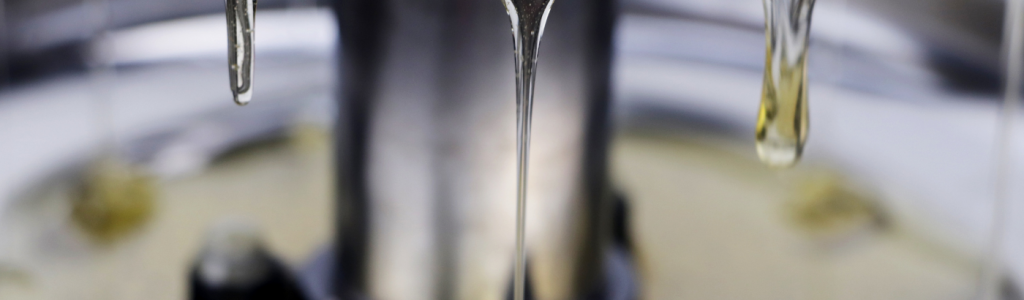
Performing a professional viscosity analysis is essential for understanding and controlling the behavior of a fluid or material when subjected to stress. Whether for industrial fluids such as oils and lubricants or the characterization of polymer materials, FILAB laboratory provides the expertise of its doctors and engineers to ensure the reliability of your processes. 

You want to measure the viscosity index of your product

What is viscosity?

The viscosity of a material refers to its resistance to flow or deformation when subjected to stress. This property characterises the way a material flows or deforms under an applied force, whether it is liquid or semi-solid. The more viscous a material, the more resistant it is to flow. Viscosity is therefore essential in many industrial sectors, where the handling, transport or application of materials must be precisely controlled.

Viscosity measurement

Viscosity measurement defines the rate of change in viscosity as a function of temperature. The higher the viscosity index, the lower the propensity for viscosity to change.

Measuring the viscosity index is particularly important when using industrial fluids (oils, grease, lubricants) and when producing and characterising polymers.

A viscosity index that is not appropriate for the temperature of your installations can jeopardise the role of your industrial fluids and your polymer synthesis.

Why determine the viscosity of a fluid?

Viscosity measurement is crucial to understanding and controlling the behaviour of a fluid in various industrial environments. Here are the main reasons why this measurement is important:

Optimising industrial processes: Viscosity has a direct influence on the flow of fluids in pipelines, pumping systems or reactors. By measuring viscosity, you can choose the right equipment and guarantee optimum efficiency in the production or transport of fluids.
Product quality control: In sectors such as cosmetics, pharmaceuticals and food, viscosity is a key indicator of finished product performance. Regular control of viscosity ensures that products are consistent and comply with specified requirements.
Predicting behaviour under different conditions: Viscosity can vary as a function of temperature, pressure or shear rate. By measuring this property, manufacturers can anticipate how a fluid will behave under real conditions of use, guaranteeing appropriate performance.
Ensuring the safety and reliability of processes: In industries such as automotive and aerospace, where lubrication is essential, knowing the viscosity of fluids helps to ensure that mechanical systems operate correctly, reducing the risk of failure.

Principle of viscosity index measurement

The viscosity index is a unitless value calculated from the kinematic viscosity of an oil measured at two standard temperatures, generally 40°C and 100°C. It is based on a comparative scale defined by ASTM D2270, which establishes a correlation between viscosity and temperature.

Methodology:

  • Kinematic viscosity is measured at 40°C and 100°C using a viscometer (generally a capillary or rotary viscometer).
  • The results are compared with reference oils (oils with a standard viscosity index), and the index is calculated using specific formulas.

The FILAB laboratory can help you measure the viscosity index of your product

Why choose FILAB for your viscosity analysis?

The FILAB laboratory makes available the expertise of its doctors and engineers and its state-of-the-art analytical equipment tosupport manufacturers in the analysis of industrial fluids (oil, grease, lubricant) and the study of polymer materials (in matrices such as PET, PP, ink, resin, HDPE, glue

Our technical resources for viscosity measurement

Capillary viscometers and rheometers are the main techniques used to measure polymer viscosity. These techniques ensure that polymers meet the quality and performance standards required for their specific applications:

Capillary viscometers assess how the polymer passes through a pressurised tube, suitable for polymers in solution or melt.
Rheometers measure shear strength, providing detailed information on viscoelastic properties.
indice-viscosite-1.png

Our Solutions

Determination of hot and cold viscosity indexes

applicable standards

ASTM D2270 : Definition and calculation of viscosity index

ASTM D445 : Kinematic viscosity of liquids

ISO 3104 : Measurement of kinematic viscosity

Our FAQ

How to get a quote from FILAB?

To obtain a quote, you can contact our team via our contact form, by phone, or by email.

Simply tell us your requirements (type of material, desired analysis, applicable standards, urgency, quantity of samples, etc.). We will then send you a personalized technical and pricing proposal within 24-48 hours.

What is the typical duration of the analysis?

Turnaround times vary depending on the nature of the analysis and the complexity of the expert assessment project.

However, FILAB is committed to providing fast turnaround times tailored to your industrial constraints and urgent needs.

Why is the Viscosity Index (VI) critical for lubricants?

The Viscosity Index is a dimensionless number that indicates how much a fluid's viscosity changes with temperature. A high VI means the fluid maintains a more stable viscosity across a wide temperature range, which is vital for the aerospace and automotive sectors to ensure consistent lubrication and prevent mechanical failure.

Which industries require professional viscosity analysis?

Viscosity control is essential for:

  • Pharmaceuticals & Cosmetics: to ensure the texture, stability, and application of creams, syrups, and gels.
  • Polymers & Plastics: to characterize molecular weight distribution and processing behavior.
  • Chemicals: for the optimization of pumping systems and fluid transport.
How does FILAB support polymer characterization through viscosity?

In addition to standard flow testing, we combine viscosity analysis with techniques like GPC/SEC to determine molecular weight or DMA analysis to study viscoelastic behavior as a function of temperature and frequency.

What standards does FILAB follow for viscosity testing?

Our laboratory operates under ISO 17025 accreditation and follows international standards such as ASTM D445 for kinematic viscosity and ASTM D2270 for calculating the viscosity index.

The filab advantages
A highly qualified team
Responsiveness in responding to and processing requests
A COFRAC ISO 17025 accredited laboratory
(Staves available on www.cofrac.com - Accreditation number: 1-1793)
A complete analytical facility of 5,200m²
Tailor-made support
Tailor-made support
Video debriefing available with the expert
Anaïs DECAUX Customer Support Manager
Ask for your quote