

Glass or crystal? How can you tell the difference?
Is it glass? Is it crystal? What is the difference between glass and crystal? FILAB laboratory can answer all these questions and more.

There are several ways to determine whether the raw material or finished product is crystal or glass. However, the most reliable method is to examine its composition.
How can you tell crystal from glass and vice versa?
What is the composition of the crystal?
First of all, what is the composition of crystal? It consists mainly of silica, potash, and especially lead.
To be considered "crystal" and thus bear this name, the piece must contain at least 24% lead. This is what is known as lead crystal. In addition, the glass must have a refractive index equal to or greater than 1.545.
Lead is part of the heavy metal family and has a number of advantages, including:
- increased transparency and brilliance through an increase in the refractive index.
- the material is more flexible, which facilitates cold working of the part
What is the composition of glass?
As for glass, it does not contain lead in its composition. The most common type is soda-lime glass, which is composed of silica (SiO2), calcium, and sodium, generally added during manufacture in the form of CaO and Na2O.
The FILAB laboratory helps you differentiate between glass and crystal by studying its composition.
For the FILAB laboratory, it is easy to differentiate between the two materials.
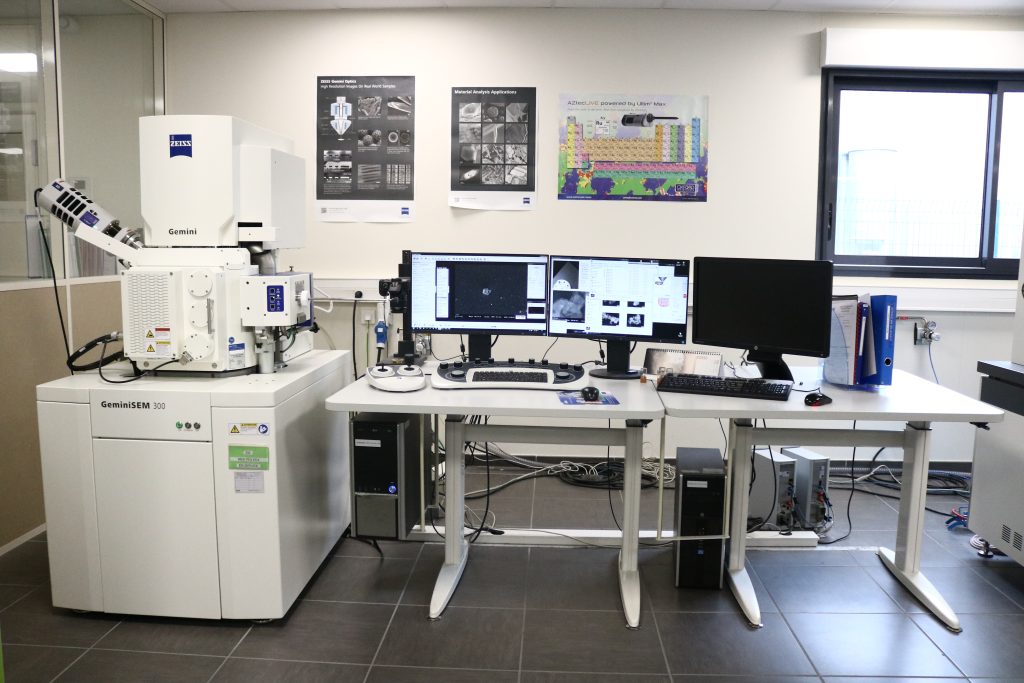
In fact, a semi-quantitative SEM-EDX analysis of the composition of a glass fragment can provide a very good estimate of its composition.
If there is no lead present, then it is conventional glass. If there is a significant amount of lead (more than 24%), then the material can be called crystal.
Also, note that high-quality crystal can contain up to 31% lead.
Frequently asked questions
Why analyze composition to distinguish glass from crystal?
Composition provides more objective information than an object’s appearance, sound, or weight considered in isolation. The analysis looks in particular for the constituents of the matrix and oxides that may help determine its classification. However, assigning a designation must take into account the category of glassware and the other criteria applicable to the product.
Does the 24% threshold for lead crystal refer to metallic lead?
The compositional criterion of 24% for lead crystal is expressed as the mass content of lead oxide, PbO, not as the proportion of metallic lead. These values are not directly interchangeable. Classification must use the correct expression of the result and examine the other characteristics required for the designation in question.
Is SEM-EDX analysis sufficient to assign a regulatory designation to glass?
SEM-EDX can provide a local or semi-quantitative estimate of the composition and help identify the material. A regulatory designation requires verification of the relevant criteria and methods for the category concerned. A local elemental result therefore does not automatically replace all the measurements required for the commercial designation.
Does the absence of lead mean that an object cannot fall into any category of crystal glass?
Regulations distinguish between several categories of glassware and several composition or physical property criteria. Not all categories are defined by the presence of at least 24% PbO. The exact designation being sought should therefore be examined, rather than drawing a conclusion solely from the detection or absence of lead.
Why compare several areas or fragments when analyzing a glass object?
A local measurement may be influenced by a coating, decoration, or compositional heterogeneity. Selecting representative areas helps distinguish the glass matrix from surface contributions. The protocol must specify the part actually analyzed so that the results address the question of product identification.