Laboratory for analysis and expertise

Polymer testing laboratory: performance and qualification tests

More than 140 people
More than 140 people at your service
5200 m² laboratory
5200 m² laboratory + 99% of services are provided in-house
Accredited laboratory
Accredited laboratory COFRAC ISO 17025
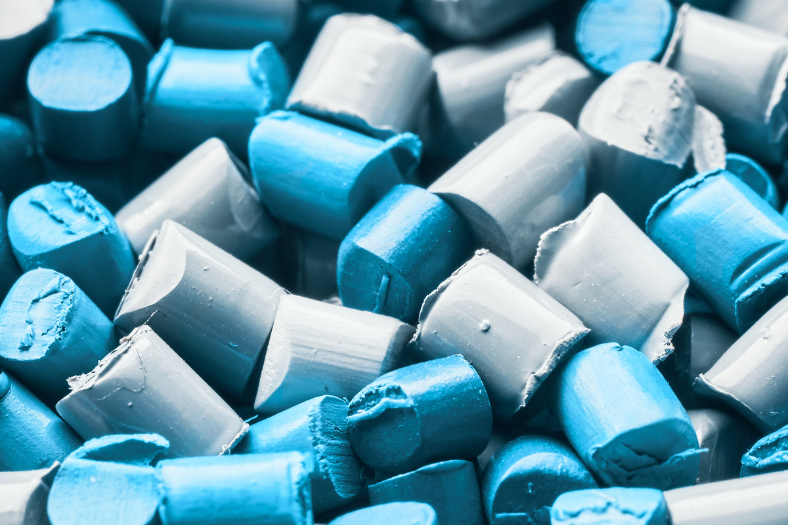
FILAB is an independent polymer testing laboratory providing comprehensive analysis and testing of polymers, plastics, composites, adhesives, and resins to support R&D, material qualification, and failure analysis. As a specialized polymer testing lab, FILAB delivers precise physical polymer testing to evaluate mechanical strength, deformation, and rheological flow, alongside thermal polymer testing (DSC, TGA, DMA) to assess thermal stability, phase transitions, and material degradation. From supplier benchmarking to processing optimization, our polymer testing services turn complex laboratory data into reliable technical decisions

Polymer testing laboratory services for material qualification and performance

As a polymer testing lab, FILAB assesses the physical, thermal and durability properties that determine whether polymer-based materials are suitable for their intended use. We support R&D, quality control, material comparison, industrialisation, , failure analysis and product qualification.

Testing can establish a baseline, compare virgin, recycled or reformulated materials, verify performance against specifications, and assess ageing, environmental exposure or process-related changes. It can also investigate deformation, cracking, contamination and other non-conformities.

Each test programme is tailored to the sample, component geometry, target market and service conditions, delivering data that supports reliable material and performance decisions.

Physical polymer testing

Mechanical behaviour and performance

Physical polymer testing provides the data needed to understand how a material or finished part responds to loads and deformation. Depending on the material and the project objective, FILAB can investigate mechanical behaviour, stiffness, deformation, strength, fracture-related behaviour and dimensional stability.

These tests are particularly useful to:

  • qualify a material for a new or existing application;
  • compare batches, grades, suppliers or formulations;
  • assess the impact of fillers, reinforcements, additives or recycled content;
  • verify whether processing has altered the material’s performance;
  • support root-cause investigations after breakage, cracking, warpage or loss of function.

Mechanical test results are interpreted alongside the material structure, formulation and processing history when required. This helps distinguish a simple variation in measured property from a change that may affect in-service performance.

Rheology and processability

Rheological testing helps characterise the flow behaviour of polymers, compounds and formulations. It can support the evaluation of viscosity-related behaviour, melt flow and sensitivity to temperature, shear or formulation changes.

Rheological expertise is valuable when investigating processability, injection or extrusion behaviour, coating or adhesive application, batch-to-batch consistency, material substitution and the effect of degradation or ageing. It also helps connect laboratory observations with conditions encountered during manufacturing.

Thermal polymer testing

Thermal transitions, stability and material changes

Thermal polymer testing is essential for understanding how a polymer behaves during manufacturing, storage and service. FILAB uses complementary thermal-analysis techniques to investigate transitions, crystallinity-related behaviour, thermal stability, degradation and the effect of temperature on material performance.

Differential scanning calorimetry (DSC) can be used to study thermal transitions and compare material states. Thermogravimetric analysis (TGA), including coupled approaches where relevant, helps evaluate mass loss and thermal-decomposition behaviour. Dynamic mechanical analysis (DMA) can provide additional insight into thermomechanical behaviour over a temperature range.

Thermal testing can help manufacturers:

select a material compatible with its processing and service temperatures;

assess the impact of a process excursion or storage condition;

investigate unexpected thermal behaviour or a shift in performance.

compare grades, formulations and suppliers;

evaluate material degradation or changes after use;

Polymer ageing and durability assessment

Polymer materials can change in service. FILAB designs polymer ageing studies to assess changes in physical, thermal, rheological or chemical properties after relevant exposure.

Tailored protocols can compare initial and aged materials, evaluate heat or environmental effects, investigate early performance loss and support durability, qualification or material-selection decisions. Results are interpreted in relation to the polymer structure, formulation and application environment.

From polymer characterization to qualification

polymères

A reliable qualification programme requires more than a single analytical result. FILAB combines polymer characterisation with targeted physical polymer testing, thermal polymer testing and rheological assessment to provide a coherent view of material performance.

Our laboratory can support the different stages of a project:

  • Material selection: identify and compare candidate polymers, compounds or composites;
  • Formulation and development: assess the effect of additives, fillers, reinforcement, recycled content or formulation adjustments;
  • Process validation: evaluate the impact of manufacturing conditions on material properties;
  • Performance qualification: generate test data relevant to defined technical requirements;
  • Non-conformity investigation: compare compliant and non-compliant samples to identify meaningful differences;
  • Lifecycle assessment: study how material properties evolve after use, ageing or environmental exposure.

Complementary polymer analysis techniques

When physical or thermal results need to be explained in greater detail, FILAB can mobilise complementary techniques for polymer analysis and characterisation. Depending on the question, this may include FTIR spectroscopy, SEM/EDX, chromatography, Pyrolysis-GCMS, X-ray diffraction (XRD), elemental analysis and appropriate sample preparation, including cryomilling.

These methods can help identify a polymer, compare formulations, detect contamination, study fillers or additives, investigate degradation mechanisms and support failure analysis. Combining testing with analytical characterisation allows the result to be related to the material’s composition and microstructure.

Why work with FILAB for polymer testing?

For more than 30 years, FILAB has supported industrial clients with analysis, expertise and R&D support. Our polymer testing laboratory works with manufacturers from sectors including medical devices, automotive, aerospace, chemicals and other performance-driven industries.

We help turn a material question into a practical testing strategy, then provide results and interpretation suited to the decision at hand: qualification, comparison, optimisation, troubleshooting or performance assessment.

Do you need a polymer testing laboratory for physical, thermal, rheological or ageing assessment? Contact FILAB to discuss your material, your application and the performance criteria to be investigated.

Our FAQ

How do I get a quote from FILAB?

To obtain a quote from FILAB, you can contact our teams via our contact form, by phone, or by email.
Simply provide us with the details of your requirements (material type, desired analysis, applicable standards, urgency, number of samples, etc.). We will then send you a personalized technical and price proposal within 24 to 48 hours.

What is the typical duration of the analysis?

Turnaround times vary depending on the nature of the analysis and the complexity of the expert assessment project.
However, FILAB is committed to providing rapid turnaround times tailored to your industrial constraints and urgent needs.

What does a polymer testing laboratory test?

A polymer testing laboratory evaluates the physical, thermal, rheological and ageing behaviour of polymers, composites, adhesives, resins, coatings and finished parts. Testing helps assess material performance, suitability and durability for the intended application.

Which physical polymer tests can FILAB perform?

FILAB can assess mechanical behaviour, stiffness, deformation, strength and dimensional stability, according to the material and project objective. Physical polymer testing can support material comparison, qualification and failure investigation.

What is thermal polymer testing used for?

Thermal polymer testing investigates how a material behaves at different temperatures during processing, storage and use. It can help evaluate thermal transitions, stability, degradation and thermomechanical performance.

Can polymer testing support material qualification and ageing studies?

Yes. FILAB can combine polymer characterisation with physical, thermal and rheological testing to compare materials, evaluate ageing-related changes and generate data relevant to qualification or performance requirements.

How much does polymer testing cost, and how can I request a quote?

The price of polymer testing depends on the sample type, the tests required, the number of samples and the project objective. Contact FILAB with your material and testing requirements to request a tailored quote.