Laboratory for analysis and expertise

Microwave-assisted analysis laboratory

More than 140 people
More than 140 people at your service
5200 m² laboratory
5200 m² laboratory + 99% of services are provided in-house
Accredited laboratory
Accredited laboratory COFRAC ISO 17025
Your needs: mineralize your samples before elemental analysis

Sample preparation is an essential step in obtaining reliable analytical results. For the analysis of chemical elements by ICP-OES or ICP-MS, certain materials require a preliminary mineralization step to bring the elements of interest into solution.

Microwave-assisted mineralization effectively breaks down the sample matrix through controlled heating, generally in the presence of suitable acids. This step facilitates subsequent elemental analysis by ICP and produces a sufficiently homogeneous and representative solution of the original sample.

FILAB has expertise in microwave-assisted sample preparation and mineralization to support industrial companies in their elemental characterization challenges.

Why mineralize a sample before ICP analysis?

ICP-OES and ICP-MS are highly effective techniques for determining the presence and concentration of chemical elements. However, the sample generally needs to be introduced in a form compatible with the analysis. The purpose of mineralization is therefore to break down the matrix and transfer the elements of interest into a solution.

This preparation notably makes it possible to:

  • solubilize the elements being investigated;
  • decompose organic or mineral matrices;
  • obtain a homogeneous solution before analysis;
  • limit matrix effects during measurement;
  • improve the representativeness of the analyzed sample;
  • prepare the sample for analysis by ICP-OES or ICP-MS.

The quality of this preparation step can directly influence the quality of the results obtained during elemental analysis.

How does microwave-assisted mineralization work?

Microwave-assisted mineralization is based on rapid and controlled heating of the sample, generally in a closed, pressurized system.

The sample is placed in a suitable vessel with one or more mineralization reagents, including acids such as nitric acid or hydrochloric acid, depending on the nature of the matrix and the elements of interest.

Under the effect of the microwaves, the mixture is heated in a controlled manner. The temperature and pressure increase inside the vessel, promoting the chemical reactions required to break down the matrix.

The protocol is defined according to the sample: material type, sample mass, reagents used, temperature, program duration and elements to be determined.

At the end of the mineralization process, a solution is obtained. It can then be prepared, diluted if necessary, and analyzed by ICP.

Which samples can be mineralized using microwaves?

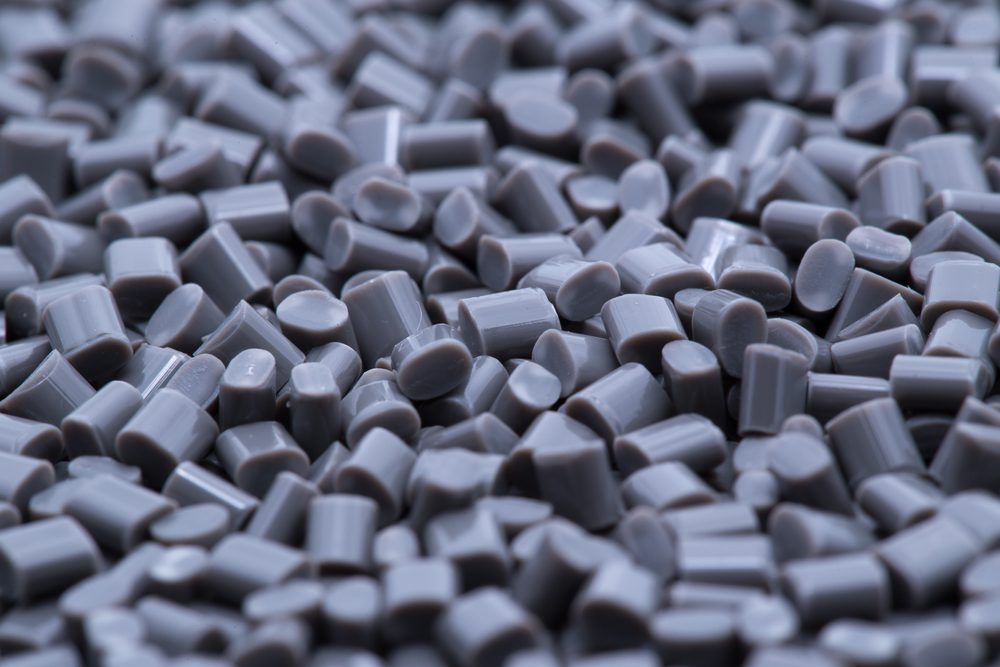
Gray,Plastic,Polymer,Granules

Microwave digestion can be adapted to many matrices, provided that a protocol compatible with their composition is defined.

FILAB can work with samples such as:

However, the sample preparation strategy depends on each matrix. A protocol suitable for a polymer will not necessarily be applicable to a metal alloy or ceramic.

What is the difference between mineralization and ICP analysis?

It is important to distinguish between the two steps. Microwave-assisted mineralization is a sample preparation step. It is intended to break down the matrix and bring the elements of interest into solution.

ICP-OES or ICP-MS is then the analytical technique used to measure the elements present in this solution. Microwaves therefore do not replace ICP. The two techniques are complementary:

StepObjective
Microwave-assisted mineralizationBreak down the matrix and bring the elements into solution
Solution preparationAdjust the solution to the analytical conditions
ICP-OES \/ ICP-MSIdentify and\/or quantify the elements of interest

This distinction is particularly important in the context of an elemental analysis service: ICP performance also depends on the quality of sample preparation.

Microwave-assisted mineralization and ICP-OES

ICP-OES (Inductively Coupled Plasma – Optical Emission Spectrometry) determines the concentrations of numerous elements present in a solution.

After mineralization, the sample is introduced into the ICP plasma. The elements are excited and emit characteristic radiation, whose intensity is used to determine their concentration.

This technique is particularly well suited to multi-elemental analysis and can be used, as required, to detect major, minor or trace elements.

Microwave-assisted mineralization and ICP-MS

ICP-MS (Inductively Coupled Plasma – Mass Spectrometry) can also be used after mineralization.

It achieves particularly low sensitivity levels and is especially suitable for detecting trace or ultra-trace elements.

The choice between ICP-OES and ICP-MS depends in particular on:

  • the elements of interest;
  • the expected concentrations;
  • the matrix;
  • the required detection limits;
  • the objectives of the study.

Why use microwaves to mineralize a sample?

Conventional mineralization may require long heating times and have certain limitations depending on the nature of the matrix. Microwave-assisted mineralization offers, in particular, rapid, controlled and reproducible heating. The closed-vessel system also makes it possible to work under controlled temperature and pressure conditions, promoting the breakdown of difficult matrices.

This approach offers several benefits:

Speed

Microwave heating reduces the time required for certain digestion steps.

Reproducibility

Program parameters can be controlled and reproduced from one sample to another.

Adaptability

Mineralization conditions can be adjusted according to the matrix and the elements of interest.

Closed-vessel preparation

Working in a closed vessel can limit certain losses of volatile compounds or elements compared with some open-vessel preparations.

FILAB laboratory expertise from preparation to analysis

The reliability of an elemental analysis depends on the entire analytical workflow: sampling, preparation, digestion, analysis and results processing. FILAB supports industrial companies throughout this process by combining microwave digestion with suitable elemental analysis techniques, particularly ICP-OES and ICP-MS.

This approach takes into account the specific nature of each sample and enables an analytical strategy tailored to the client’s objectives to be implemented.

Whether the objective is to control the elemental composition of a raw material, identify metallic impurities, quantify metals in a material or characterize a complex sample, digestion may be a decisive step before ICP analysis.

Our FAQ

How can i get a quote from FILAB laboratory?

To receive a quote from the laboratory, you can contact our teams via our contact form, by telephone or by email.
Simply send us your requirements (material type, requested analysis, applicable standard, urgency, number of samples, etc.). We will then send you a customized technical and pricing proposal within 24–48 hours.

Quelle est la durée typique des analysis au laboratoire FILAB ?

Analysis turnaround times at the FILAB laboratory vary depending on the type of analysis and the complexity of the expertise project.
FILAB is nevertheless committed to providing fast turnaround times tailored to your industrial constraints and urgent requirements.

What is microwave digestion?

Microwave digestion is a sample preparation technique that uses controlled heating, generally in the presence of acids, to break down a matrix and bring the elements of interest into solution before analysis.

Is microwave digestion an analytical technique?

No. It is a sample preparation step. It is used particularly before elemental analysis such as ICP-OES or ICP-MS.

Why digest a sample before ICP analysis?

Digestion breaks down the matrix and transfers the elements of interest into a solution compatible with ICP. It therefore helps provide a representative measurement of the sample’s elemental composition.

What is the difference between ICP-OES and ICP-MS?

ICP-OES measures elements through their optical emission and is particularly suitable for multi-element analysis. ICP-MS measures ions according to their mass-to-charge ratio and generally offers lower detection limits, particularly for trace elements.

Can metals be quantified after microwave digestion?

Yes. After digestion and solution preparation, the sample can be analyzed by ICP-OES or ICP-MS to quantify the elements of interest.

Can FILAB handle the entire analysis process?

Yes. Depending on the analytical issue, the service may include sample preparation, microwave digestion, elemental analysis by ICP and interpretation of the results.

The filab advantages
A highly qualified team
Responsiveness in responding to and processing requests
A COFRAC ISO 17025 accredited laboratory
(Staves available on www.cofrac.com - Accreditation number: 1-1793)
A complete analytical facility of 5,200m²
Tailor-made support
Tailor-made support
Video debriefing available with the expert
Thomas ROUSSEAU Scientific and Technical Director
Ask for your quote