Laboratory for analysis and expertise

Nuclear transition: where do we stand?

Quality
certifications
Cofrac
CIR
EDF
Qualiopi
Framatome
ISO 9001
ISO 19443

Should we reinvest in the nuclear industry or focus on new renewable energy sources? At a time when several nuclear power plants are reaching the end of their service life, the debate is more relevant than ever for the French government. However, much like the delays affecting the Flamanville EPR, decision-making about the future of nuclear power in France remains particularly unclear…

ISO 19443
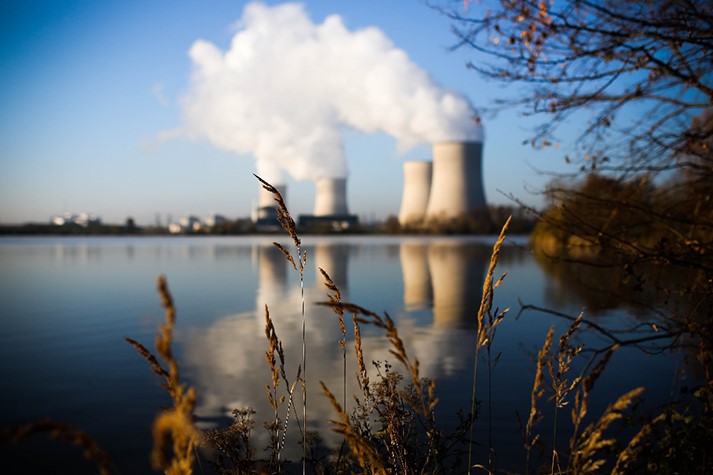
The Saint-Laurent-des-Eaux power plant in Loir-et-Cher operates two reactors, each with a capacity of 900 MW. © EDF

Looking for a coherent energy strategy?

France’s 3rd largest industrial sector in terms of jobs and expertise, the nuclear industry represents a strategically critical activity, producing energy at a competitive cost without emitting CO2. Behind the United States, France ranks second worldwide in terms of nuclear capacity, with more than 58 reactors across its territory.

It is therefore not so easy to abandon this sector, despite the controversies it generates… So much so that the report on maintaining skills, unveiled in the media a few days ago, recommends building six new EPRs from 2025 onwards.

Under the supervision of the ASN (French Nuclear Safety Authority), major players in the nuclear industry are seeking to safeguard their future through renovation and modernization processes aimed at increasing the safety and operating life of power plants. Investments are also being released for numerous research projects, in the hope of finding “the nuclear energy of the future” and new technologies capable of reconciling economic performance with environmental protection.

Nuclear waste treatment: public debate is now open

However, questions about future investment do not rule out the need to dismantle nuclear power plants that have reached the end of their service life. Corrosion, cracking, mechanical wear… the ageing of power plants, some of which were built more than 40 years ago, is generating large quantities of used and radioactive materials. In France, these represented a total stock of 1,540,000 m³ in 2016, divided into five categories according to their level of radioactivity and degradation time.

This growing volume is forcing stakeholders to review their nuclear waste treatment policies. Cigéo, a deep geological disposal project in Bure (Meuse), is currently “the least bad solution” chosen by France for highly radioactive, long-lived waste.

Starting this autumn, the national plan for the management of radioactive materials and waste will, for the first time, be subject to public debate, in order to involve citizens in discussions about the energy options available to France.

How does FILAB support nuclear industry stakeholders in the energy transition?

The FILAB laboratory is certified by AFNOR CERTIFICATION to the ISO 9001 standard and the ISO 19443 standard for the chemical analysis and characterization of materials and products for the nuclear sector. In addition, FILAB offers a broad range of technical expertise, enabling it to address nuclear-sector challenges with reliability and integrity. Whether for routine inspections or support with R&D projects, suppliers, manufacturers and authorities call on us to validate the compliance of products used in nuclear power plants.

With a 5,200 m² analytical platform, we also provide the following services:

  • PMUC analysis (Products and Materials Used in Nuclear Power Plants)

FILAB is approved by EDF to perform the analysis required for PMUC certification. Approved for many years to carry out chemical analysis of halogens and sulfur, FILAB’s approval has been extended to analysis specific to products in family 021 (ion-exchange resins and conditioning products).

As a member of Nuclear Valley, the competitiveness cluster dedicated to civil nuclear power, FILAB contributes its expertise in characterizing metal alloys as part of the collaborative COMCEPT project.

Would you like to find out more? Contact us!

The filab advantages
A highly qualified team
Responsiveness in responding to and processing requests
A COFRAC ISO 17025 accredited laboratory
(Staves available on www.cofrac.com - Accreditation number: 1-1793)
A complete analytical facility of 5,200m²
Tailor-made support
Tailor-made support
Video debriefing available with the expert
Thomas GAUTIER Materials Expert
Ask for your quote