


"I used Filab for a chemical analysis. Very satisfied with the service. Responsive team, deadlines met, and a clear analysis report. I recommend them."

+140 employees
here to listen to you

5,200 m² laboratory
+99% of services carried out in-house

Accredited laboratory
COFRAC ISO 17025
Home • Analytical services • Analysis • Materials • Accelerated Aging
As an industrial company, you want to carry out accelerated aging tests on your materials and products
What is an accelerated aging test?
The accelerated aging of materials involves applying controlled stresses to study certain degradation phenomena more quickly. Depending on the material and its use, the protocol may involve temperature, humidity, light exposure, or a defined chemical environment.
Why carry out accelerated aging tests on materials?
These tests make it possible to compare formulations, assess the effect of a treatment, or monitor changes in a property under the selected conditions.
FILAB supports you in defining the protocol, characterizing the samples, and interpreting the results in light of your industrial objective.
Would you first like to identify the type of test suited to your use environment? See our overview of material aging tests.
How do you define an accelerated aging protocol for materials?
The protocol depends on the material, its use, and the degradation being studied. It defines the exposure conditions, samples, and controls required.
Choose the stresses
Temperature, humidity, light, or chemical contact: their intensity and duration must accelerate the phenomenon being studied without causing degradation that is not representative of actual use.
Plan comparison samples
The initial condition serves as a reference, with controls suited to the study. Separate specimens are provided when measurements are destructive.
Organize monitoring
The properties to be measured, monitoring intervals, and any stop criteria are defined before the test. Intermediate checks can be used, if necessary, to monitor the progression of degradation.
Tests and analysis associated with accelerated material aging
An accelerated aging program combines exposure conditions with analysis to measure their effects. FILAB selects the services suited to the material, the stresses under investigation, and the properties you wish to monitor.
Subject materials to defined stresses
Depending on your application, the protocol may include:
- Environmental testing to study the effects of temperature and humidity.
- UV aging tests to examine changes associated with light exposure.
- Thermal shock testing to assess the effects of rapid temperature variations.
- Salt spray testing or exposure to specific environments, such as synthetic sweat, depending on the selected protocol.
When the objective involves repeated mechanical stresses, material fatigue testing can complement the study.
Measure changes before and after exposure
The tests are defined according to the characteristics to be preserved:
- Mechanical properties: tensile tests, compressive tests, flexural tests or torsional tests, as required.
- Surface and coating condition: characterization of defects, morphology, and interfaces.
- Polymer evolution: study of degradation, swelling, or thermal stability, as well as the cross-linking of paints and varnishes, where this phenomenon is relevant.
- Measurement of nickel release, when it is one of the criteria to be monitored.
These measurements make it possible to compare the initial condition with the condition after exposure, on the samples or on comparable test specimens when the tests are destructive.
Understand degradation mechanisms
When a change is observed, additional investigations may be conducted to determine its nature:
- Investigation of corrosion mechanisms, potentially supplemented by electrochemical analyses.
- Analysis of wear phenomena and study of failure mechanisms.
- Container–contents chemical compatibility study, for relevant applications.
And also... Accelerated aging study in thermal / hygrometric conditions:
The accelerated aging study under thermal and hygrometric conditions is an analysis technique used to assess the durability and reliability of materials and products under simulated conditions by accelerating their aging. This method makes it possible to anticipate the service life and performance of materials under varying climatic conditions, without waiting for these effects to appear in the long term.
The aim of this study is to
- simulate the environmental conditions (temperature and humidity) to which a product will be exposed during its useful life.
- accelerate degradation processes to predict service life and identify potential failure modes.
Expertise, evidence and traceabilityUpdated: June 2026
Why trust the FILAB laboratory for your accelerated aging tests?
Entrusting your accelerated aging tests to the FILAB laboratory means relying on technical expertise, a documented quality framework and expert interpretation of the results to support industrial, quality or regulatory decisions.
Recognized accreditations
- ISO 17025
- Nadcap MTL
- SAFRAN
- FRAMATOME
- EDF
- DASSAULT AVIATION
- Aubert & Duval
- Airbus Defence & Space
- Liebherr
- FDA registered
An expert at your service
Expertise Manager
Clément Boenard supports accelerated aging test projects.
Recognized accreditations
- ISO 17025
- Nadcap MTL
- SAFRAN
- FRAMATOME
- EDF
- DASSAULT AVIATION
- Aubert & Duval
- Airbus Defence & Space
- Liebherr
- FDA registered
An expert at your service
Expertise Manager
Clément Boenard supports accelerated aging test projects.
Our four-step approach:
- Discussion of your requirements and constraints.
- Proposal for a suitable analytical protocol and quotation.
- Testing and expert review of the results.
- Delivery of a detailed, actionable and traceable report.
Verified reviews
What our customers say
N
Nicolas a.
12 May 2026
"Very responsive laboratory, with excellent analysis quality and deadlines met. Communication is smooth, the technical explanations are clear, and the team knows how to adapt to specific needs. I recommend them for their professionalism and reliability!"
5/5
C
Charlotte t.
8 May 2026
"Clear and precise deliverable, delivered on time. I recommend them."
5/5
Transparency & contactLast verified: June 2026
Where to find us and how to contact us
FILAB is an independent, accredited physical laboratory based in France. All the contact details below can be used to verify our identity and submit your request.
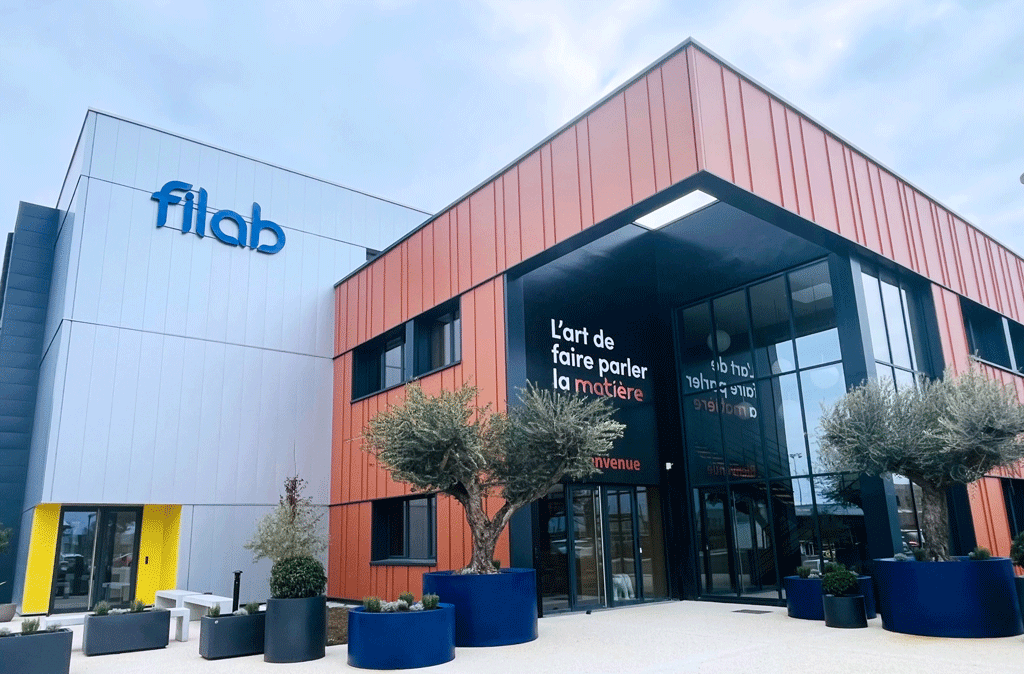
FILAB Laboratory
Ecoparc Dijon Bourgogne
80 rue Jean-Louis Auguste Petitjean
21850 Saint-Apollinaire, France
Tel. +33 (0)3 80 52 32 05
FAQ – Your Questions About Accelerated Material Aging
How can i obtain a quote from the FILAB laboratory?
To obtain a quote from the laboratory, you can contact our teams via our contact form, by phone, or by email.
Simply send us your requirements (material type, requested analysis, applicable standard, urgency, number of samples, etc.). We will then send you a customized technical and pricing proposal within 24–48 hours.
What is the typical turnaround time for analysis at the FILAB laboratory?
Analysis turnaround times at the FILAB laboratory vary depending on the type of analysis and the complexity of the expert assessment project.
However, FILAB is committed to providing fast turnaround times tailored to your industrial requirements and urgent needs.
How long does an accelerated aging test take?
The duration depends on the material, the stresses applied, the property being monitored, and any applicable standard or reference framework. It is defined when the test protocol is prepared. The overall lead time also includes sample preparation and analysis: exposure time alone therefore does not represent the time required to deliver the results.
Can a finished part be tested instead of a test specimen?
The choice depends on the purpose of the study and the test constraints. A finished part makes it possible to account for its geometry, assemblies, or interfaces. Test specimens may make it easier to compare material properties. The dimensions, preparation, and representativeness of the samples must be validated before shipment.
How many samples should be provided?
The number of samples depends on the test conditions, the scheduled inspection points, and the measurements to be performed. In particular, control samples, the necessary replicates, and destructive analysis must be taken into account. Specify the quantities available when submitting your request so that a suitable test program can be defined.
Can two suppliers be compared through accelerated aging?
Yes, the study can compare two materials or formulations subjected to the same protocol, using criteria defined in advance. It is important to document their initial condition and any differences in preparation or manufacturing. The results allow their performance to be compared under the tested conditions, without establishing equivalence for all applications.
What information is needed to obtain a quote for accelerated aging testing?
Please indicate the type of material, the shape and dimensions of the parts, their intended use environment, and the property to be monitored. If available, attach a technical data sheet, specifications, or a required protocol. Also specify the number of samples, whether a reference for comparison is available, and your desired deadline.
The filab advantages

A highly qualified team

Responsiveness in responding to and processing requests

A COFRAC ISO 17025 accredited laboratory
(Staves available on www.cofrac.com - Accreditation number: 1-1793)

A complete analytical facility of 5,200m²

Tailor-made support

Video debriefing available with the expert


Ask for your quote