

Why have your raw materials tested…
The geopolitical context of 2022 has greatly disrupted the industry, particularly in terms of raw materials. Various solutions can be considered to facilitate and control your raw materials. Let's take a look at the solutions that the FILAB laboratory can offer you.

First of all, what do we mean by raw materials? Raw materials refer to all the initial products used in the production or manufacture of finished products. These are materials produced by nature that require processing before they can be used.
1. Determination of the chemical nature of the material
You are integrating a new supplier and need to identify the chemical nature of the raw material they supply to you.
At FILAB, we characterize the nature of raw materials (mineral, organic, metallic, etc.).
2. Analysis of the purity of your raw materials
The “purity” of a raw material contributes significantly to optimizing its final performance. Therefore, regular monitoring of raw materials is an essential step in the production process.
In the event of a defect (visual defect, questionable strength, appearance of an unknown substance, etc.), manufacturers from all sectors regularly call on analysis laboratories to check the purity of the materials used.
To check the profiles, we use several analysis techniques: GC-FID, GC-MS, LC-UV / LC-RI / LC-ELSD / LC-MS
3. Identification and measurement of impurities
An organic impurity is any organic component other than the chemical entity being analyzed. Organic impurities can be either residual solvents or any other related substance (synthesis precursors, by-products, synthesis intermediates, degradation products). The FILAB laboratory analyzes organic impurities present in your raw materials using GC-MS, LC-MS (QTOF and ORBITRAP), ICP-MS screening, etc.
4. Assistance in selecting raw materials
FILAB can help you choose your raw materials in two ways:
- Bibliographic research: Conducting bibliographic research involves searching for all information, articles, publications, patents, and previous work on a subject related to the field you wish to study by gathering information on the subject from the literature. This process is commonly carried out before any research, development, and/or application work.
- R&D support: with a team of engineers and PhDs with diverse skills, the FILAB laboratory offers its multi-industry knowledge and R&D expertise in chemical analysis and material characterization.
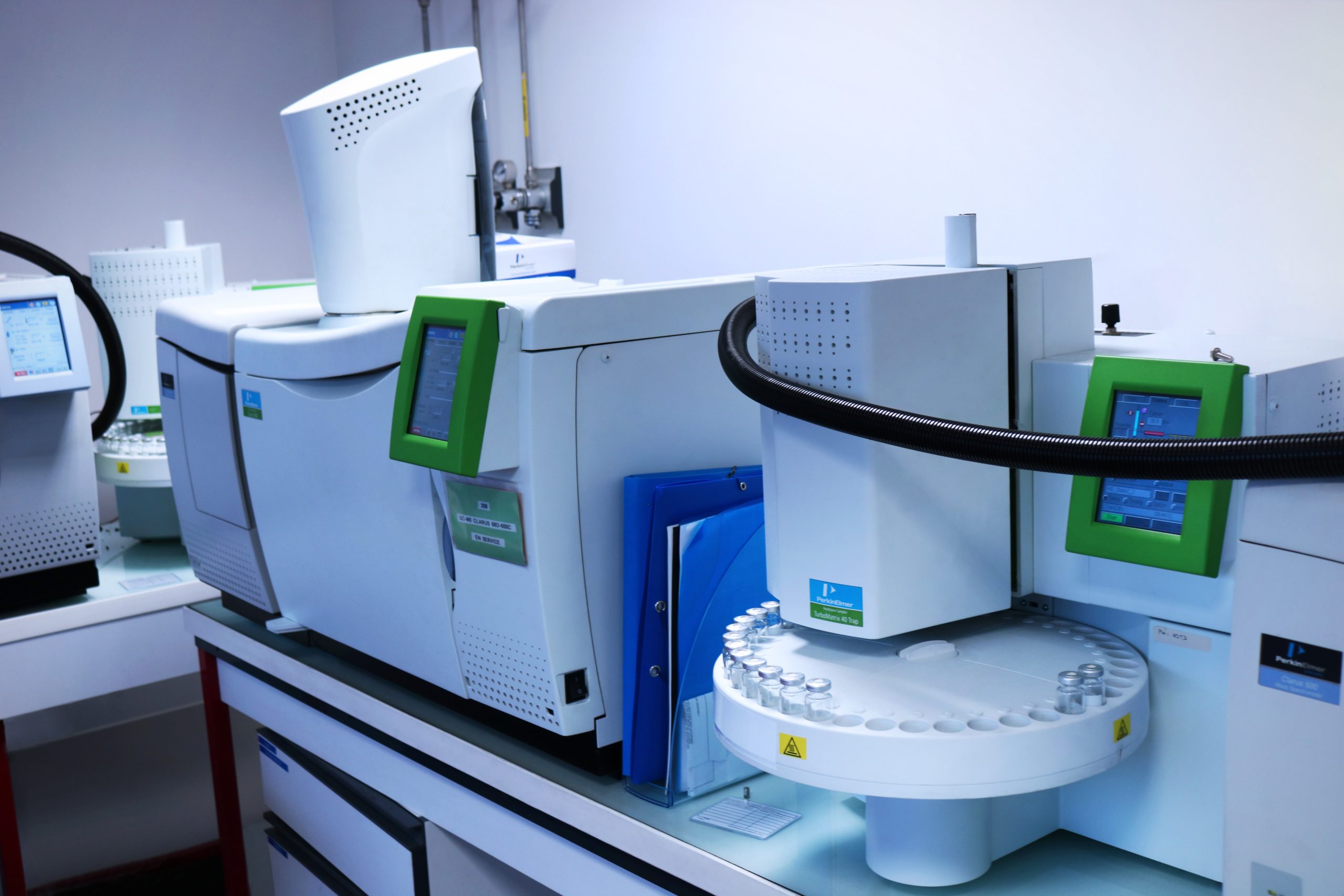
Our state-of-the-art analytical equipment, a real asset for controlling your raw materials


Frequently asked questions
Why inspect a raw material when changing suppliers?
A change of supplier may be accompanied by differences in composition, purity, or material characteristics. Comparative analysis make it possible to compare batches with the requirements of the process and finished product. They complement supplier information to verify that the new material is suitable, without assuming that two identical commercial references are equivalent across all parameters.
What is the difference between material identification and purity testing?
Identification seeks to establish the nature of the material or its constituents. Purity testing examines the proportion of the expected compound and the contributions of other substances according to the method used. These objectives are complementary: confirming a chemical family does not automatically demonstrate the absence of impurities or compliance with a specified concentration.
How can an unknown impurity in a raw material be investigated?
An investigation may compare a batch showing an anomaly with a compliant reference, then examine the signals that differ. Chromatographic techniques coupled with mass spectrometry help characterize unknown organic compounds. Mineral or elemental investigations require other approaches; the strategy is defined according to the matrix and the defect encountered.
Why define a common testing program to compare several raw material batches?
A common testing program makes it possible to examine the same characteristics using consistent sample preparation methods, analytical methods, and units. It facilitates comparison of content, impurity profiles, or material properties. The criteria must be linked to process needs and specifications: an analytical deviation does not automatically have the same implications for all applications.
How do analysis and a literature review help in selecting a raw material?
The literature review provides knowledge about materials and their possible behavior. analysis verify characteristics in actual samples. Bringing the two together helps compare candidates and prepare the relevant tests, then assess their results against manufacturing constraints. Documentary data do not replace validation of the material in its intended application.