Laboratory material analysis

Chemical analysis Materials characterization Problem-solving
+140 employees
+140 employees here to listen to you
5,200 m² laboratory
5,200 m² laboratory +99% of services carried out in-house
Accredited laboratory
Accredited laboratory COFRAC ISO 17025

Would you like to know the composition of a material, compare two batches, or verify the information provided by a supplier? Laboratory material analysis can be used to identify its constituents and, depending on your objective, measure the content of specific elements or compounds.

FILAB supports your quality, R&D, and production teams in analyzing metallic materials, polymers, ceramics, and composites. Based on your sample, technical documents, and the question to be addressed, our experts define the appropriate investigations to identify a material, examine a composition discrepancy, or compare a result with your specifications.

Would you like to carry out a laboratory material analysis?

What is material analysis?

Material analysis is part of our expertise in materials characterization. This encompasses all the techniques and methods used to determine a material’s composition, structure, and properties. Essential in many industrial sectors, it helps explain why a material behaves in a particular way and optimize it for specific applications.

Our services: when should you perform a material analysis?

Identify the nature and constituents of a material

Is a reference missing, is the documentation incomplete, or would you like to verify the nature of a sample? Analysis can identify its chemical family and search for characteristic constituents. The level of identification depends on the complexity of the material and the information accessible through the selected methods.

For an unknown deposit, residue, or particle, discover our unknown material analysis service.

Compare the composition of two batches or suppliers

A change of supplier, a new raw material, or variation between batches may require composition stability to be verified. Comparison with a reference sample makes it possible to identify differences in the parameters studied. It helps document a discrepancy, without by itself presuming equivalent performance in use. 

When the comparison must also cover structure or properties, it can be supplemented by a complete materials characterization.

Verify composition criteria

Do you have a technical data sheet or set of specifications? The study can focus on targeted elements or compounds and their expected concentrations. Depending on the material and the elements being sought, an ICP elemental analysis may be considered. Acceptance criteria are defined in advance so that the results can be compared with the requirements applicable to your request.

Search for an undesirable substance

The suspected presence of an impurity or contamination may require a targeted search. Our deposit and contamination analysis service can be used to examine these situations. Specify the substances being sought, the context in which they appeared, and the materials that may have come into contact with the sample: this information helps guide the investigations and define their limitations.

Our material analysis techniques for materials characterization

When should material analysis be supplemented by materials characterization?

Knowing the composition of a material is not always enough to explain its behavior. Two samples with similar compositions may differ in structure, surface or properties, particularly as a result of their manufacturing processes or conditions of use.

If your question also concerns degradation, a difference in behavior or an expected property, material analysis can be complemented by a more comprehensive materials characterization approach.

Material analysis: choose FILAB laboratory expertise

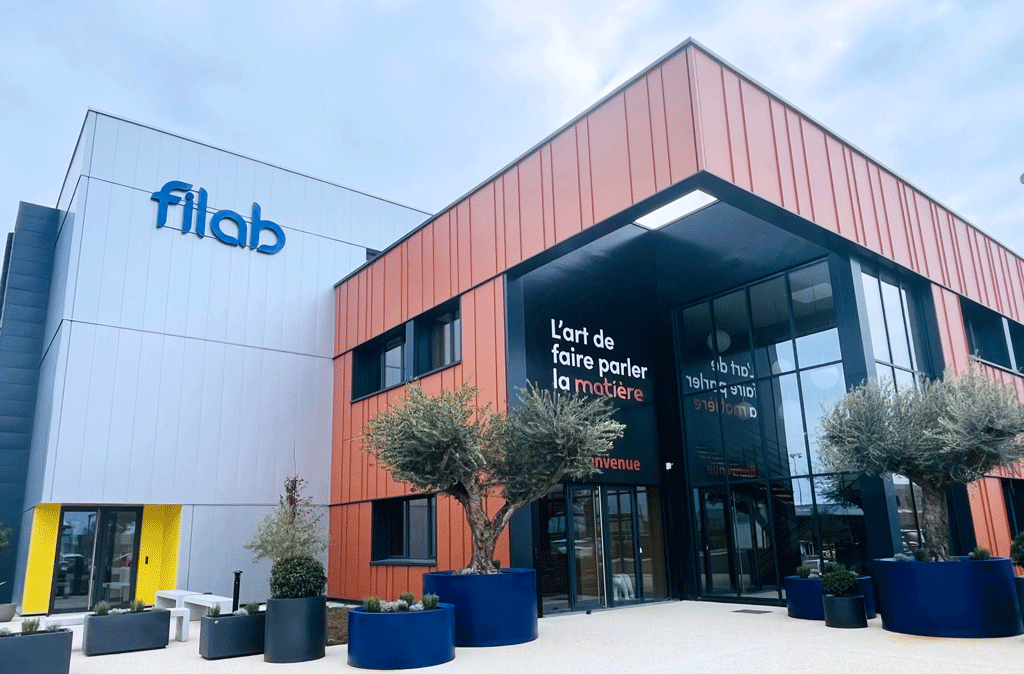
filab-extérieur

As a laboratory specializing in material analysis, FILAB offers recognized expertise, backed by state-of-the-art analytical equipment and a multidisciplinary team of engineers and PhD scientists. Located across 5,200 m², our facilities are equipped to perform all types of material analysis, regardless of the material: metal, polymer, ceramic, glass, composite, etc.

The materials analysis services offered by FILAB assess the physical, chemical, mechanical, thermal and electrical properties of materials. These analysis help to understand failures, optimize manufacturing processes, ensure quality control and meet regulatory requirements.

With responsiveness, reliability and precision, FILAB supports industrial companies in all their material analysis projects, providing tailored solutions adapted to their specific needs.

FAQ

What is material analysis?

Material analysis is a set of techniques used to determine the composition, structure and properties of a material. This helps explain what an object is made of, why it behaves in a particular way and whether it is of good quality.

Which materials are covered by laboratory material analysis?

Laboratory material analysis applies to a very wide range of materials across many fields of activity. Virtually anything tangible can be analyzed to determine its composition, structure and properties.

  • Metal alloys
  • Polymers and composites
  • Surface analysis
  • Ceramics and glass
  • Powders
What are the most common material analysis methods?

The methods used depend on what needs to be analyzed.

  • Scanning electron microscopy (SEM): to observe material surfaces at very high magnification and examine their microstructure.

  • Spectroscopy: to identify chemical elements and molecules. Mass spectrometry identifies molecules by measuring their mass. Atomic absorption spectrometry detects heavy metals.

  • X-ray diffraction (XRD): to identify crystalline phases and the atomic structure of solid materials.

  • Thermal analysis: to study how a material behaves as a function of temperature (melting, decomposition).

  • Mechanical testing: to measure a material’s strength, hardness or ability to deform.

Why perform material analysis?

Working with a laboratory specialized in material analysis enables you to optimize your production processes through better material selection. Material analysis expertise helps identify the materials best suited to your technical and industrial requirements, while ensuring performance and durability.

Through advanced materials characterization methods, material analysis provides an in-depth understanding of failure causes and enables targeted corrective actions to be implemented. Whether for quality control of raw materials, investigation of a product defect or process improvement, material analysis is an essential tool for ensuring the reliability and compliance of your materials.

What can a metal material analysis verify before production begins?

A metal material analysis can verify the chemical composition of a metal or alloy, compare it with the expected grade, and identify any discrepancies. It is particularly useful when receiving a batch, when changing suppliers, or when no material certificate is available.

Why conduct a bio-based material analysis before replacing a conventional material?

A bio-based material analysis, particularly for polymers, helps assess a substitute solution. The study compares the composition and relevant properties of the candidate material with those of the reference material. FILAB supports manufacturers in identifying differences that could affect material processing or use, depending on the project requirements.

Can a material analysis laboratory help identify the cause of a manufacturing defect?

Yes, a material analysis laboratory can investigate a difference in composition or contamination that may contribute to the observed defect. Comparing a defective sample with a compliant reference sample helps guide the investigation. Combined with information about the manufacturing process, the results help examine possible causes and guide corrective actions.

Can material analysis identify all the constituents of a sample?

The level of information depends on the complexity of the material and the methods selected. The analysis may identify certain constituents or measure targeted concentrations. Several complementary approaches may be required; an analysis does not guarantee exhaustive identification of the entire formulation.

Can material analysis confirm compliance with a technical data sheet?

It can help verify the composition criteria defined in the study, provided that precise requirements and suitable methods are available. The conclusions relate to the parameters analyzed and the samples examined, rather than to the product’s overall performance.

What information should be provided when requesting a material analysis from the FILAB laboratory?

Indicate the sample’s origin and presumed nature, your objective, the quantity available, and any constituents being investigated. Attach any technical data sheets, composition criteria, or reference samples available to you. Also specify your deadline.

What results can be obtained from a material analysis?

Depending on your request, the study may specify the nature of a material, identify certain constituents, or measure targeted concentrations. The results are interpreted in relation to your objective and, when available, a reference for comparison.

The filab advantages
A highly qualified team
Responsiveness in responding to and processing requests
A COFRAC ISO 17025 accredited laboratory
(Staves available on www.cofrac.com - Accreditation number: 1-1793)
A complete analytical facility of 5,200m²
Tailor-made support
Tailor-made support
Video debriefing available with the expert
Thomas GAUTIER Materials Expert
Ask for your quote