Case study

Study of the purity of a coating layer using XPS

Comparative study of multilayer coatings on zirconium tubes using XPS
Accueil Blog Study of the purity of a coating layer using XPS

The problem?

The objective of this study is to characterize the outer surface of a zirconium tube at three circumferential positions in order to verify the homogeneity of the coatings over the entire circumference of the tube.

The customer wants to verify the uniformity of the coatings on the entire length of the tube. To do this, FILAB offers the customer a comparative study using XPS technology. The idea is to perform an elemental, structural, and quantitative analysis of the surface layer (a few nm deep) of a sample from three different areas of the tube in order to meet the customer's needs.

Summary

01
Characterizing the surface of a zirconium tube using XPS
02
Analysis and interpretation of results obtained by XPS
03
Conclusion of the comparative study
01

Characterizing the surface of a zirconium tube using XPS

Objective :

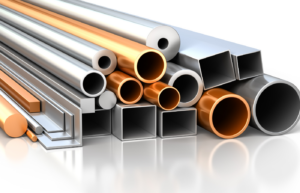
Determine whether the coating on the customer's zirconium tube is uniform across its entire surface. To do this, the outer surface of the tube is characterized using XPS analysis on three different areas.
Approach :

Study three areas of the tube to verify whether or not these three areas are identical. To do this, we used XPS. XPS analyses revealed that the zirconium tube was not homogeneous throughout. It consists primarily of a partially oxidized layer of chromium, followed by a layer of zirconium. For the three circumferential positions, the chromium detected on the surface is in the form of Cr2O3 oxide and in metallic form, while the zirconium is only in oxide form (ZrO2).

In-depth analysis at approximately 60 nm, coupled with analysis of the extreme surface, revealed heterogeneities between the different positions.

For all three positions, the oxygen content appears to stabilize at around 20% after 60 nm of abrasion. 

02

Analysis and interpretation of results obtained by XPS

Observations :

On each profile, over the first few nanometers, a very rapid decrease in the carbon content is observed. This change corresponds to the removal of the thin layer of atmospheric pollution present on most samples.

Underneath this layer, there is always a layer of chromium followed by a layer of zirconium. However, the thickness of these layers varies significantly depending on their position. In addition to this difference in chromium thickness, a difference in oxygen content can also be observed. 

03

Conclusion of the comparative study of the three areas

Each sample exhibits distinct chemical stratification comprising a thin layer of surface contamination, followed by layers of chromium and zirconium. Variations in layer thickness and composition depending on position reveal significant differences in the chemical structure of the samples. 

For all three positions, the oxygen content appears to stabilize at around 20% after 60 nm of abrasion. The base metal has therefore not been reached, and the zirconium oxide layer in all three areas appears to be greater than 30 nm.

Need help? Contact our team

Other studies that may be of interest to you

Chromium oxidation

Chromium is a chemical element belonging to the transition metals group. It is a hard, shiny, corrosion-resistant metal used in many fields due to its physical and chemical properties. Chromium has different oxidation states. Find out more

Rouging phenomenon

With its excellent properties, stainless steel has become indispensable in many fields: everyday objects, medicine, surgery, automotive, aeronautics, mechanical industries, etc. However, many industrial stainless steel installations are affected by the phenomenon of rouging. Find out more

ATG kinetics: simulation of PVC part aging

One of our customers wants to evaluate the thermal behavior of 3D-printed parts. Find out more

Laboratory specializing in analysis and expertise for industrial companies

More than 140 people
More than 140 people at your service
5200 m² laboratory
5200 m² laboratory + 99% of services are provided in-house
Accredited laboratory
Accredited laboratory COFRAC ISO 17025
+2200 clients
+2200 clients in France and abroad

Contact us

Our services are reserved for professionals.