Chemical composition analysis of polymers and additives

Chemical analysis Material characterization Problem solving
More than 140 people
More than 140 people at your service
5200 m² laboratory
5200 m² laboratory + 99% of services are provided in-house
Accredited laboratory
Accredited laboratory COFRAC ISO 17025
Identify and characterize the composition of your polymer materials

The chemical composition of a polymer material determines its mechanical, thermal and chemical properties, as well as its ability to meet the regulatory requirements of your industry. Whether you need to inspect a raw material, qualify a product, identify contamination or compare a formulation, precise characterization is essential.

At the FILAB laboratory, we support manufacturers with the analysis of the chemical composition of polymers and their additives. Thanks to a multi-technique approach, our experts identify the constituents of your materials, quantify certain compounds and provide you with an interpretation tailored to your industrial challenge.

Our chemical composition analysis services for polymers and additives

Identification of the polymer matrix

The first step is to identify the type of polymer making up the material.

This identification makes it possible in particular to:

Additive characterization

Additives play an essential role in the material's performance.

Our analysis make it possible to:

  • identify their chemical nature;
  • detect regulated additives;
  • compare several formulations;
  • check the compliance of a production run.
Contaminant analysis

Contamination can alter a polymer's properties or lead to non-compliance.

Our experts can look for:

  • organic impurities ;
  • mineral contaminants;
  • manufacturing residues;
  • substances resulting from aging;
  • degradation products..
Deformulation and material comparison

As part of an R&D approach, supplier qualification or competitive analysis, the laboratory carries out deformulation studies aimed at identifying the main constituents of a formulation.

These investigations make it possible to compare several materials and identify differences in composition that may explain a particular behavior.

Our technical resources for the chemical composition analysis of polymers and additives

Chemical analysis

FTIR

Raman spectroscopy

GC-MS

HPLC, UPLC

Material characterization

TGA

DSC

XRD

SEM-EDX

XRF

GPC

Why analyze the chemical composition of polymers and additives?

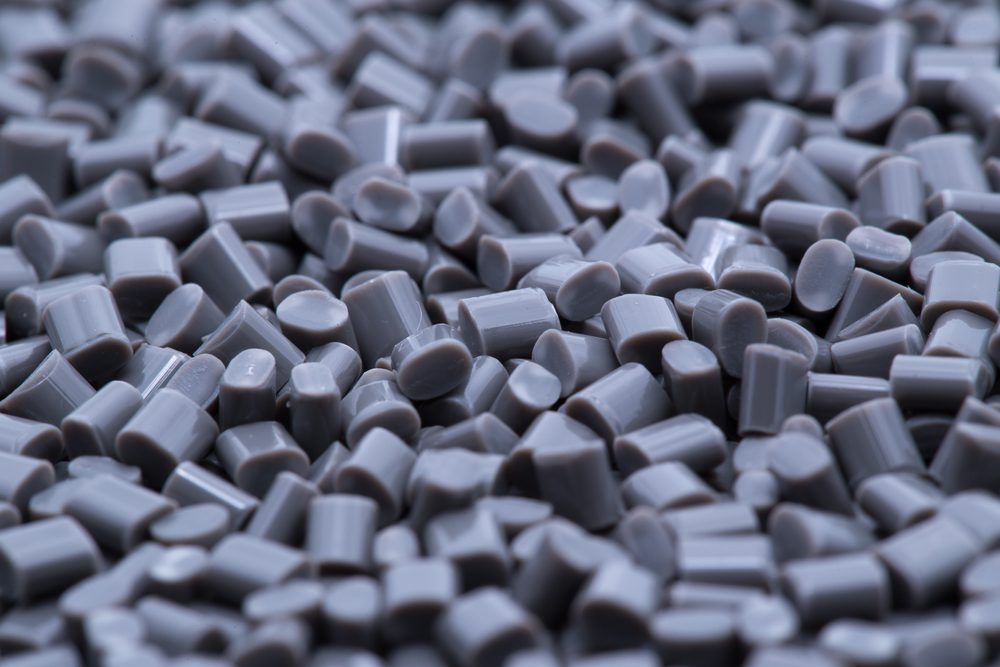
Gray,Plastic,Polymer,Granules

Polymers are rarely made of a single material. Their formulation generally combines a polymer matrix with various additives designed to improve performance or facilitate processing.

Chemical composition analysis makes it possible in particular to:

  • identify the nature of an unknown polymer;
  • verify the compliance of a raw material or finished product;
  • compare several formulations;
  • check for the presence of specific additives;
  • identify contamination or an unwanted substance;
  • support a deformulation or reverse-engineering process;
  • investigate the causes of a failure or premature aging; 
  • identify and quantify additives in polymers

What types of polymers can be analyzed?

The laboratory works on a wide variety of polymer materials, including:

What additives can be identified?

Polymer formulations often contain additives whose nature and concentration directly influence the material's performance.

The laboratory can identify or characterize different types of additives, including:

Depending on your needs, the analysis can be qualitative, semi-quantitative, or quantitative.

Our FAQ

Why analyze the chemical composition of a polymer?

The analysis makes it possible to identify the nature of the polymer, verify formulation compliance, detect contaminants, or explain a failure.

What additives can be identified in a polymer?

The laboratory can characterize many additives, such as plasticizers, antioxidants, UV stabilizers, flame retardants, pigments, mineral fillers, or lubricants.

What is the difference between polymer identification and de-formulation?

Identification aims to determine the nature of the polymer matrix, while de-formulation seeks to characterize all the constituents of a formulation, including additives and fillers.

Can two polymer formulations be compared?

Yes. A comparative analysis makes it possible to identify differences in composition between two materials and assess their impact on the product's properties.

How can i get a quote from FILAB laboratory?

To get a quote, you can contact our teams via our contact form, by phone, or by email.
Simply send us your requirements (material type, desired analysis, any applicable standard, urgency, number of samples, etc.). We will then send you a personalized technical and pricing proposal within 24-48 hours.

What is the typical turnaround time for analysis?

Lead times vary depending on the nature of the analysis and the complexity of the expert assessment project.
FILAB is nevertheless committed to providing fast turnaround times adapted to your constraints and industrial urgencies.

The filab advantages
A highly qualified team
Responsiveness in responding to and processing requests
A COFRAC ISO 17025 accredited laboratory
(Staves available on www.cofrac.com - Accreditation number: 1-1793)
A complete analytical facility of 5,200m²
Tailor-made support
Tailor-made support
Video debriefing available with the expert
Thomas GAUTIER Head of Materials Department
Ask for your quote